English
Based on “The Economy Gave Up On Young People … It’s Starting To Show” from Economics Explained Watch the original video
The Generation Adrift: Why Young People Are Checking Out of the Economy
Episode summary
The global economy is failing young people, with 262 million (one in four worldwide) aged 15-24 classified as “NEETs” – Not in Employment, Education, or Training. This isn’t laziness, but a structural issue: entry-level jobs are disappearing due to automation and AI, while the cost of higher education and housing has skyrocketed, making degrees less valuable and moving for work unaffordable. For instance, in the UK, the share of NEETs with a work-limiting health condition nearly doubled in a decade.
Addressing this requires treating vocational training as a primary path, not a fallback, as seen in the Netherlands where 90% of vocational graduates find employment. Additionally, making childcare affordable and implementing “flexicurity” (flexible hiring with strong safety nets and retraining) like Denmark’s 6.2% NEET rate are crucial. Ignoring this problem leads to dire consequences, exemplified by Japan’s 1.5 million “hikikomori” (social recluses), and the “80/50 problem” where elderly parents support their middle-aged, economically inactive children.
Somewhere in a prosperous nation, a young person wakes up today with no work, no school, and no immediate plan to pursue either. Tomorrow will be the same. And the day after. This isn’t an isolated incident; it’s a global phenomenon affecting 262 million young people—one in four worldwide. They have a name: NEETs, standing for Not in Employment, Education, or Training.
The immediate, often predictable, reaction to this statistic is a dismissive “lazy generation,” “too soft,” or “get off their phones and get a job.” This sentiment, frequently voiced across family dinner tables by older generations, paints a picture of individual failing. However, a closer look at the data reveals a far more complex and troubling narrative. Youth unemployment rates have actually been declining in many wealthy nations, suggesting, by official measures, that young people are doing fine. But this is precisely where the official statistics fall short.
The traditional unemployment rate only counts those who are actively looking for jobs. For every young person counted in these official statistics, there are roughly three more who are entirely invisible to the economic system. These aren’t just the “lazy ones” your uncle might describe; they are a generation struggling with deep-seated structural challenges that are pushing them to the margins, threatening the foundational promise that each generation will do a little better than the last.
This article will delve into what it means to be a NEET, why this crisis is unfolding now and everywhere, the true cost of this disengagement, and crucially, what solutions already exist to bring this generation back into the fold.
The Invisible Crisis: Beyond Unemployment Figures
Conventional unemployment rates miss 20.4% of young people (15-24) who are “NEETs” (Not in Employment, Education, or Training) because they are not actively seeking work, highlighting a critical gap in economic indicators.
To understand the NEET phenomenon, we must first recognize the limitations of the conventional unemployment rate. This metric, while useful for gauging the immediate availability of labor, counts only those without a job who are actively engaged in the job search—sending applications, attending interviews, registering with job centers. The moment someone stops these activities, for any reason, they cease to be “unemployed” and become “economically inactive.” This is a clinical term for a grim reality: the system has stopped worrying about them.
Unemployment benefits are typically tied to active job searching, so stopping the search often means losing crucial financial support. This narrow definition of unemployment fails to capture the full scope of young people genuinely struggling to build productive lives. It misses those who, after months of rejection, have simply given up; those who cannot work due to undiagnosed health conditions; those caring for sick parents or young children without support; or those living in towns where available jobs pay less than the cost of commuting to them. None of these individuals are “unemployed” in the technical sense, but they are very much disconnected from the economy.
The NEET measure was specifically designed to find these invisible people. By capturing everyone between 15 and 24 who isn’t working, studying, or in any formal training—regardless of their job-seeking status—we gain a far more complete picture. In 2023, while only 6% of young people globally were officially unemployed, a staggering 20.4% were NEET. This stark difference highlights the inadequacy of our current economic indicators to truly reflect the health of our youth labor markets.
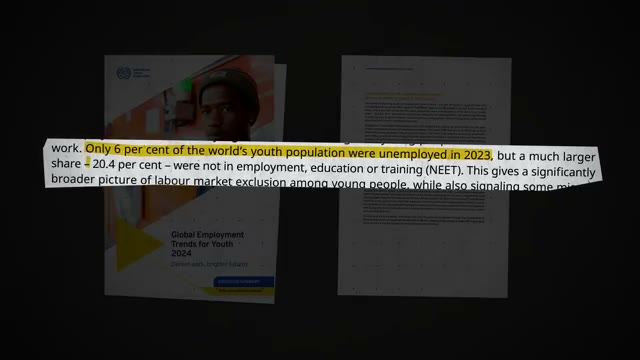
A bar chart comparing global youth unemployment (6%) to NEETs (20.4%) in 2023.
Unpacking the NEETs: A Nuanced Picture
The 262 million NEETs globally are not a uniform group; this analysis focuses on those in affluent nations, distinguishing between two main categories.
It’s crucial to acknowledge that the 262 million NEETs worldwide are not a monolithic group. Their circumstances vary dramatically, particularly between developing and wealthy nations. In developing countries, entire regions may lack the infrastructure for formal employment, while conflict can make education and work impossible. Cultural expectations and early motherhood often keep young women out of the workforce. These are severe problems, but the focus here is on NEETs in affluent nations—countries with functioning economies, robust education systems, and social safety nets, where the problem paradoxically persists and grows.
Within wealthy nations, there are two distinct groups of NEETs:
The Voluntarily Disengaged
A minority of NEETs (about one in five in Europe) are voluntarily disengaged, either holding out for ideal jobs, pursuing personal ventures, or living at home without immediate plans.
This group represents a minority—in Europe, about one in five NEETs. These are young people who have made a deliberate, though sometimes questionable, choice to step back from the conventional path, or who are simply in a transitional phase. Some might be holding out for the “right” opportunity rather than settling for the first job that comes along, while others are trying to build their own ventures. And, to be frank, some are “riding it out” at their parents’ homes, waiting for circumstances to change. Particularly among young men, there’s a noted tendency to hold out for a dream job title and perfect salary straight out of the gate, believing anything less isn’t worth pursuing. While this group exists, they are smaller than popular headlines often suggest.
The Involuntarily Disconnected
The vast majority of NEETs (four out of five in Europe) are involuntarily disconnected due to discouragement, illness/disability (44% in the UK), or caretaking responsibilities (one in five NEET women), often stemming from structural disadvantages.
The vast majority of NEETs in wealthy nations—four out of five in Europe—are disconnected from work or education less by choice and more by circumstance. Many are actively looking for work but, after countless rejections, have become discouraged and stopped trying altogether.
A rapidly growing segment of this population consists of young people dealing with illness or disability. In the UK, the share of NEETs reporting a work-limiting health condition nearly doubled in a decade, rising from 26% in 2015 to 44% in 2025.
Another significant group, heavily skewed female, comprises young people with caretaking responsibilities. One in five NEET women are looking after children, compared to just one in 30 young men. When childcare costs exceed potential earnings, or when no other support is available, the option to work simply evaporates.
The data consistently points to a profile for these vulnerable NEETs: they tend to come from lower-income families, are more likely to live in rural areas than cities, and have less education. In the US, a quarter of NEETs come from families earning less than $25,000 a year, and the rate among Black youth is more than 50% higher than among white youth. These patterns strongly suggest structural disadvantage rather than individual laziness. If this were merely a problem of motivation, nearly a million young people in the UK wouldn’t be in this category—the highest number in over a decade, in a country that had previously made progress on this very issue.
The Economic Ladder is Broken
The promise of upward mobility is failing, with over half of American parents financially supporting adult children as traditional entry-level jobs disappear and education becomes less effective.
The core promise of modern economies—that each generation will enter the workforce, contribute, and ultimately achieve a better life than their parents—is failing for a significant share of young people. For the first time in a generation, many are struggling to become economically active at all, let alone surpass their parents’ achievements.
The immediate question arises: if these young people have no paycheck or training wage, who is supporting them? The short answer is, predominantly, their parents. For the first time on record, over half of American parents with a child over 18 are providing financial support, averaging nearly $1,500 a month. The state provides some residual support, mainly through health-related benefits for those unable to work. But this merely masks the underlying structural issues that have dismantled traditional pathways to adulthood.
Disappearing Entry-Level Jobs
Automation and AI are eliminating traditional entry-level jobs like data entry and administrative roles, while the gig economy offers unstable alternatives, making it harder for young people to gain initial work experience.
For most of the 20th century, the economy offered a reasonably reliable first rung on the career ladder. Jobs like factory work, administrative roles, data entry, retail management, and customer service required little experience, paid a living wage, and, crucially, taught essential work ethic and provided a work history. These roles were not glamorous, but for an 18-year-old without credentials or connections, they were the gateway to economic activity.
These vital entry points are now vanishing. Automation first targeted routine tasks like data entry and basic processing. Now, artificial intelligence is doing the same to entry-level white-collar work. Between late 2022 and mid-2025, employment for new workers in jobs most exposed to AI fell by 6%, even as older workers in the same fields saw employment grow. The gig economy has absorbed much of what remained, replacing stable entry-level employment with flexible work that, while sounding appealing, often offers no progression, no training, and no clear path upward.
The Costly, Diminishing Return of Education
Despite rising costs (e.g., $40,000 average US student debt), degrees offer diminishing returns; the share of UK graduates in degree-requiring roles is at a 10-year low, and US graduate unemployment now exceeds the overall rate.
The obvious response to this disappearing ladder is often: “Go to university, get a degree, that will open doors.” And while it’s true that a degree remains effectively required for most “good” jobs, despite public announcements from companies dropping degree requirements (fewer than one in 700 new hires actually benefited from such changes), the landscape has shifted dramatically.
The problem lies in the escalating cost of higher education and its diminishing returns. In the UK, tuition fees tripled in 2012. In the US, the average student borrower carries nearly $40,000 in federal debt alone. Young people took on this debt with the reasonable assumption that a degree would translate into a graduate-level job. However, the labor market has not kept pace. In 2024, over a million students graduated from UK universities, but the share landing in roles actually requiring a degree has fallen to its lowest level since 2014. And for the first time on record, the unemployment rate for recent US graduates has started to exceed the overall unemployment rate. The degree costs more than ever, delivers less than it promised, and the jobs that didn’t require one have largely disappeared anyway.
Unaffordable Cities and Delayed Adulthood
Job opportunities cluster in expensive cities, making relocation unaffordable (e.g., Sydney rent requires $130,000 AUD income), leading three in five Gen Z renters to be “rent-burdened” and one in four young US adults to live with parents, delaying adulthood.
Adding to these pressures, the post-pandemic hiring boom has cooled, hitting young workers first. In the UK, youth employment in 2025 still hadn’t recovered to 2019 levels, even as adult employment grew steadily. Moreover, the jobs that do exist tend to cluster in specific, expensive cities—finance in London and New York, tech in San Francisco. For previous generations, moving for opportunity meant stretching a modest income across a reasonable rent. In 1960, the typical renter spent less than a fifth of their income on housing; today, it’s closer to a third on average, and significantly worse in job-rich cities.
Consider Sydney, Australia: the income needed to rent a typical apartment without financial stress jumped from $88,000 Australian in 2019 to $130,000 in 2025. The average young worker in New South Wales earns around $54,000. In the US, three in five Gen Z renters are now “rent-burdened,” spending over 30% of their income on housing before any other expenses—a figure closer to three in four in cities like Los Angeles and San Diego.
The logical conclusion for many young people is that the move simply isn’t worth it. They stay in their hometowns, where opportunities are scarcer and the NEET risk is higher, or they move back in with their parents. This is now the living situation for roughly one in four young adults in the US, up from one in nine just 50 years ago. While financially pragmatic, this arrangement often comes with a growing feeling that adulthood has been indefinitely delayed.
The Mental Health Toll and Vicious Cycles
Economic precarity contributes to a mental health crisis, with UK youth mental health conditions rising to 26% and US young adults reporting worse mental health than older groups, creating a vicious cycle that hinders employment.
The cumulative effect of an unstable job market, crushing debt, and unaffordable housing is a generation under chronic stress. Unsurprisingly, “none of this,” as the video aptly puts it, “is particularly good for your mental health.” The share of young people in the UK reporting common mental health conditions has risen from 19% in 2014 to nearly 26% today. In Australia, the prevalence of depression among young adults more than doubled between 2007 and 2021. And in the US, for the first time on record, young people aged 18 to 24 are now more likely to report poor mental health than people twice their age.
The question of whether structural pressures cause mental health crises or vice-versa is a complex “chicken and egg” scenario; it’s genuinely a bit of both. Chronic stress from economic precarity undoubtedly harms mental health. Yet, the numbers began moving in the wrong direction as far back as 2011, years before the post-pandemic job crunch and cost-of-living crisis. In the UK, depression among young people aged 15 to 24 nearly doubled between 2003 and 2019. Struggling with mental health at 15 makes school harder, leading to worse qualifications, fewer labor market options, and ultimately, a worsening of mental health—a vicious cycle that becomes increasingly difficult to break.
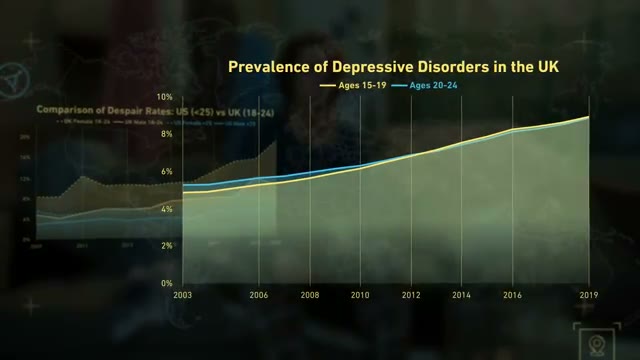
A line graph illustrating the doubling of depression among UK youth (15-24) from 2003 to 2019.
Even for those who successfully navigate these challenges and land a job, the conditions are hardly a relief. One job, it turns out, is increasingly not enough. A record 1.35 million adults in the UK now work at least two jobs, with Gen Z driving most of that growth. Yet, over two-thirds of them still rely on parents or family for essentials like rent, groceries, or bills. For those working a single job, the hours often extend beyond what was agreed; over a third of workers report employer expectations to work beyond contracted hours, and nearly a quarter of Gen Z answer work emails outside normal hours at least five days a week. The gig economy promised flexibility but largely shifted risk to the worker. Half of Gen Z workers report feeling burned out.
Compounding this, the social support networks—friendships, local communities, places to switch off—that previous generations relied upon have thinned out. When young people eventually decide the grind isn’t worth it and step back, there are fewer forces pulling them back in. Moving back home used to carry a tacit social pressure to “get on with it”; that pressure has largely dissipated, removing one of the informal mechanisms that kept people in the labor market, even when conditions were tough.
The Cost of Inaction: Japan’s Warning
Ignoring the NEET problem leads to severe consequences, exemplified by Japan’s 1.5 million “hikikomori” (social recluses) and the “80/50 problem,” where elderly parents support middle-aged, economically inactive children, costing economies billions annually.
All of this comes with a hefty price tag. Eurofound estimates the cost of NEETs to European economies at €142 billion annually, distributed across foregone taxes, lost productivity, and benefits paid out. But the true, long-term cost is far greater and more insidious.
To see what happens when a country ignores these issues for too long, one need only look at Japan. Following the burst of its asset price bubble in the early 1990s, stable jobs dried up almost overnight. Japanese employers, accustomed to hiring fresh graduates in annual cohorts for lifetime employment, suddenly left new graduates cycling through low-paying part-time work. The economy narrowed, entry points closed, and they never truly reopened.
Today, one in four Japanese people in their 20s will be NEET at least once over any four-year period, with more than half experiencing it multiple times. In a society with immense stigma around falling behind, some young people not only gave up on work but also on going outside. This gave rise to the term “hikikomori,” referring to individuals, mostly young men, who withdraw from work or school and barely leave their rooms, sometimes for years. This is the reality for 1.5 million people in Japan right now—2% of everyone aged 15 to 39—with an average duration of withdrawal around 10 years. This isn’t a “rough patch”; it’s a decade largely spent in isolation.
Japan didn’t deliberately create a society where millions disappeared into their bedrooms. It simply fostered an intensely competitive education system, an economy with narrowing entry points, and a welfare system that heavily relied on families to absorb the strain. Once families reached their limit, there was little left to catch those falling out of society. While “hikikomori” is a Japanese word, similar patterns have been documented across South Korea, the US, Singapore, and much of the developed world.
The long-term consequence of this unaddressed problem is known as the “80/50 problem”: parents in their 80s still financially supporting children in their 50s who never re-entered society. This effectively removes two people from the economy—one through spending, one through working. When these elderly parents eventually die, many of their children are left with no income, no work history, and nowhere to go. This grim scenario illustrates the devastating human and economic cost of allowing the NEET problem to fester for an entire generation.

A visual representation of the ‘80/50 problem,’ showing elderly parents supporting adult children.
Pathways to Re-Engagement: Lessons from Europe
Despite the bleak outlook, countries like the Netherlands (5% NEET rate) and Denmark (6.2% NEET rate) demonstrate that effective policies can significantly reduce NEET figures.
While the picture painted thus far is bleak, it’s not without hope. Some countries have found parts of the solution. Across Europe, NEET rates vary enormously, from above 22% in Italy and 19% in Greece to remarkably low figures like 5% in the Netherlands, 6.2% in Denmark, and 6.7% in Sweden. This isn’t a matter of culture or attitude; it’s a matter of policy.
The “low countries” and Nordic nations offer clear examples of effective strategies:
Valuing Vocational Training
Countries with low NEET rates, like the Netherlands, treat vocational training as a primary path, with dual education systems ensuring 90% of graduates find employment, providing clear career entry points.
These countries treat non-university routes as a genuine first choice, not a fallback. They run “dual education systems” where vocational students split their time between classrooms and real workplaces. Graduates emerge with work experience, employer relationships, and a foot already in the door. In the Netherlands, 90% of recent vocational graduates were employed in 2024, well above the EU average. This creates clear pathways for more young people, reducing NEET rates and significantly lessening the drain on public finances.
Early Intervention & Affordability
Sweden’s low NEET rate is partly due to affordable childcare and housing policies, which enable young people to work and live near job centers, preventing early disengagement.
Catching young people before they fully disengage is critical, as pulling someone back after years out is dramatically harder and more expensive. These countries prioritize policies that make work economically viable and life manageable for young adults. Sweden, for instance, makes childcare affordable, resulting in nearly 80% of women being in the workforce and a low NEET rate. Sweden also implements housing policies that enable young people to actually live near where the jobs are, addressing a major barrier to opportunity.
Flexicurity (Denmark)
Denmark’s “flexicurity” model combines flexible hiring with strong safety nets and retraining programs, ensuring job loss doesn’t lead to long-term disengagement, contributing to its low 6.2% NEET rate.
Denmark’s approach, known as “flexicurity,” combines flexible hiring practices for employers with strong safety nets and active retraining programs for workers. This means that losing a job doesn’t become a life sentence; the system actively helps individuals transition into their next role rather than simply paying them to stay home. Denmark’s NEET rate of 6.2% is well below the EU’s strategic target to keep the rate at 9% or below by 2030, a testament to the effectiveness of this integrated approach.
Building the Political Will
Fixing the NEET problem, which could add £26 billion annually to the UK economy, requires acknowledging it as a structural issue rather than blaming a “lazy generation,” demanding political will to implement proven solutions.
None of these solutions are theoretically complicated, and the economic case for implementing them is compelling. In the UK alone, reducing every region’s NEET rate to match the best-performing one would add £26 billion to the economy every year. This figure doesn’t even include the savings from reduced welfare payments, health costs, and decades of foregone tax revenue from people who remained disengaged. That total bill is considerably larger and harder to calculate.
So, why hasn’t this problem been fixed more broadly? Partly because the “lazy generation” story is far easier to tell and significantly more politically convenient than the structural one. If one accepts the “lazy” framing, the policy response is simple: motivational lectures, benefit sanctions, and exhortations to “lower expectations.” But if one accepts what the data truly shows—that these are structural problems—the required response looks entirely different.
Structural problems, unlike perceived generational laziness, can actually be fixed. The evidence is there, and the successful examples are there. The hard part, as with most things, is building the political will to do it.
Fixing this problem matters far beyond the young people directly caught up in it. None of us can look forward to a stable future when millions of young people globally lack decent work, cannot build a life, and are checking out of the economy entirely. These are the individuals who are supposed to be driving future growth, paying taxes, and supporting the rest of us as we age. For the first time since the Industrial Revolution, younger generations in wealthy countries are struggling to exceed their parents’ wealth despite overall economic growth. This is fundamentally reshaping our economies and societies. The time to act is now.
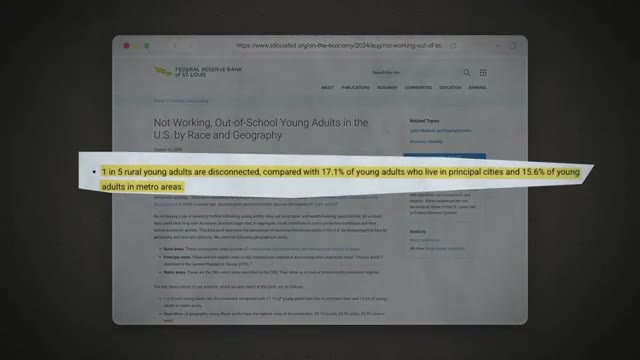
A graphic showing NEETs are concentrated in areas where jobs are hardest to find.
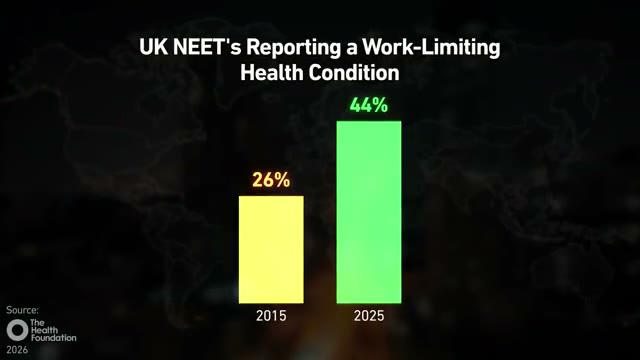
A line graph showing the rising percentage of UK NEETs with work-limiting health conditions.

A map of US cities highlighting the high percentage of Gen Z renters who are rent-burdened.
한국어
“The Economy Gave Up On Young People … It’s Starting To Show” — Economics Explained 기반 기사 원본 영상 보기
경제는 왜 청년을 외면하는가? ‘니트족’ 현상에 드리운 어두운 그림자
에피소드 요약
전 세계적으로 2억 6,200만 명의 젊은이들, 즉 4명 중 1명꼴로 일, 학업, 훈련(NEET)을 하지 않는 상태에 놓여 있으며, 이는 흔히 지적되는 ‘게으른 세대’라는 인식과는 달리 구조적인 경제 문제에서 비롯된 현상이다. 공식 실업률은 구직 활동을 하는 사람만을 집계하기 때문에 이들을 놓치지만, NEET 지표는 구직 여부와 상관없이 비경제활동인구를 포괄하여 실제 문제를 드러낸다. 특히 부유한 국가들에서 NEET 인구의 증가는 자동화와 AI로 인한 진입 장벽 일자리 감소, 학자금 대출 부담 증가와 학위의 가치 하락, 그리고 높은 주거 비용으로 인한 기회 도시로의 이동 제약 등 복합적인 요인에 기인한다. 영국에서는 2015년 26%였던 건강 문제로 인한 NEET 비율이 2025년 44%로 거의 두 배 증가했으며, 미국에서는 18세 이상 자녀에게 재정 지원을 하는 부모가 절반 이상으로 늘어 월평균 1,500달러를 지출하고 있다. 이러한 상황은 젊은 세대의 정신 건강 악화로 이어져 악순환을 형성하고 있다.
이러한 문제를 해결하기 위해서는 네덜란드, 스웨덴, 덴마크와 같이 직업 교육을 대학 진학의 대안이 아닌 동등한 첫 번째 선택지로 인정하고, 현장 경험을 제공하는 이원화 교육 시스템을 도입해야 한다. 또한, 보육 비용을 낮춰 여성의 경제 활동 참여를 독려하고(스웨덴은 여성의 80%가 경제활동에 참여하며 NEET 비율이 EU 평균보다 낮다), 주거 정책을 통해 젊은이들이 일자리 근처에 거주할 수 있도록 지원해야 한다. 덴마크의 ‘유연 안정성(Flexicurity)’ 모델처럼 유연한 고용과 강력한 사회 안전망, 적극적인 재교육 프로그램을 결합하여 실업이 장기적인 사회 이탈로 이어지지 않도록 하는 노력도 중요하다. 일본의 ‘히키코모리’ 현상과 같이 문제가 장기화될 경우 80대 부모가 50대 자녀를 부양하는 ‘8050 문제’로 이어질 수 있음을 경고하며, 구조적 문제 해결을 위한 정치적 의지 확보가 시급하다.
오늘날, 전 세계적으로 4명 중 1명에 해당하는 2억 6천 2백만 명의 청년들이 일자리도, 학교도, 그 어떤 계획도 없이 하루를 보내고 있습니다. 이들은 ‘니트족(NEET: Not in Employment, Education, or Training)‘이라 불리며, 단순한 개인의 나태함으로 치부되기에는 너무나 복잡하고 광범위한 사회경제적 문제를 드러내고 있습니다. 공식 실업률 통계가 보여주지 못하는 경제의 어두운 이면, 그리고 청년들이 겪는 구조적 어려움에 대해 심층적으로 파헤쳐 봅니다.
‘보이지 않는’ 청년들: 공식 통계가 놓치는 것들
공식 실업률은 구직 활동을 하는 청년만을 집계하여 실제 경제활동 비참여자 3명 중 1명을 놓치며, ‘니트족’ 개념은 구직 여부와 무관하게 15-24세의 일, 학업, 훈련을 하지 않는 모든 청년을 포함해 실제 문제를 드러낸다.
많은 이들은 일자리나 학업을 찾지 않는 청년들을 ‘게으르다’거나 ‘나약하다’고 비난하곤 합니다. 55세 이상 어른들과의 가족 식사 자리에서 이런 이야기를 듣는 것은 흔한 일입니다. 하지만 데이터는 훨씬 더 복잡한 이야기를 들려줍니다. 대부분의 부유한 국가에서 공식 청년 실업률은 실제로 감소하는 추세입니다. 이는 표면적으로 청년들이 ‘잘 지내고 있다’는 인상을 줄 수 있습니다.
그러나 공식 청년 실업률은 ‘적극적으로 구직 활동을 하는 사람’만을 집계한다는 치명적인 한계를 가지고 있습니다. 즉, 구직 활동을 포기했거나, 건강상의 이유 등으로 일할 수 없는 청년들은 이 통계에서 완전히 누락됩니다. 공식 실업 통계에 잡히는 청년 1명당, 실제로는 3명에 가까운 청년들이 ‘경제활동 비참여자(economically inactive)‘로 분류되어 통계에서 사라지는 것입니다.
경제학자들이 ‘경제활동 비참여자’라고 부르는 이들은, 공식적으로는 ‘시스템이 더 이상 걱정하지 않는 사람들’이라는 차갑고 임상적인 표현으로 정의됩니다. 대부분의 국가에서 실업 수당은 ‘적극적인 구직 활동’과 연계되어 있기 때문에, 구직 활동을 멈추는 순간 이들은 지원 대상에서 제외됩니다. 실업률은 현재 당장 일할 수 있고 준비된 사람들을 세는 데는 유용하지만, ‘얼마나 많은 청년들이 생산적인 삶을 꾸려나가는 데 진정으로 어려움을 겪고 있는가’라는 더 큰 질문에는 답하지 못합니다.
이러한 ‘보이지 않는’ 청년들을 포착하기 위해 고안된 것이 바로 ‘니트족(NEET)’ 개념입니다. 15세에서 24세 사이의 청년 중 일하거나, 공부하거나, 공식적인 훈련을 받고 있지 않은 모든 사람을 포함합니다. 구직 활동 여부와 관계없이 이들을 모두 포함함으로써, 우리는 실제 상황에 대한 훨씬 더 완전한 그림을 얻을 수 있습니다. 2023년 전 세계 청년 중 공식 실업률은 6%에 불과했지만, 니트족 비율은 20.4%에 달했습니다.
‘니트족’ 현상, 게으름의 문제가 아니다: 부유한 국가의 현실
전 세계 니트족 대다수는 개발도상국에 거주하지만, 선진국에서도 자동화, 학자금 대출, 주거비 등 구조적 문제로 인해 니트족 현상이 심화되고 있다.
니트족이라는 범주 안에는 다양한 배경을 가진 사람들이 존재하며, 이들을 모두 동일하게 취급한다면 정책 대응은 엉뚱한 방향으로 흘러갈 수 있습니다. 우선, 전 세계 2억 6천 2백만 명의 니트족 중 대다수는 개발도상국에 거주하며, 그들의 이야기는 선진국과는 사뭇 다릅니다. 이들 지역은 정규 고용을 위한 인프라가 부족하고, 분쟁으로 인해 교육과 일자리가 불가능한 경우가 많습니다. 또한, 이른 출산이나 문화적 관습으로 인해 젊은 여성들이 노동 시장에서 배제되기도 합니다. 이러한 문제들은 심각하지만, 이 기사에서는 선진국의 니트족 현상에 초점을 맞춥니다. 선진국들은 기능하는 경제, 우수한 교육 시스템, 그리고 사회 안전망을 갖추고 있음에도 불구하고 이 문제가 존재하기 때문입니다.
선진국 내 니트족은 크게 두 가지 매우 다른 그룹으로 나눌 수 있습니다.
자발적 이탈 vs. 불가피한 현실
선진국 니트족의 5분의 1은 자발적 이탈자이지만, 나머지 5분의 4는 질병, 돌봄 책임, 구직 단념 등 환경적 요인으로 인해 단절된 경우로, 특히 건강 문제로 인한 니트족 비율이 급증하고 있다.
첫 번째 그룹은 ‘자발적으로 이탈한’ 청년들입니다. 이들은 당분간 전통적인 경로에서 벗어나기로 의도적인 선택을 했거나, 잠시 쉬는 기간을 가지며 다음 단계를 준비하는 사람들입니다. 어떤 이들은 첫 번째 기회를 잡기보다는 ‘적합한’ 기회를 기다리고 있으며, 다른 이들은 스스로 무언가를 만들려고 노력하고 있습니다. 솔직히 말해, 일부는 부모님 집에서 ‘버티면서’ 상황이 바뀌기를 기다리는 경우도 있습니다. 특히 젊은 남성들 사이에서는 처음부터 ‘꿈의 직함’과 ‘완벽한 연봉’을 고집하는 경향이 있는데, 그 이하의 조건으로는 일할 가치가 없다고 생각하기 때문입니다. 그러나 이들은 소수이며, 언론에서 흔히 묘사하는 것보다 훨씬 적은 비중을 차지합니다. 가장 상세한 데이터를 보유한 유럽에서는 이들이 전체 니트족의 5분의 1에 불과합니다.
나머지 5분의 4는 ‘선택보다는 환경에 의해’ 일이나 교육에서 단절된 사람들입니다. 이들 중 일부는 적극적으로 구직 활동을 하지만 일자리를 찾지 못하고 있으며, 다른 이들은 수많은 거절 끝에 낙담하여 아예 구직을 포기했습니다. 또 다른 이들은 질병이나 장애로 어려움을 겪고 있는데, 이 그룹은 니트족 인구 중 가장 빠르게 증가하는 부분 중 하나입니다. 영국에서만 해도, ‘노동에 지장을 주는 건강 문제’를 보고한 니트족의 비율은 2015년 26%에서 2025년 44%로, 단 10년 만에 거의 두 배 가까이 증가했습니다.
또한, 돌봄 책임을 지고 있는 청년들도 있습니다. 이 경우는 여성에게 훨씬 더 치우쳐져 있습니다. 니트족 여성 5명 중 1명은 자녀를 돌보고 있는 반면, 니트족 남성의 경우 30명 중 1명에 불과합니다. 보육 비용이 일해서 버는 돈보다 많거나, 단순히 도와줄 사람이 없는 경우, 일할 선택권 자체가 사라지는 것입니다.
구조적 불평등의 증거
취약한 니트족은 저소득층, 농촌 지역 출신이며 교육 수준이 낮을수록 위험이 커지는 등 구조적 불이익을 겪으며, 미국 부모의 절반 이상이 18세 이상 자녀에게 월평균 1,500달러를 지원한다.
이처럼 취약한 니트족들의 상황은 제각각이지만, 데이터는 매번 동일한 공통 프로필을 가리킵니다. 이들은 저소득층 가정 출신일 가능성이 높고, 도시보다 농촌 지역에 거주할 가능성이 더 높으며, 교육 수준이 낮을수록 위험이 더 커집니다. 미국에서는 니트족의 4분의 1이 연 소득 2만 5천 달러 미만의 가정 출신입니다. 또한 흑인 청년의 니트족 비율은 백인 청년보다 50% 이상 높습니다.
이러한 패턴은 개인의 선택보다는 구조적 불이익을 훨씬 더 강력하게 시사합니다. 만약 이것이 단순히 ‘게으름’의 문제였다면, 지난 10년 넘게 이 문제 해결에 진전을 보였던 영국에서 현재 거의 100만 명에 달하는 청년들이 이 범주에 속해 있을 리 없습니다. 대부분의 부유한 국가에서 니트족 비율은 수년간 개선되어 왔지만, 현재는 그 진전이 정체된 상태입니다.
그렇다면 이 청년들의 생활비는 누가 부담할까요? 대부분은 부모님입니다. 사상 처음으로 미국 부모의 절반 이상이 18세 이상 자녀에게 재정적 지원을 제공하고 있으며, 월 평균 1,500달러에 육박합니다. 나머지는 주로 건강 관련 복지 혜택을 통해 국가가 일부를 부담합니다.
왜 이런 현상이 발생하는가? 복합적인 구조적 요인들
청년들은 자동화와 AI로 인한 초급 일자리 감소, 학위의 가치 하락, 그리고 높은 주거 비용으로 인한 기회 도시로의 이동 제약 등 복합적인 구조적 문제에 직면해 있다.
솔직히 말해, 이 문제는 단 하나의 원인 때문에 발생한 것이 아닙니다. 여러 가지 문제가 동시에 발생했고, 청년들은 성인 생활의 시작점에서 이 모든 문제에 부딪혔습니다. 이들에게는 추락을 완화해 줄 어떤 완충 장치도 없었습니다.
사라지는 ‘첫 번째 사다리’
과거 초급 일자리였던 공장, 사무 보조, 고객 서비스 등이 자동화와 AI로 사라지고, 남은 일자리는 긱 경제로 흡수되어 안정적인 경력 발전 기회를 제공하지 못한다.
20세기 대부분 동안, 경제는 비교적 안정적인 ‘첫 번째 사다리’를 제공했습니다. 공장 일, 사무 보조, 데이터 입력, 소매점 관리, 고객 서비스와 같은 직업은 많은 경험을 요구하지 않았습니다. 이러한 초급 일자리는 생활 임금을 지급했고, 직장에 나가는 법, 지시를 따르는 법, 그리고 경력을 쌓는 법을 가르쳐주어 다음 일자리를 얻는 것을 더 쉽게 만들었습니다. 화려하지는 않았지만, 자격증이나 인맥이 없는 18세 청년들에게는 사회로 진입하는 중요한 통로였습니다.
그러나 이러한 일자리들이 사라지고 있습니다. 자동화는 데이터 입력, 기본 처리, 반복적인 고객 서비스 상호작용과 같은 가장 일상적인 업무를 가장 먼저 대체했습니다. 이제 AI는 초급 화이트칼라 업무에도 같은 영향을 미치고 있습니다. 2022년 말부터 2025년 중반까지, AI 노출도가 높은 직업군의 신규 근로자 고용은 6% 감소한 반면, 같은 분야의 고령 근로자 고용은 오히려 증가했습니다. 남은 일자리의 상당수는 긱 경제(Gig Economy)로 흡수되었는데, 이는 안정적인 초급 일자리를 유연한 업무로 대체했습니다. 겉으로는 매력적으로 들리지만, 실상 진전이나 훈련, 상향 이동의 기회를 거의 제공하지 않습니다.
비싸지고 가치 떨어지는 학위
학위 취득 비용은 증가하고 있지만, 학위를 요구하는 직무 취업률은 최저 수준으로 떨어져 학위가 약속했던 가치를 제공하지 못하며, 신규 졸업생의 실업률이 전체 실업률을 초과하기 시작했다.
이 모든 문제에 대한 명백한 해답은 ‘대학에 가서 학위를 취득하면 더 좋은 직업을 얻을 수 있다’는 것이었습니다. 그리고 모든 것에도 불구하고, 대부분의 좋은 일자리에는 여전히 학위가 사실상 필수적이라는 것은 사실입니다. 기업들은 지난 몇 년간 학위 요구 사항을 공개적으로 철회했지만, 실제로 이러한 변화의 혜택을 받은 신규 채용은 700명 중 1명 미만이었습니다. 따라서 학위는 여전히 ‘입장권’인 셈입니다.
문제는 이제 학위를 취득하는 데 드는 비용과 학위가 실제로 제공하는 가치입니다. 영국에서는 2012년에 등록금이 3배로 뛰었습니다. 미국에서는 평균적인 학자금 대출자가 연방 학자금 대출만으로 거의 4만 달러에 달하는 빚을 지고 있습니다. 청년들은 학위가 졸업 수준의 직업으로 이어질 것이라는 합리적인 가정 하에 이러한 빚을 졌지만, 노동 시장은 그 기대를 따라가지 못하고 있습니다. 2024년 영국 대학에서만 100만 명 이상의 학생들이 졸업했지만, 이들이 실제로 학위를 요구하는 직무에 취업하는 비율은 2014년 이후 최저 수준으로 떨어졌습니다. 또한 사상 처음으로 미국 신규 졸업생의 실업률이 전체 실업률을 초과하기 시작했습니다.
결론적으로, 학위는 과거보다 더 많은 비용이 들고 약속했던 것보다 더 적은 것을 제공하고 있습니다. 그리고 학위가 필요 없었던 일자리들은 대부분 사라져 버렸습니다. 게다가 팬데믹 이후의 고용 호황이 식으면서, 가장 먼저 타격을 받은 것은 젊은 근로자들이었습니다. 영국에서는 2025년에도 청년 고용률이 2019년 수준을 회복하지 못하고 있는데, 성인 고용률은 꾸준히 증가하고 있는 것과 대조적입니다.
감당할 수 없는 주거비와 이동의 제약
주거비가 급증하여 청년들은 기회 도시로의 이동이 어려워지고, 부모님과 함께 사는 젊은 성인이 50년 전 9명 중 1명에서 현재 4명 중 1명으로 증가했다.
이러한 문제들만으로도 심각하지만, 존재하는 일자리에 접근하는 것 자체가 또 다른 도전이 되고 있습니다. 특정 분야의 좋은 일자리는 특정 도시에 집중되는 경향이 있습니다. 런던과 뉴욕의 금융, 샌프란시스코의 기술 산업처럼 말입니다. 이전 세대에게는 기회가 있는 곳으로 이사하는 것이 합리적인 임대료로 적당한 수입을 유지하는 것을 의미했습니다. 1960년에는 일반적인 임차인이 수입의 5분의 1 미만을 주거비로 지출했지만, 오늘날에는 3분의 1에 가깝습니다. 그리고 일자리가 실제로 있는 도시에서는 상황이 훨씬 더 심각합니다. 시드니에서는 재정적 어려움 없이 일반적인 아파트를 임대하기 위해 필요한 소득이 2019년 8만 8천 호주 달러에서 2025년 13만 호주 달러로 급증했습니다. 뉴사우스웨일스주의 평균 젊은 근로자는 약 5만 4천 호주 달러를 법니다. 미국에서는 Z세대 임차인 5명 중 3명이 현재 ‘임대료 부담(rent burdened)‘으로 분류되어, 다른 어떤 비용도 고려하기 전에 소득의 30% 이상을 주거비로 지출하고 있습니다. 로스앤젤레스나 샌디에이고 같은 도시에서는 4명 중 3명에 가깝습니다.
결과적으로 청년들은 이사를 가는 것이 단순히 가치가 없다고 판단합니다. 그래서 그들은 기회가 더 적고 니트족이 될 위험이 더 높은 고향에 머무르거나, 부모님 집으로 다시 돌아갑니다. 현재 미국 젊은 성인 4명 중 1명이 부모님과 함께 살고 있으며, 이는 50년 전 9명 중 1명이었던 것에 비해 크게 증가한 수치입니다. 이러한 생활 방식이 재정적으로 합리적일 수 있지만, 종종 성인 생활이 무기한 연기되는 듯한 느낌을 동반합니다.
신체적, 정신적 건강 악화와 사회적 단절
불안정한 일자리, 부채, 주거 문제 등 구조적 압력은 청년들의 정신 건강을 악화시켜 우울증 유병률이 급증하고 있으며, 이는 학업 및 노동 시장 진입을 더욱 어렵게 하는 악순환을 형성한다.
이 모든 상황은 정신 건강에 결코 좋지 않습니다. 영국에서 흔한 정신 건강 문제를 보고하는 청년의 비율은 2014년 19%에서 오늘날 거의 26%로 증가했습니다. 호주에서는 젊은 성인의 우울증 유병률이 2007년에서 2021년 사이에 두 배 이상 증가했습니다. 그리고 미국에서는 사상 처음으로 18세에서 24세 청년들이 자신보다 두 배 나이 많은 사람들보다 정신 건강이 좋지 않다고 보고할 가능성이 더 높아졌습니다.
만성 스트레스와 정신 건강 위기
만성 스트레스는 정신 건강에 해롭고, 팬데믹 이전부터 청년들의 정신 건강은 악화되고 있었으며, 이는 학업 및 노동 시장 진입을 더욱 어렵게 하는 악순환을 형성한다.
여기서 당연히 생기는 질문은 ‘무엇이 먼저인가?‘입니다. 구조적 압력이 정신 건강 위기를 초래했는가, 아니면 정신 건강 위기가 이미 자체적으로 진행되고 있었고 단순히 그러한 압력을 헤쳐나가는 것을 더 어렵게 만들었는가? 사실 둘 다입니다. 그리고 이것이 문제를 해결하기 어렵게 만듭니다.
구조적 압력 주장은 직관적입니다. 불안정한 일자리 시장, 심각한 부채, 감당할 수 없는 주거 문제에 시달리는 세대는 만성적인 스트레스에 시달립니다. 그리고 만성 스트레스는 정신 건강에 해롭습니다. 팬데믹이 상황을 훨씬 더 악화시켰지만, 청년들은 그 이전부터 이미 어려움을 겪고 있었습니다. 2011년부터 이미 숫자들이 잘못된 방향으로 움직이기 시작했으며, 이는 팬데믹 이후의 일자리 위기나 현재의 생활비 위기보다 몇 년 전의 일입니다. 영국에서는 15세에서 24세 청년의 우울증이 2003년에서 2019년 사이에 이미 거의 두 배로 증가했습니다. 15세에 정신 건강 문제로 어려움을 겪으면 학교생활이 더 어려워지고, 이는 학업 성적에 악영향을 미칩니다. 학업 성적이 나쁘면 노동 시장에서 선택지가 줄어들고, 이는 다시 정신 건강을 악화시킵니다. 각 단계가 다음 단계를 더 어렵게 만들고, 그 사슬을 따라 더 멀리 갈수록 다시 끌어올리기가 더 힘들어집니다.
‘일하는 빈곤층’과 사회적 유대의 약화
영국 성인 135만 명이 최소 두 가지 일을 하지만 3분의 2 이상이 부모님께 의존하고, Z세대 절반이 번아웃을 느끼는 등 일의 강도는 높아지고 사회적 유대는 약화되어 일부 청년들은 노동 시장에서 이탈한다.
어렵사리 취업에 성공한 청년들에게도 상황은 그리 나아지지 않습니다. 하나의 일자리로는 더 이상 충분하지 않은 경우가 많습니다. 현재 영국에는 최소 두 가지 일을 하는 성인이 사상 최고치인 135만 명에 달하며, Z세대가 이러한 증가의 대부분을 주도하고 있습니다. 그럼에도 불구하고 이들 중 3분의 2 이상은 여전히 임대료, 식료품, 공과금과 같은 필수적인 지출을 위해 부모님이나 가족에게 의존합니다.
하나의 일자리를 가진 사람들도 합의된 근무 시간으로 일이 끝나지 않습니다. 근로자의 3분의 1 이상이 고용주가 계약 시간을 넘어 일하기를 기대한다고 말하며, Z세대 근로자의 거의 4분의 1은 일주일에 최소 5일 이상 정상 근무 시간 외에 업무 이메일에 답합니다. 긱 경제는 유연성을 약속했지만, 그 유연성은 대부분 위험이 고용주가 아닌 근로자에게 전가된다는 것을 의미합니다. 회사가 필요할 때만 당신은 이용 가능하며, 나머지는 당신의 문제입니다. Z세대 근로자의 절반이 번아웃을 느끼고 있다고 보고합니다. 이전 세대가 기댈 수 있었던 우정, 지역 공동체, 그리고 스트레스를 해소할 공간들은 수년 동안 점점 줄어들고 있습니다.
그래서 일부 청년들은 결국 ‘일하는 것이 가치가 없다’고 판단하고 노동 시장에서 벗어납니다. 그리고 일단 벗어나면, 과거처럼 이들을 다시 끌어들이는 힘도 약해졌습니다. 과거에는 부모님 집으로 돌아가는 것이 일종의 ‘말없는 사회적 압력’을 동반했습니다. 빨리 독립하고 경제적으로 자립해야 한다는 기대가 있었습니다. 하지만 이제 그 압력은 대부분 사라졌습니다. 솔직히 말해, 우리가 방금 설명한 모든 상황을 고려하면, 이는 아마도 괜찮은 일일 것입니다. 그러나 이는 상황이 어려울 때에도 사람들을 노동 시장에 머물게 했던 비공식적인 메커니즘 중 하나가 사라졌다는 것을 의미합니다.
‘니트족’ 현상의 사회경제적 비용: 일본의 ‘히키코모리’와 ‘8050 문제’
니트족 현상은 유럽 경제에 연간 1,420억 유로의 손실을 입히며, 일본의 ‘히키코모리’와 ‘8050 문제’는 이 문제가 장기화될 경우 사회적 단절과 경제적 부담이 심화됨을 보여주는 경고다.
이 모든 현상에는 적지 않은 비용이 따릅니다. 유럽연합 산하 유러파운드(Eurofound)는 니트족으로 인해 유럽 경제가 연간 1,420억 유로의 손실을 입는다고 추정합니다. 이는 세금 손실, 생산성 저하, 그리고 일하지 않는 사람들에게 지급되는 복지 혜택 등으로 분산됩니다.
한 국가가 이러한 문제들을 오랫동안 방치했을 때 어떤 일이 일어나는지 보고 싶다면, 일본이 가장 명확한 사례일 것입니다. 일본 경제는 지난 수십 년간 어려움을 겪었습니다. 1990년대 초 자산 가격 거품이 터지면서 안정적인 일자리가 거의 하룻밤 사이에 사라졌습니다. 일본 기업들은 항상 신규 졸업생들을 연간 단일 코호트로 채용했지만, 이제 영구 고용을 기대했던 졸업생들은 저임금 시간제 일자리를 전전하게 되었습니다. 경제는 위축되었고, 진입 지점은 닫혔으며, 결코 다시 열리지 않았습니다. 20대 일본인 4명 중 1명은 4년 동안 적어도 한 번은 니트족이 되며, 절반 이상은 여러 번 니트족 상태를 경험했습니다. 그리고 사회적으로 뒤처지는 것에 대한 엄청난 낙인이 있는 사회에서도, 일부 청년들은 다시 일하는 것을 포기했습니다. 그리고 심지어 외출하는 것까지 포기했습니다.
상황이 너무 심각해져서 그들은 이를 설명하기 위한 단어인 **히키코모리(ひきこもり, Hikikomori)**를 만들어야 했습니다. 이는 일이나 학교에 가지 않고, 거의 방을 나가지 않으며, 때로는 몇 년 동안 그렇게 지내는 사람들, 주로 젊은 남성들을 지칭합니다. 놀랍게 들리겠지만, 현재 일본에서는 150만 명의 사람들이 이러한 현실을 살고 있습니다. 이는 15세에서 39세 사이의 전체 인구 중 2%에 해당합니다. 사람들이 이러한 상태로 보내는 평균 시간은 약 10년입니다. 10년! 이것은 잠시의 어려움이나 몇 달간의 힘든 시기가 아닙니다. 그것은 거의 홀로 지내는 10년이라는 긴 세월입니다.
일본은 150만 명의 사람들이 침실로 사라지는 사회를 만들려고 한 것이 아닙니다. 그저 극도로 경쟁적인 교육 시스템, 진입 지점이 좁아진 경제, 그리고 가족에게 부담을 크게 의존하는 복지 시스템을 구축했을 뿐입니다. 일단 가족이 한계에 도달하자, 사회에서 이탈하는 사람들을 붙잡을 수 있는 것은 거의 없었습니다. 히키코모리는 일본어 단어이지만, 한국, 미국, 싱가포르 및 대부분의 선진국에서도 유사한 패턴이 보고되고 있습니다. 그러나 일본은 이 문제가 가장 오랫동안 지속되고 가장 깊어진 곳입니다.
이 문제가 한 세대 동안 방치될 때 어떤 일이 일어나는지에 대한 이름조차 있습니다. 바로 **‘8050 문제’**입니다. 80대 부모가 사회로 다시 진입하지 못한 50대 자녀를 여전히 부양하는 문제입니다. 이는 경제에 기여해야 할 두 사람(한 명은 소비로, 한 명은 노동으로)이 모두 효과적으로 경제에서 제외된 상태를 의미합니다. 그리고 이 노부모들이 사망하면, 자녀 중 다수는 수입도, 경력도, 갈 곳도 없는 상황에 처하게 됩니다. 즉, 150만 명이 침실에 갇혀 있고, 80대 부모가 여전히 생활비를 내고 있는 것이 이 문제가 한 세대 동안 방치되었을 때의 모습입니다.
해결책은 없는가? 성공적인 국가들의 사례
네덜란드, 스웨덴, 덴마크와 같이 니트족 비율이 낮은 국가들은 직업 교육을 대학 진학의 동등한 선택지로 인정하는 이중 교육 시스템, 저렴한 보육, 유연 안정성 모델을 통해 청년들의 사회 진입을 지원한다.
미래에 대해 절망적인 기분을 느끼게 하는 것으로 여기서 멈추는 것은 쉽습니다. 하지만 이것이 전체 그림은 아닙니다. 일부 국가들은 이 문제의 일부를 실제로 해결해냈습니다. 유럽 전역에서 니트족 비율은 이탈리아의 22% 이상, 그리스의 19%에서 네덜란드의 5%대 초반에 이르기까지 엄청난 차이를 보입니다. ‘문화나 태도의 문제’라고 주장하는 사람들도 있겠지만, 그렇지 않습니다. 니트족 비율이 낮은 국가들이 실제로 무엇을 하고 있는지 살펴보면, 동일한 해답이 계속해서 나타납니다.
이 모든 것은 비대학 진로를 ‘대학에 가지 못한 사람들을 위한 대체 계획’이 아닌, **‘진정한 첫 번째 선택’**으로 대우하는 것에서 시작됩니다. 이는 대부분의 부유한 국가들이 현재 비대학 진로를 다루는 방식과는 다릅니다. 이 문제를 잘 해결하는 국가들은 **이중 교육 시스템(Dual Education System)**을 운영합니다. 직업 교육을 받는 학생들이 교실과 실제 직장을 오가며 시간을 보냅니다. 그래서 이들은 졸업할 때 직장 경험, 고용주와의 관계, 그리고 이미 한 발짝 앞서 나갈 수 있는 기회를 가지고 있습니다. 네덜란드에서는 2024년 직업 학교 졸업생의 90%가 취업했으며, 이는 EU 평균을 훨씬 웃도는 수치입니다. 이는 더 많은 청년들이 명확한 미래 경로를 가지고 있다는 것을 의미하며, 결과적으로 니트족 감소와 공공 재정에 대한 부담 감소로 이어집니다.
니트족 비율이 낮은 국가들이 잘하는 또 다른 점은 청년들이 완전히 단절되기 전에 이들을 붙잡는 것입니다. 몇 년 동안 사회에서 벗어난 사람을 다시 끌어들이는 것은 처음부터 그들을 잃지 않는 것보다 훨씬 더 어렵고 비용이 많이 듭니다. 이를 위해 이들 국가는 보육을 저렴하게 만들어 일하는 것이 실제로 경제적 이득이 되도록 합니다. 스