English
Based on “Insult Dogs and Emotional Support Alligators” from NPR Podcasts Watch the original video
The Week in Quirks: From Donut-Detecting Dogs to Sourdough from the Ice Age
Episode summary
NPR’s “Wait, Wait, Don’t Tell Me” features comedy writer Robert Smigel, known for Triumph the Insult Comic Dog, discussing his career and new podcast, “Humor Me,” where he helps non-funny people craft jokes for real-life situations like eulogies or breaking up with a mom group. The show also explores quirky news, including a study linking smartphone adoption in 2007 to a significant drop in birth rates, evidenced by comparing birth rates in areas with and without early AT&T iPhone coverage.
The segment highlights how humor can be a tool for navigating awkward social situations, exemplified by Smigel’s podcast. Additionally, it reveals the surprising impact of technology on societal trends, suggesting that our digital distractions might be inadvertently altering fundamental human behaviors like reproduction.
In a world constantly bombarded by breaking headlines, it’s easy to miss the delightfully bizarre and surprisingly insightful stories bubbling just beneath the surface. This past week offered a treasure trove of such tales, revealing everything from the unexpected impact of smartphones on human reproduction to the culinary habits of ancient squirrels. It’s a reminder that humor, wisdom, and sheer absurdity often reside in the most unconventional corners of our daily lives.
The Modern Predicament: From Screen Time to Snack Time
Our lives are increasingly shaped by technology and consumption, impacting everything from population growth to our palates.
Our lives are increasingly shaped by technology and consumption, often in ways we don’t fully realize. Recent revelations shed light on how these forces are impacting everything from our population growth to our palates.
The Smartphone Effect on Birth Rates
New research provides compelling proof that the arrival of smartphones in 2007 directly correlates with a significant drop in the global birth rate, as people choose screen time over other activities.
For years, many have suspected a link between the rise of smartphones and a decline in birth rates, but concrete evidence remained elusive. Not anymore. New research has finally provided compelling proof: the arrival of smartphones in 2007 directly correlates with a significant drop in the global birth rate.
This isn’t a physiological effect, as one panelist quipped, “No, no, no. We don’t need to use protection. I have an Android.” Instead, the studies suggest a behavioral shift. People are simply choosing screen time over… other activities. The research cleverly demonstrated this by looking at areas that first received AT&T iPhone coverage in 2007 and comparing their birth rates to those without. The conclusion? Where the iPhones went, birth rates dropped. Perhaps AT&T should have offered a “you’ll never have a family plan” instead of a “family plan.” The implication is clear: whether it’s watching “a miniature pony play the piano” or endlessly scrolling, our devices are captivating us in ways that might be altering fundamental human behaviors.
America’s Snack Innovation Crisis
America, once the snack capital, has lost its innovative edge, with this year’s “powerhouse snack award” going to a basic snack mix, indicating a creative drought in the snack aisle.
While smartphones capture our attention, our taste buds, it seems, are suffering from a different kind of stagnation. America, once the undisputed snack capital of the world, appears to have lost its innovative edge. This year’s “powerhouse snack award” went to Hershey’s Dot Snack Mix – a blend of pretzels, corn cereal, pita chips, and garlic rye chips. In essence, as one observer noted, it’s “just Chex Mix.”
The lament is palpable: where are the groundbreaking flavors of yesteryear, like the revolutionary “sour cream and onion”? The panel poked fun at the current state, questioning how “flamin’ hot” ever became a universally accepted flavor, given that neither word is inherently appetizing. The consensus? We need a “Manhattan Project but for Fritos,” a concerted effort to rekindle our snack-making genius. The absence of true novelty, despite 85 different Oreo variations, suggests a deeper creative drought in the snack aisle.
Unconventional Wisdom and Unexpected Heroes
The best advice or most surprising stories often come from unlikely sources, such as a foreign healthcare system or an accidental text message.
Sometimes, the best advice or most surprising stories come from the most unlikely sources, be they a foreign healthcare system or an accidental text message.
Medical Checkups at the Bar: China’s Health Trend
In China, a new healthcare trend sees medical exams and treatments offered in bars, providing undeniable convenience, though raising humorous questions about patient claims.
Imagine heading to your local pub for a pint and a prostate exam. In China, this is becoming a reality. A new healthcare trend sees medical exams and various treatments offered in bars. The convenience is undeniable: you can enjoy a cold beer on tap, maybe a dartboard, and then get an MRI. While it might not be the pinnacle of medical care, it certainly ensures you’re “absolutely ready to go when it’s time for the urine sample.” The humor wasn’t lost on the panel, who mused about the difficulty doctors would face in believing patients’ claims of “just one or two drinks a week” when they’re literally taking their blood pressure mid-pint.
The Serendipity of Accidental Advice
Life-changing advice can arrive unexpectedly, as actor Josh O’Connor found when Steven Spielberg’s accidental text, meant for his wife, unlocked a difficult scene for him.
Life-changing advice often arrives when least expected, sometimes even when it’s not meant for you at all. Actor Josh O’Connor, while filming a Steven Spielberg movie, found himself struggling with a particular scene. Then, a text message from Spielberg popped up: “The door’s on the latch, just push.” O’Connor described it as unlocking the entire scene for him, a moment of pure genius.
The twist? It wasn’t genius; it was an accident. Spielberg had meant the text for his wife, who apparently needed guidance on how to open a door. Despite its mundane origin, the advice resonated with O’Connor, proving that sometimes, the universe delivers exactly what you need, even if the messenger’s intentions were entirely different. This anecdote humorously overshadowed other fictional tales, such as Andrew Lloyd Weber getting the idea for “Cats” from a “cat scan” or Michael B. Jordan gleaning life lessons from Samuel L. Jackson’s expletive-laden golf commentary.
A Deep Dive into the Animal Kingdom’s Quirks
Animals, both wild and domesticated, continue to surprise and entertain us with their unique behaviors and roles in human lives.
Animals, both wild and domesticated, continue to surprise and entertain us with their unique behaviors and roles in human lives.
The Saga of Wall-E, the Emotional Support Alligator
Wall-E, an emotional support alligator, was denied entry to a park, then kidnapped and released into a Georgia swamp, now living a wild life.
Emotional support animals come in all shapes and sizes, but few capture the imagination quite like Wall-E, the emotional support alligator. Wall-E made headlines when he was denied entry to Citizens Bank Park in Philadelphia with his owner. His story took a dramatic turn when he was kidnapped from his enclosure. Authorities, responding to a report of a loose alligator, picked him up and released him into a swamp in Georgia. As far as we know, Wall-E is now living his best, wild life, a testament to the unpredictable journey of an emotional support reptile.
Service Animals with a Twist
Even well-trained service animals have their moments, like a service dog causing an emergency landing or another detecting its vet’s secret donut stash.
While most service animals are paragons of helpfulness, sometimes even they have their moments. A service dog on an American Airlines flight caused an emergency landing after having “an accident” on the plane, leading to human passengers becoming ill. It’s a reminder that even the most well-trained companions are still, at heart, animals.
This segment also introduced comedy writer Robert Smigel, creator of Triumph the Insult Comic Dog, who played a game about service animals. One particularly delightful question involved a service dog being trained to detect blood sugar changes. During a vet checkup, the dog alerted to the veterinarian herself. The surprising truth? The dog wasn’t sensing a medical condition; it was detecting the vet’s secret stash of donuts she hadn’t shared with her co-workers. A true hero for justice in the workplace.
Ancient Diets and Modern Bread: The Squirrel and Ötzi Tales
Scientists discovered Ice Age squirrels ate mammoth and saber-tooth tiger meat, while microbes from 5,000-year-old Ötzi the Iceman’s stomach were used to make “very, very good” sourdough bread.
The animal kingdom’s influence extends far into the past, with recent scientific discoveries revealing astonishing facts about ancient creatures. Scientists, by extracting DNA from ancient squirrel feces (a voluntary and intensely smelly endeavor, apparently), discovered that Ice Age squirrels had a rather formidable diet: mammoth meat and saber-tooth tiger meat. From eating giants to foraging in dumpsters, as one panelist noted, “How the mighty have fallen!”
Meanwhile, a 5,000-year-old caveman known as Ötzi the Iceman continues to yield scientific marvels. So well-preserved was Ötzi that living microbes were found in his stomach. Researchers at Italy’s Institute for Mummy Studies (yes, that’s a real place) successfully harvested these microbes to make sourdough bread. The scientists declared the dough “very, very good,” leaving us to ponder the unique flavor profile of bread baked from ancient gut bacteria.
Beyond the Absurd: Daily Life’s Quirky Rhythms
Even mundane routines, from what we drink to how we eat and dress, are subject to trends and humorous interpretations.
Even our most mundane routines, from what we drink to how we eat and dress, are subject to trends and humorous interpretations.
The Elusive “Drink of the Summer”
This year’s internet-proclaimed “drink of the summer” is a glass of ice, soda water, and olive brine, dubbed the “dirty Shirley” by some.
Every summer brings its “song of the summer” and its “drink of the summer.” This year’s internet-proclaimed beverage trend? A glass of ice, soda water, and the brine left over from olives. Dubbed the “dirty Shirley” by some, others have less flattering names for this concoction. Regardless, it’s here, and apparently, “you’re all drinking it whether you like it or not.”
The End of Three Square Meals?
Modern experts suggest replacing three square meals with “culinary spontaneity” and following body instincts, aligning with the “girl dinner” concept of chaotic, spontaneous eating.
For generations, the advice has been to eat three square meals a day. But according to some modern experts, this wisdom is outdated. Instead, they recommend “culinary spontaneity,” following your body’s instincts, and adopting whatever regimen works best for your health. This philosophy neatly aligns with the concept of “girl dinner”—a delightful, often chaotic, assembly of whatever bits and bobs are available, from fries and 24 Oreos to an entire wheel of brie, eaten straight from the fridge.
John Travolta’s Beret Moment
John Travolta appeared at Cannes with a dramatically dyed black beard and beret, explaining it as men having fun with fashion, though the panel humorously suggested he was bald.
Celebrities, too, contribute to the week’s quirky tapestry. Legendary movie star John Travolta recently made headlines by appearing on the red carpet at Cannes with a dramatically dyed black beard and a matching beret. He explained his new look by stating that “men can have fun too” with fashion and that he was inspired by images of classic Hollywood directors, many of whom wore berets. While a noble sentiment, the panel couldn’t help but suggest a simpler explanation: “I’m bald.” His new look prompted comparisons to “a substitute theater teacher who owns just the meanest little dog,” adding another layer of humor to the week’s observations.
From the profound (smartphones changing society) to the purely preposterous (sourdough from a 5,000-year-old stomach), this week’s news offered a delightful journey through the unexpected. It’s a vibrant reminder that even in the most serious of times, there’s always room for a good laugh, a surprising insight, and perhaps, a new appreciation for the diverse and often absurd world we inhabit.
Based on “Hasan Piker vs. The Establishment | America, Actually” from Vox Watch the original video
Hasan Piker and the Democratic Divide: A Battle for the Party’s Future
Episode summary
Vox’s “America, Actually” explores the controversy surrounding leftist Twitch streamer Hasan Piker, whom centrist Democratic think tank Third Way argues is too extremist for the Democratic party. Third Way president Jon Cowan cites Piker’s past misogynistic comments (like calling Miley Cyrus a “little slut”), alleged antisemitic remarks (comparing liberal Zionists to “liberal Nazis” and calling ultra-Orthodox Jews “inbred”), and calls for violence against property owners (“Kill them… murder those fuckers in the street”) as reasons Democrats should not align with him.
Piker, however, claims his older misogynistic comments were a “desperate attempt to be funny” from a younger self and that he has since apologized, viewing it as a journey of rehabilitation. While he denies intent for antisemitism, he does apologize for the “pig dog” slur if it carried such connotations. The video ultimately highlights the tension between the Democratic party’s desire to win moderate voters and the growing appeal of more progressive, and often provocative, online figures like Piker.
The Democratic Party, often described as a broad coalition, is currently grappling with internal tensions over its direction and who it chooses to embrace. At the heart of a recent flashpoint is Hasan Piker, a popular leftist Twitch streamer whose growing influence has sparked a fierce debate about the party’s identity, its electoral strategy, and the boundaries of its “big tent.”
Piker’s ascent to prominence, particularly after the 2024 election cycle, saw him become a significant voice within progressive circles, sought after for insights on engaging young men online and understanding the political ramifications of issues like the Biden administration’s policy on Gaza. However, this rise has simultaneously drawn sharp criticism from a segment of Democrats, most notably a centrist think tank called Third Way, which views Piker’s brand of politics as not only offensive but electorally damaging.
In March, Third Way published an op-ed in the Wall Street Journal, unequivocally stating, “Democrats are too cozy with Hassan Piker.” This article ignited a broader conversation: Is Piker merely controversial, or is he “toxic” to the Democratic brand? And how much of the backlash is truly about Piker as a person versus the leftist political ideology he champions?
Third Way’s Alarm Bell: An Extremist Threat?
Centrist think tank Third Way argues Hasan Piker is an extremist threat to the Democratic Party, citing his “profoundly offensive” and “anti-American” statements, including alleged antisemitism and calls for violence, which they believe will damage the party’s brand and electoral chances.
Third Way, described as the premier centrist think tank in Washington D.C., advocates for a more moderate, establishment-aligned Democratic Party. Their core belief is that such candidates perform better at the ballot box. Jonathan Cohen, president of Third Way and co-author of the Wall Street Journal op-ed, articulated their case: while Piker is free to express his views, Democrats should “definitively no” support him, campaign with him, or seek his endorsement.
Cohen’s argument rests on two pillars: Piker’s “profoundly offensive” statements and his perceived extremism, which Cohen believes will “only do damage to Democrats and the Democratic brand and hurt their chances of beating right-wing populism.” He painted Piker as “anti-American,” “bigoted,” “anti-Semitic,” and “deeply misogynistic.”
The specific impetus for Third Way’s op-ed, according to Cohen, was the elevation of Piker at events like the “Pod Save America” conference, which signaled an official alignment between Piker and prominent Democrats. Cohen emphasized that for Democrats to build majorities in red and purple states and defeat “Trumpism,” the party cannot be perceived as extreme.
Third Way’s op-ed highlighted several of Piker’s past statements to bolster their claims. One paragraph quoted in the discussion stated, “Mr. Piker is often called progressive, but that does violence to the term. A self-identified Marxist, he has referred to ultraorthodox Jews as quote inbred. Employed anti-semitic dog whistles against an anti-Hamas viewer of his stream. Compared liberal Zionist to quote liberal Nazis, unquote, and said, quote, ‘Hamas is a thousand times better,’ unquote, than the Israeli state.”
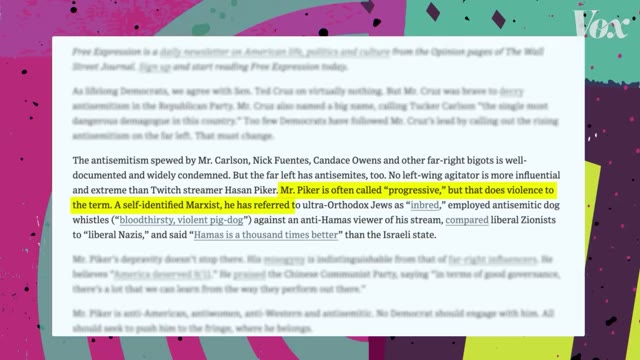
On-screen text displays a quote from Third Way’s op-ed criticizing Piker’s controversial statements.
Cohen also drew a contentious parallel, likening Piker to far-right figures like Nick Fuentes and Candace Owens, stating that “left-wing anti-semites are savvier than the Nazi endorsers on the right.” While acknowledging Piker has voted for Democrats and opposed Trump, unlike Fuentes, Cohen argued this was merely a difference in packaging, not a material distinction in the level of bigotry. He cited Piker’s comments on Miley Cyrus (“I always knew Hannah Montana was a little [profanity]”), his comparison of “liberal Zionists” to “liberal Nazis,” and his critical remarks about Kamala Harris.
Furthermore, Third Way’s article connected Piker’s rhetoric to real-world violence, claiming that “accepting anti-semitic figures like Mr. Piker into the mainstreams puts Jewish lives in danger.” Cohen specifically quoted Piker advocating violence against property owners: “Kill them. Kill those [profanity] and murder those [profanity] in the street. Let the streets Let the streaks soak in their [profanity] red capitalist blood, dude.”

A clip shows Hasan Piker advocating violence against property owners, supporting Third Way’s accusation.
Hasan Piker’s Defense: Context, Apology, and Agitation
Hasan Piker defends himself by apologizing for past misogynistic comments as youthful attempts at humor, denying antisemitic intent for the “pig dog” slur while apologizing if it carried such connotations, and explaining his calls for violence and “Hamas is a thousand times better” statement as hyperbolic or “agitative propaganda” to provoke thought and highlight perceived hypocrisy or atrocities.
In response to Third Way’s allegations, Hasan Piker offered a multifaceted defense, combining apologies for past remarks, contextualization for others, and a clear articulation of his provocative communication style.
Addressing the Miley Cyrus comment, Piker admitted it was “so cringe,” describing it as an “unearthed attempt at a satirical like pop culture slash dating advice show that I was trying to do that was like bro focused.” He stated he had “of course” apologized for it, noting it “obviously doesn’t reflect my current values and it hasn’t reflected my values since like I would say 2014.” He attributed the shift to growing up and a “desperate attempt to try to be funny,” acknowledging it was “far too misogynistic.” Piker also framed this within his broader worldview on “rehabilitation,” citing his own evolution from past misogynistic and transphobic opinions.
Regarding the accusation of anti-Semitism, particularly the “pig dog” slur used against a Jewish man on stream, Piker expressed unawareness of its anti-Semitic connotations. He said he “didn’t even know that this is like in any way, shape, or form anti-semitic,” believing it to be a common socialist pejorative against capitalists. When pressed on whether he would apologize if it did carry such ties, Piker stated, “Yeah, I mean, of course, it’s… I never want to offend entire swaths of the population unless they’re fascist.”
On the claim of advocating violence, specifically the “If you cared about Medicare fraud… you would kill Rick Scott” comment, Piker asserted it was “directly clipped out of context.” He explained he was using hyperbolic language in reference to Mike Johnson’s comments on Medicare fraud, intending to highlight the perceived hypocrisy of Republicans. He clarified, “It’s pretty obvious I’m talking about Rick Scott committing at the time awardwinning amounts of Medicare fraud. It’s more so about the point that like Republicans love to present an argument as though they care about Medicare fraud, but in reality they’re actually just trying to gut Medicare in its entirety.”
Piker also addressed his controversial statement, “Hamas is a thousand times better than the Israeli state,” which he had “doubled down” and “quadrupled down” on. He confirmed he “do mean it” and acknowledged it’s “intentionally provocative, but I don’t think it’s inappropriate.” He explained its purpose: “The entire point I’m making there is to to cause you to second guess when we have this back and forth conversation as I’m sure many people who will be tuning in to listen to this conversation will maybe think about this perspective differently than they ever have.” He described this as “agitative propaganda,” a Marxist term, aimed at underscoring “the violent atrocities that the Israeli government has committed.” Piker also sought to humanize Hamas, stating, “Hamas is not an alien entity. These are Palestinians,” and stressing the importance of understanding the conditions that led to militant resistance. He conceded that anti-Semitic individuals exist within the Palestinian resistance, but argued their primary goals are to make the occupation costly and negotiate.
The Political Battleground: Strategy and Vision
The debate highlights a core Democratic Party tension: Third Way advocates appealing to moderate voters to “flip red places to blue,” while Piker argues his leftist politics, focused on economic populism and anti-imperialism, are more receptive to Americans and are increasingly attracting politicians despite centrist warnings.
Beyond the personal attacks, the core of the debate between Third Way and Hasan Piker lies in their divergent visions for the Democratic Party’s future and its path to electoral success.
Third Way’s strategy, as articulated by Cohen, is focused on “flipping red places to blue” by appealing to moderate voters. He cited the success of moderate House New Democrats in flipping 50 seats since 2018, contrasting it with the “literally zero” seats flipped by left-wing groups associated with Piker, Bernie Sanders, and AOC. For Third Way, aligning with “extremists” like Piker alienates the “moderate Democratic base,” including working-class people of color, who prioritize winning and beating “Trumpism.” Cohen argued that Democrats should not “become a mirror image of the other party, the rightwing that is extremist and bigoted.” He dismissed the idea that voters only care about kitchen table issues, emphasizing that they also care about Democrats not taking “extremist positions on culture issues.”
Piker, however, rejects the premise that his brand of politics harms Democrats. He argues that “Third Way’s brand of politics has helped Republicans” by “constantly conced[ing] on culture war narratives and culture war issues of the Republican party and never focus[ing] on economic populism, left economic populism.” He attributes this to Third Way’s “corporate donors” and their interest in maintaining a “certain posture within the Democratic Party’s center of power that they do abide by the interests of corporations and often times place them over the interests of the population.”
Piker’s primary goal is not simply to “get the most Democrats elected” but to advance “political action and… policies” and “political goals.” While he votes Democratic and has never voted Republican, he emphasizes his lack of “loyalty to any brand or any identity.” He believes that “Americans are far more receptive to to my kind of politics to our worldview on the left” and that this sentiment is “not getting that representation.”
He points to a “seismic shift” in public sentiment, particularly post-October 7th, around Israel and American militarism. This shift, he suggests, gave confidence to the left to “stand by their positions” and be “more bold about American militarism,” an anti-imperialist perspective he has long held. Piker sees his project as “bridging” the anti-war, anti-imperialism worldview increasingly unifying a base with the elected class.
Despite Third Way’s warnings, Piker notes that politicians, “especially since the Third Way stuff,” are increasingly reaching out to stream with him, not just progressives but “across the board.” He uses his stream as a platform and fundraising tool for candidates he believes in, a practice he acknowledges has become more hands-on as “the environment did” change.
The debate between Third Way and Hasan Piker highlights a fundamental tension within the Democratic Party: whether to consolidate power by appealing to a broad, moderate center or to energize and expand the base by embracing more radical, left-wing positions. The outcome of this internal struggle will undoubtedly shape the party’s trajectory in the coming years.

A clip shows Hasan Piker making a misogynistic comment about Miley Cyrus, illustrating Third Way’s claims.

Hasan Piker reacts to the Miley Cyrus clip, acknowledging it as ‘so cringe’ and an old, regrettable attempt at humor.
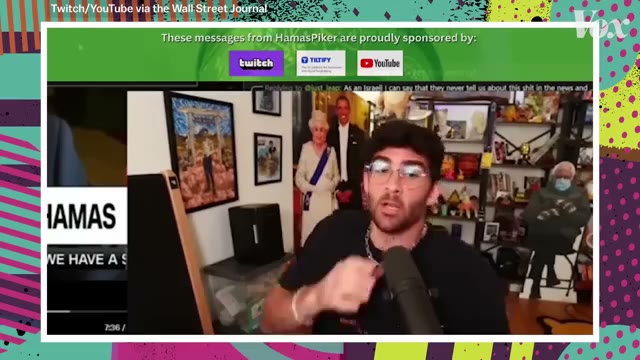
A clip shows Hasan Piker using the ‘pig dog’ slur against a Jewish man, central to the anti-Semitism accusation.

Hasan Piker explains his controversial ‘Hamas is a thousand times better’ statement as ‘agitative propaganda’ to provoke thought.
한국어
“Insult Dogs and Emotional Support Alligators” — NPR Podcasts 기반 기사 원본 영상 보기
욕설 코미디견 트라이엄프와 감성지원 악어: NPR 퀴즈쇼, 한 주간의 기상천외한 뉴스 해부
에피소드 요약
NPR의 뉴스 퀴즈 쇼 ‘Wait, Wait, Don’t Tell Me’는 진행자 피터 세이글과 패널들이 한 주간의 뉴스를 유쾌하게 풀어낸다. 이번 에피소드에서는 뉴욕 닉스의 NBA 챔피언십 진출 열풍, 스마트폰이 출산율 감소에 미친 영향, 그리고 미국의 스낵 혁신 부재 등 세 가지 주요 뉴스를 다뤘다. 특히 스마트폰과 출산율 감소의 연관성은 2007년 아이폰 출시 이후 AT&T 커버리지 지역에서 출산율이 유의미하게 감소했다는 연구 결과를 통해 설명되며, 사람들이 스마트폰 사용에 몰두하느라 성생활이 줄었다는 결론을 내린다. 또한, 스낵 시장에서는 새로운 제품 대신 기존 스낵을 재활용하는 현상이 두드러지며, 올해의 ‘파워하우스 스낵’으로 선정된 허쉬의 닷 스낵 믹스가 사실상 체크스 믹스와 다를 바 없다는 비판이 제기된다.
이어서 패널들은 중국에서 바(bar)에서 의료 검진을 받는 새로운 헬스케어 트렌드를 소개하며, 편리함과 음주 후 검사라는 아이러니를 유머러스하게 지적한다. 또한, ‘블러프 더 리스너’ 코너에서는 스티븐 스필버그 감독이 배우 조쉬 오코너에게 실수로 보낸 문자 메시지가 연기 돌파구를 마련해줬다는 실제 이야기가 공개된다. 마지막으로, 풍자 코미디언 트라이엄프(Triumph, the Insult Comic Dog)의 창작자 로버트 스미글이 출연하여 자신의 코미디 철학과 새로운 팟캐스트 ‘Humor Me’를 소개하고, 감정 지원 동물에 관한 퀴즈를 풀며 월리라는 감정 지원 악어의 사연과 비행 중 서비스견의 ‘사고’로 인한 비상 착륙 사례 등을 통해 유쾌한 시간을 선사한다.
NPR과 WBEZ 시카고가 공동 제작하는 인기 뉴스 퀴즈쇼 ‘Wait, Wait… Don’t Tell Me!’가 이번 주에도 재치 있는 입담과 기상천외한 뉴스로 청취자들을 사로잡았습니다. 임시 진행자 알조 슬레이드(Alzo Slade)와 메인 진행자 피터 세이걸(Peter Sagal)이 이끄는 이번 에피소드에서는 뉴욕 닉스의 열풍부터 스마트폰이 출산율에 미치는 영향, 그리고 전설적인 코미디 작가 로버트 스미겔(Robert Smigel)과의 유쾌한 대화까지, 한 주간의 가장 흥미롭고 때로는 황당한 소식들을 유머러스하게 해부했습니다.
웃음으로 버무린 시사 상식 대결
‘Wait, Wait… Don’t Tell Me!’는 시사 상식을 재치 있는 퀴즈와 패널들의 해설로 풀어내며, 이번 주에는 샨티라 잭슨, 셰인 타우스, 조쉬 곤델만이 참여했다.
‘Wait, Wait… Don’t Tell Me!’는 시사 상식을 재치 있는 퀴즈와 패널들의 기발한 해설로 풀어내는 프로그램입니다. 이번 주 패널로는 작가 겸 코미디언 샨티라 잭슨(Shantira Jackson), 코미디언 셰인 타우스(Shane Torres), 그리고 팟캐스트 ‘The Nightly’의 공동 진행자 조쉬 곤델만(Josh Gondelman)이 참여하여 날카로운 통찰과 폭소를 자아내는 농담을 주고받았습니다.
1. ‘알조는 누구인가?’ – 청취자와 함께하는 뉴스 퀴즈
첫 청취자 참가자인 에밀리 다이크 하우스는 ‘알조는 누구인가?’ 코너에서 알조 슬레이드가 읽어주는 세 가지 뉴스 인용문 중 두 가지 이상을 맞혀야 했다.
첫 번째 청취자 참가자인 미시간주 홀랜드에서 온 에밀리 다이크 하우스(Emily Dyke House)는 비영리 이민 법률 사무소에서 행정 보조 및 가끔 보조금 작가로 일하는 분이었습니다. 그녀는 ‘알조는 누구인가?’ 코너에서 알조 슬레이드가 읽어주는 세 가지 뉴스 인용문 중 두 가지 이상을 맞혀야 하는 도전을 받았습니다.
뉴욕 닉스의 열풍: 스포츠와 미디어의 유쾌한 만남
뉴욕 닉스가 1973년 이후 처음으로 NBA 챔피언십 우승에 근접하자 뉴욕 시민들이 열광했으며, 티모시 샬라메와 스파이크 리 같은 유명인들도 경기에 참석해 화제가 되었다.
첫 번째 인용문은 뉴욕 시에서 들린 구호였습니다: “내 시장은 무슬림, 내 베이글은 유대인, 교황은 우리 편, 닉스는 5차전!” 이 구호는 뉴욕 닉스가 1973년 이후 처음으로 NBA 챔피언십 우승에 근접했을 때 터져 나왔습니다. 에밀리는 정답을 맞혔고, 진행자 피터 세이걸은 뉴욕 시민들이 닉스에 열광하며 수백만 명이 ‘평생 닉스 팬’임을 이번 주에야 발견했다고 농담했습니다.
이 열풍은 전국적인 이야기가 되었는데, 일부는 뉴욕에 많은 언론사가 기반을 두고 있기 때문이라고 말합니다. 이에 뉴욕 기반 언론은 “닥쳐, 촌뜨기들(Rubes)!”이라고 응수했다고 합니다. 티모시 샬라메(Timothy Chalamet)와 스파이크 리(Spike Lee) 같은 유명인들이 닉스 경기에 참석하는 모습도 화제가 되었는데, 패널들은 심지어 샌안토니오 경기에도 이들이 날아왔다고 비꼬며 웃음을 자아냈습니다. 샨티라 잭슨은 자신이 뉴욕 리버티(Liberty) 팬이며, 매 경기마다 작가 프랜 리보(Fran Lebowitz)가 점보 스크린에 등장하면 모두가 열광한다고 덧붙였습니다. 닉스의 결승전은 뉴욕 전체에 영향을 미쳐, 경기 중에는 교통 체증이 사라지고, 예약 없이도 고급 레스토랑에 들어갈 수 있으며, 심지어 티모시 샬라메의 집에 침입하기에도 완벽한 시간이라는 농담까지 나왔습니다.
스마트폰과 출산율: 기술이 가져온 의외의 영향
2007년 스마트폰 출시 이후 AT&T 커버리지 지역에서 출산율이 유의미하게 감소했다는 연구 결과가 나왔으며, 이는 사람들이 스마트폰 사용에 몰두하느라 성생활이 줄었다는 결론을 내린다.
두 번째 인용문은 뉴욕 타임스 독자의 댓글이었습니다: “가장 단순한 설명이 보통 맞는 법이다. 사람들은 밤에 섹스 대신 이것을 응시하고 있다.” 이는 두 가지 새로운 연구가 출산율 감소의 원인으로 지목한 기술에 대한 이야기였습니다. 에밀리는 “휴대폰, 너무 뻔한 것 같지만”이라고 답했고, 진행자는 “맞다, 특히 스마트폰”이라고 확인했습니다.
2007년 스마트폰의 등장이 출산율의 급격한 감소로 이어졌다는 연구 결과는 많은 이들이 오랫동안 의심해왔던 사실을 증명했습니다. 패널들은 이를 “오늘 밤은 안 돼, 여보. 난 작은 조랑말이 피아노 치는 걸 보고 있어”와 같은 유머러스한 비유로 설명했습니다. 흥미롭게도 연구자들은 초기 아이폰을 AT&T 고객만 사용할 수 있었던 점에 착안, AT&T 서비스 지역과 비서비스 지역의 출산율을 비교하여 스마트폰 보급이 출산율 하락으로 이어진다는 결론을 내렸습니다. 이는 AT&T가 한때 “가족 계획은 없을 거예요”라는 광고를 내야 할 정도였다는 농담으로 이어졌습니다.
미국 스낵 혁신의 위기: 체크스 믹스의 재림?
블룸버그는 올해 ‘파워하우스 스낵 어워드’ 수상작인 ‘허쉬 닷 스낵 믹스’가 본질적으로 ‘체크스 믹스’의 재활용에 불과하며, 미국이 새로운 스낵 창조 능력을 잃었다고 비판했다.
마지막 인용문은 블룸버그 뉴스 기자의 말: “여러분, 그냥 체크스 믹스(Chex Mix)일 뿐입니다.” 이는 미국이 새로운 스낵을 창조하는 능력, 즉 ‘천재성’을 잃었다는 비판이었습니다. 에밀리는 힌트를 얻어 ‘스낵’이 정답임을 맞혔습니다.
블룸버그는 올해 ‘파워하우스 스낵 어워드’ 수상작이 프레첼, 옥수수 시리얼, 피타 칩, 마늘 호밀 칩을 섞은 ‘허쉬 닷 스낵 믹스(Hershey’s dot snack mix)‘였다는 사실을 지적하며, 이는 본질적으로 ‘체크스 믹스’의 재활용에 불과하다고 비판했습니다. 패널들은 “플래밍 핫(Flamin’ Hot)“이라는 맛이 허용되었을 때부터 위기가 시작되었다고 농담하며, “이 두 단어는 모두 맛이 아니다”라고 지적했습니다. 또한, 스낵 혁신을 위해 ‘프리토스(Fritos)를 위한 맨해튼 프로젝트’가 필요하다고 주장하며 유머를 더했습니다.
2. 패널들의 기발한 뉴스 해설: 바에서 건강 검진까지?
다음 코너에서는 패널들이 한 주간의 흥미로운 뉴스에 대한 질문에 답하며, 특히 중국의 이색 의료 트렌드와 스필버그의 오타에 대한 이야기가 다뤄졌다.
다음 코너에서는 패널들이 한 주간의 흥미로운 뉴스에 대한 질문에 답했습니다.
중국의 이색 의료 트렌드: 바에서 건강 검진을?
중국에서는 사람들이 동네 술집에서 칵테일과 함께 건강 검진을 받는 새로운 트렌드가 확산되고 있으며, 이는 편리함과 음주 후 검사라는 아이러니를 유머러스하게 지적한다.
셰인 타우스에게 던져진 질문은 중국의 새로운 의료 트렌드에 관한 것이었습니다. 사람들이 의료 검진과 치료를 어디서 받고 있을까요? 힌트: “술을 마시고, 주사를 맞는다.” 정답은 ‘바(bar)‘였습니다.
중국에서는 사람들이 동네 술집에서 칵테일과 함께 건강 검진을 받는 새로운 트렌드가 확산되고 있다고 합니다. 이는 최고의 의료 서비스는 아니겠지만, 적어도 소변 검사 시간에는 완벽하게 준비될 수 있다는 농담이 이어졌습니다. 패널들은 미국에서도 술집에서 처방약을 복용하는 사람들이 많다는 점을 지적하며, 편리함과 건강 검진의 결합이 가져올 기묘한 상황에 대해 유머러스하게 논평했습니다.
뜻밖의 지혜: 스필버그의 오타가 연기 비법으로
배우 조쉬 오코너는 스티븐 스필버그 감독이 아내에게 보낼 ‘문이 걸쇠에 잠겼어, 그냥 밀어’라는 문자를 실수로 받고, 이 문자가 연기할 장면에 대한 통찰력을 주어 돌파구를 마련했다.
‘Bluff the Listener’ 코너에서는 청취자 바네사 산체스(Vanessa Sanchez)가 세 패널 중 누가 진짜 이야기를 하는지 맞춰야 했습니다. 그녀는 시카고에 사는 18세 아들의 엄마이자, 국립 멕시코 미술관에서 일하며, 주말에는 드래곤 보트 팀에서 활동하는 다재다능한 분이었습니다.
패널들은 각각 ‘뜻밖의 지혜’에 대한 이야기를 들려주었습니다.
- 조쉬 곤델만: 앤드루 로이드 웨버(Andrew Lloyd Weber)가 무릎 통증으로 CAT 스캔(CAT scan)을 받다가 ‘고양이도 할 수 있다(Cats can)‘는 아이디어를 얻어 뮤지컬 ‘캣츠(Cats)‘를 만들었다는 이야기.
- 샨티라 잭슨: 마이클 B. 조던(Michael B. Jordan)이 사무엘 L. 잭슨(Samuel L. Jackson)과 골프를 치면서 사무엘 L. 잭슨의 욕설 섞인 조언(“젠장할 곳으로 가야 해”, “너무 많이 생각하면 젠장할 머릿속에서 엉망이 돼”)을 통해 삶과 연기에 대한 지혜를 얻었다는 이야기.
- 셰인 타우스: 배우 조쉬 오코너(Josh O’Connor)가 스티븐 스필버그(Steven Spielberg) 감독의 영화 촬영 중, 스필버그가 아내에게 보낼 예정이었던 “문이 걸쇠에 잠겼어, 그냥 밀어(The door is on the latch, just push)“라는 문자를 실수로 받고, 이 문자가 연기할 장면에 대한 통찰력을 주어 ‘장면 전체를 풀었다(unlocked the whole scene)‘는 이야기.
바네사는 고양이 엄마라는 이유로 조쉬의 ‘캣츠’ 이야기를 선택했지만, 아쉽게도 정답은 셰인의 이야기였습니다. 조쉬 오코너는 NPR의 ‘Fresh Air’에서 스필버그의 우연한 문자가 자신의 연기 돌파구로 이어졌다고 실제로 언급했습니다.
3. ‘내 일이 아니야’ – 로버트 스미겔과 감성지원 동물들의 세계
이번 주 특별 게스트는 ‘욕설 코미디견’ 트라이엄프의 창작자 로버트 스미겔이었으며, 그의 코미디 철학과 새로운 팟캐스트 ‘Humor Me’가 소개되었다.
이번 주의 특별 게스트는 코미디계의 전설이자 ‘욕설 코미디견(Insult Comic Dog)’ 트라이엄프(Triumph)의 조종사로 유명한 로버트 스미겔이었습니다. 진행자는 그를 “NPR 직원들이 해고될지 안 될지 추측할 때 하는 게임”이라고 트라이엄프가 자신의 쇼를 비난할 것이라고 농담하며 환영했습니다.
코미디 거장의 반전 이력: 치과 의사 지망생에서 트라이엄프의 조종사로
로버트 스미겔은 실패한 치과 의학도였으며, 가구 쇼핑 중 발견한 강아지 머리 인형으로 아내를 웃기면서 트라이엄프 캐릭터를 탄생시켰다고 밝혔다.
스미겔은 자신이 사실은 실패한 치과 의학도였다는 놀라운 사실을 밝혔습니다. 그의 아버지는 치아 접착 기술을 개발하여 치과 의학을 혁신한 ‘전설적인 치과 의사’였으며, 스미겔은 그런 아버지의 뒤를 잇고자 했지만 코미디에 더 소질이 있음을 깨달았다고 합니다. 그는 “아버지는 치과를 섹시하게 만들었고, 나는 코미디를 역겹게 만들고 있다”고 말하며 웃음을 자아냈습니다.
트라이엄프 캐릭터의 탄생 비화도 공개되었습니다. 신혼이었던 스미겔 부부가 가구 쇼핑 중 발견한 고무 인형 가게에서, 스미겔이 강아지 머리 인형을 손에 끼고 아내의 엉덩이 냄새를 맡는 시늉을 하며 아내를 웃겼고, 이것이 트라이엄프의 시작이 되었다고 합니다. 트라이엄프는 스미겔 자신도 차마 하지 못할 농담을 서슴없이 던지는 캐릭터로, 스미겔은 매일 아침 거울을 보며 트라이엄프가 자신을 비난해주기를 바란다고 말했습니다.
스미겔의 새로운 팟캐스트 ‘Humor Me with Robert Smigel and Friends’도 소개되었습니다. 이 팟캐스트는 재미없는 사람들이 재미있어지는 방법을 조언해주는 프로그램으로, 미워하는 장인어른의 추도사를 유머러스하게 쓰는 법이나 엄마 모임에서 불쾌감을 주지 않고 탈퇴하는 법 등 기발한 고민들을 다룬다고 합니다.
감성지원 동물 퀴즈: 악어부터 혈당 감지견까지
스미겔은 ‘욕설견이 서비스견을 만나다’ 퀴즈에서 감성지원 악어 월-E의 납치 및 귀환, 서비스견의 기내 사고로 인한 비상 착륙, 그리고 혈당 감지견이 수의사의 ‘비밀 도넛’을 감지한 이야기를 맞혔다.
스미겔은 ‘욕설견이 서비스견을 만나다(Insult Dog Meet Service Dog)‘라는 퀴즈에 참여하여 사람들을 돕는 서비스 동물에 대한 질문에 답했습니다.
-
감성지원 악어 월-E(Wall-E): 필라델피아 은행 경기장에 주인이 악어와 함께 입장하는 것을 거부당해 화제가 되었던 감성지원 악어 월-E에게 무슨 일이 일어났을까요?
- A: 메트라이프(Met Life)의 보험 악어(Insure Aigator)로 광고 계약을 맺었다.
- B: 자연사 후 감성지원 여행 가방 세트가 되었다.
- C: 누군가 그를 납치해 조지아 습지에 풀어줬고, 당국에 신고되어 습지로 돌아갔다. 스미겔은 C를 선택했고 정답이었습니다. 월-E는 실제로 납치되었다가 습지로 보내졌고, 현재까지 그곳에서 잘 지내고 있다고 합니다.
-
서비스견의 기내 사고: 최근 일어난 서비스 동물의 문제점은 무엇이었을까요?
- A: 애리조나의 안내견이 발정 난 암캐 냄새를 맡고 주인을 운하로 끌고 들어갔다.
- B: 아메리칸 항공 비행기에 탑승한 서비스견이 ‘사고’를 일으켜 승객들이 아프게 되어 비상 착륙했다.
- C: 진단되지 않은 질병을 가진 서비스견이 사우스캐롤라이나 주 상원 전체에 옴을 옮겼다. 스미겔은 B를 선택했고, 이 또한 정답이었습니다. 비상 착륙 후 출동한 응급 대원들이 비행기에서 뛰쳐나오며 “아!” 하고 소리쳤다는 농담이 이어졌습니다.
-
혈당 감지 훈련견의 놀라운 발견: 혈당 변화 감지를 위해 훈련받던 서비스견이 건강 검진 중 수의사에게 경고를 보냈습니다. 다음은 어떤 일이 일어났을까요?
- A: 수의사가 제1형 당뇨병 진단을 받아 생명을 구할 수 있었다.
- B: 개가 혈당을 전혀 감지하지 못하고 단지 흰색 코트를 좋아하는 것으로 밝혀졌다.
- C: 수의사가 동료들과 나누지 않고 도넛을 직장에 가져온 것이 적발되었다. 스미겔은 A를 선택했지만, 정답은 C였습니다. 개는 수의사의 ‘비밀 도넛’을 감지했던 것입니다. 이 결과로 스미겔은 3문제 중 2문제를 맞히며 좋은 성적을 거두었습니다.
4. ‘라임 챌린지’와 ‘번개 빈칸 채우기’: 뉴스 속 숨겨진 유머
청취자 바네사는 ‘라임 챌린지’에 참여하여 현대인의 식사 습관, 존 트라볼타의 베레모, 그리고 올리브 소금물 음료, 빙하기 다람쥐 식단, 5천년 묵은 빵 등 황당한 뉴스 속 유머를 맞혔다.
다음 청취자 참가자인 매사추세츠주 찰스타운의 유치원 교사 바네사는 진행자의 아들이 유치원에 가는 것에 대한 조언을 해주며 따뜻함을 더했습니다. 그녀는 ‘라임 챌린지’에 참여하여 알조 슬레이드가 읽어주는 세 가지 라임 중 마지막 단어나 구절을 맞혀야 했습니다.
식사 습관의 변화: 세 끼 식사 대신 ‘요리적 즉흥성’
전문가들은 더 이상 하루 세 끼 식사를 할 필요가 없으며, 대신 ‘요리적 즉흥성’을 받아들이고 몸의 본능에 따라 건강에 가장 적합한 방식을 따르라고 조언한다.
첫 번째 라임은 현대인의 식사 습관에 대한 것이었습니다. 전문가들은 더 이상 하루 세 끼 식사를 할 필요가 없다고 말합니다. 대신 “요리적 즉흥성(culinary spontaneity)“을 받아들이고 몸의 본능에 따라 건강에 가장 적합한 방식을 따르라고 조언합니다. 이는 “싱크대 위에서 무언가를 입에 쑤셔 넣는 것”에 대한 우아한 표현이라는 패널의 농담과, “걸 디너(girl dinner)“라는 새로운 트렌드(여러 가지 간단한 음식을 조합하여 먹는 방식)에 대한 설명으로 이어졌습니다.
존 트라볼타의 베레모: 패션인가, 탈모인가?
존 트라볼타가 칸 영화제에서 베레모를 착용하며 ‘남자들도 패션으로 즐거움을 누릴 수 있다’고 말했지만, 패널들은 이를 ‘나 대머리야’라는 말을 대신하는 유머러스한 표현으로 해석했다.
샨티라 잭슨에게는 존 트라볼타(John Travolta)에 대한 질문이 주어졌습니다. 그가 “남자들도 즐거움을 누릴 수 있다”며 공개적으로 시작한 것은 무엇일까요? 정답은 ‘베레모(beret)‘였습니다. 칸 영화제 레드카펫에서 검은색으로 염색한 수염과 베레모를 착용한 존 트라볼타의 사진이 화제가 되었습니다. 그는 자신의 첫 영화를 감독했으며, 고전 할리우드 감독들의 사진에서 베레모를 많이 보았고, 남자들도 패션으로 즐거움을 누릴 수 있어야 한다고 말했다고 합니다. 하지만 패널들은 이를 “나 대머리야”라는 두 단어를 대신하는 많은 말이라고 유머러스하게 해석했습니다.
황당한 발견들: 올리브 소금물 음료와 5천년 묵은 빵
인터넷에서 ‘올해의 여름 음료’로 등극한 올리브 소금물 음료, 빙하기 다람쥐의 매머드 고기 식단, 그리고 5천 년 전 아이스맨 외치 위장에서 발견된 미생물로 만든 사워도우 빵 등 황당한 뉴스들이 소개되었다.
라임 챌린지에서는 다음과 같은 황당한 뉴스들이 소개되었습니다.
- 여름의 음료: 올리브 소금물 음료. 얼음, 탄산수, 그리고 올리브를 담갔던 소금물이 섞인 이 음료가 인터넷에서 ‘올해의 여름 음료’로 등극했다고 합니다. 패널들은 이를 “더러운 셜리(Dirty Shirley)“라 부르며 유머를 더했습니다.
- 빙하기 다람쥐의 식단: 고대 다람쥐의 배설물에서 DNA를 추출한 결과, 빙하기 다람쥐들이 매머드 고기와 검치호랑이 고기를 먹었다는 사실이 밝혀졌습니다. 이 연구는 심지어 70만 년 된 다람쥐 배설물에서도 강렬한 냄새가 났다는 놀라운 사실도 밝혀냈습니다.
- 5천년 묵은 아이스맨 빵: 5천 년 전 미라화된 아이스맨 외치(Ötzi)의 위장에서 발견된 살아있는 미생물로 사워도우 빵을 만들었다는 소식입니다. 이탈리아 미라 연구소의 연구원들은 이 빵이 “매우, 매우 좋다”고 평가했지만, 진행자는 “누가 나비의 우유인가요?”라는 농담을 던지며 5천 년 전 미생물로 만든 빵에 대한 기묘함을 강조했습니다.
바네사는 세 문제 모두 맞히며 완벽한 점수를 받았습니다.
결론: 웃음 뒤에 남는 생각할 거리
‘Wait, Wait… Don’t Tell Me!’는 뉴스의 아이러니와 인간적인 면모를 포착하여 청취자들에게 웃음과 함께 생각할 거리를 제공하며, 매주 뉴스 소비의 새로운 즐거움을 선사한다.
‘Wait, Wait… Don’t Tell Me!’는 단순히 뉴스를 전달하는 것을 넘어, 그 안에 숨겨진 아이러니와 인간적인 면모를 포착하여 청취자들에게 웃음과 함께 생각할 거리를 제공합니다. 뉴욕 닉스 팬들의 열광부터 스마트폰이 가져온 사회 변화, 그리고 감성지원 악어와 혈당 감지견의 이야기까지, 이번 주 에피소드는 우리가 살아가는 세상의 다채롭고 때로는 기이한 단면들을 유쾌하게 조명했습니다. 로버트 스미겔과의 대화는 코미디의 뒷이야기와 한 인물의 흥미로운 이력을 엿볼 기회를 제공하며, 쇼의 깊이를 더했습니다. 이처럼 ‘Wait, Wait… Don’t Tell Me!’는 매주 뉴스 소비의 새로운 즐거움을 선사하며, 시사 상식을 유머러스하게 접근하는 독특한 방식으로 많은 사랑을 받고 있습니다.
“Hasan Piker vs. The Establishment | America, Actually” — Vox 기반 기사 원본 영상 보기
하산 피커 대(對) 기성 정치권: 민주당의 정체성 논쟁
에피소드 요약
이 영상은 미국의 좌파 트위치 스트리머 하산 파이커(Hasan Piker)를 둘러싼 논란과 그가 민주당에 미치는 영향에 대해 다룬다. 중도 성향의 민주당 싱크탱크인 서드 웨이(Third Way)는 월스트리트 저널에 기고한 글에서 민주당이 파이커와 너무 가깝다고 비판하며, 그가 “반미적이고, 편협하며, 반유대주의적이고, 극심한 여성 혐오자”라고 주장한다. 서드 웨이의 회장 존 코헨(Jon Cohen)은 파이커의 극단적인 발언들이 민주당의 브랜드에 해를 끼치고, 우익 포퓰리즘을 이기는 데 방해가 될 것이라고 강조한다. 특히 그는 파이커가 울트라 정통 유대인을 “근친상간”이라 부르고, “하마스가 이스라엘 국가보다 천 배 낫다”고 말했으며, “재산 소유자들을 죽여라”는 폭력적인 발언을 했다고 지적한다. 서드 웨이는 민주당이 당의 미래를 위해 중도 유권자들을 끌어들이는 데 집중해야 하며, 파이커와 같은 극단주의자들과 연대하는 것은 도덕적으로 잘못될 뿐만 아니라 정치적으로도 해롭다고 주장한다.
반면, 하산 파이커는 자신의 과거 발언 중 일부는 풍자적 시도였으며, 당시의 가치관을 반영하지 않는다고 해명한다. 그는 과거 여성 혐오적, 트랜스포비아적 견해를 가졌었지만, 스스로 성장하고 변화했다고 말하며, 사회적 범죄에 대한 재활의 중요성을 강조한다. 또한, “돼지 개(pig dog)“와 같은 표현이 반유대주의적인 의미를 내포하는지 몰랐다고 밝히며, 의도적으로 특정 집단을 비하하려 한 것이 아니라고 주장한다. 서드 웨이가 제시한 폭력 선동 발언에 대해서는 맥락에서 벗어난 것이라고 반박한다. 이 논쟁은 민주당 내에서 당의 정체성과 미래 방향에 대한 깊은 고민을 보여주며, 젊은 세대와의 소통 방식, 그리고 극단적인 목소리에 대한 수용 범위에 대한 중요한 질문을 던진다.
최근 몇 년간 미국의 정치 지형에서 좌파 스트리머 하산 피커(Hasan Piker)의 영향력이 급부상하며 민주당 내부의 뜨거운 논쟁을 불러일으키고 있습니다. 2020년 대선 이후, 그는 인기 있는 좌파 트위치(Twitch) 스트리머로서 민주당 내에서 인터넷 소통 방식, 젊은 남성 유권자층 공략, 심지어 가자(Gaza) 정책의 정치적 비용에 대한 조언을 구하는 주요 목소리가 되었습니다.
그러나 피커의 이러한 부상은 민주당 내 일부 세력의 거센 반발을 사고 있습니다. 워싱턴 D.C.의 대표적인 중도 성향 싱크탱크인 써드 웨이(Third Way)는 피커를 “반미적이고, 편협하며, 반유대주의적이고, 극심한 여성 혐오주의자”라고 비난하며, 그가 민주당에 해를 끼치고 우파 포퓰리즘(right-wing populism)을 이길 기회를 저해한다고 주장합니다. 과연 피커는 민주당에 독인가, 아니면 새로운 활력인가? 그리고 이러한 논쟁의 이면에는 피커 개인에 대한 비판을 넘어 그가 대표하는 좌파 정치에 대한 근본적인 견해 차이가 자리 잡고 있습니다.
하산 피커, 민주당의 새로운 목소리인가 위협인가?
좌파 스트리머 하산 피커의 영향력이 커지자, 중도 싱크탱크 써드 웨이는 그를 ‘반미적, 편협, 반유대주의적, 여성 혐오자’로 비난하며 민주당에 해를 끼친다고 주장해 논쟁이 가열되고 있다.
부상하는 좌파 스트리머의 영향력
2020년 대선 이후 하산 피커는 젊은 층 사이에서 급부상한 좌파 트위치 스트리머로, 민주당 인사들이 인터넷 소통, 젊은 남성 유권자 공략, 가자 정책 등에 대해 자문을 구할 정도로 영향력이 커졌다.
하산 피커는 2020년 대선 이후 젊은 층 사이에서 급부상한 좌파 트위치 스트리머입니다. 그의 영향력은 민주당 내부에서도 인정받아, 새로운 인터넷 환경에 적응하고 젊은 남성 유권자들에게 다가가는 방법, 심지어 바이든 행정부의 가자 정책에 대한 정치적 파장에 대해 민주당 인사들이 그에게 자문을 구하는 상황에 이르렀습니다. 이는 전통적인 정치권이 뉴 미디어와 인플루언서의 힘을 인식하기 시작했음을 보여주는 단적인 예시입니다.
중도주의 싱크탱크 ‘써드 웨이’의 비판
써드 웨이는 피커가 민주당 브랜드에 해를 끼치고 우파 포퓰리즘을 이길 기회를 저해한다며, 그가 초정통파 유대인을 ‘근친상간’, 자유주의 시오니스트를 ‘자유주의 나치’로 비유하고 하마스를 옹호하는 발언을 했다고 비판했다.
그러나 피커의 이러한 영향력 확대는 민주당 내 중도 세력의 심각한 우려를 낳았습니다. 대표적인 중도주의 싱크탱크인 써드 웨이는 민주당이 더욱 온건하고 기성 정치권에 가까운 후보들을 지지해야 한다고 주장하며, 이것이 선거에서 더 나은 결과를 가져올 것이라고 믿습니다. 써드 웨이의 회장이자 비판 기고문의 공동 저자인 조나단 코헨(Jonathan Cohen)은 민주당이 피커와 “너무 가깝게 지낸다”고 공개적으로 비판했습니다.
코헨은 피커의 발언이 “매우 불쾌할 뿐만 아니라, 그가 너무 극단적이어서 민주당과 그 브랜드에 해를 끼치고 우파 포퓰리즘을 이길 기회를 저해할 것”이라고 주장합니다. 특히 3월, 써드 웨이가 월스트리트 저널(Wall Street Journal)에 발표한 기고문은 피커가 “진보적”이라는 표현이 “용어에 대한 폭력”이라고 규정하며, 그를 자칭 마르크스주의자(Marxist)로 지칭했습니다. 기고문은 피커가 초정통파 유대인(ultra-Orthodox Jews)을 “근친상간(inbred)“이라 부르고, 자유주의 시오니스트(liberal Zionist)를 “자유주의 나치(liberal Nazis)“에 비유했으며, “하마스(Hamas)가 이스라엘 국가보다 천 배 낫다”고 말했다는 점을 지적하며 그의 발언들이 반유대주의적이라고 비판했습니다. 써드 웨이는 피커를 ‘팟 세이브 아메리카(Pod Save America)’ 컨퍼런스에서 공식적으로 지지하고 민주당과 연계하려 한 시도를 이번 비판 기고문을 발표한 직접적인 계기로 꼽았습니다.
논란의 중심에 선 발언들: 피커의 해명과 ‘써드 웨이’의 공세
써드 웨이는 피커의 과거 발언들을 구체적인 증거로 제시하며 비판했고, 피커는 이에 대해 해명하거나 자신의 의도를 설명하며 반박했다.
써드 웨이의 비판은 피커의 과거 및 현재 발언들을 구체적인 증거로 제시하며 이루어졌습니다. 이에 대해 피커는 해명하거나 자신의 의도를 설명하며 반박했습니다.
”여성 혐오적 발언” 논란
피커는 과거 마일리 사이러스에 대한 ‘창녀’ 발언을 ‘오글거리는’ 젊은 시절의 풍자 시도였다고 인정하며, 현재 가치관을 반영하지 않고 이미 사과했으며 사회적 재활의 중요성을 강조했다.
써드 웨이는 피커가 과거 마일리 사이러스(Miley Cyrus)에 대해 “한나 몬타나가 작은 창녀(little slut)라는 걸 항상 알았다”고 말한 것을 여성 혐오적 발언의 예시로 들었습니다. 이에 대해 피커는 “너무 오글거린다(so cringe)“고 인정하며, “풍자적인 팝 문화/연애 조언 쇼”를 시도했던 젊은 시절의 “필사적인 시도”였다고 해명했습니다. 그는 이 발언이 “현재 자신의 가치관을 반영하지 않으며” 이미 사과했다고 밝혔습니다. 피커는 또한 범죄 사법 시스템뿐만 아니라 사회적 ‘범죄’에 대한 사회적 재활(rehabilitation)의 중요성을 강조하며, 자신이 과거에 여성 혐오적 또는 트랜스젠더 혐오적(transphobic) 견해를 가졌었으나 이를 극복했다고 주장했습니다.
”반유대주의” 주장과 ‘돼지 개’ 발언
피커는 유대인 남성에게 ‘피에 굶주린 돼지 개’라고 한 발언이 반유대주의적인지 몰랐고, ‘자본가들에게 흔히 쓰이는 용어’라며 사과할 의향이 있지만 써드 웨이의 진정성에 의문을 표했다.
코헨은 피커가 극우 반유대주의자 닉 푸엔테스(Nick Fuentes)와 위험할 정도로 가깝다고 주장하며, “자유주의 시오니스트는 자유주의 나치와 같다고 말하는 것은 본질적으로 반유대주의적”이라고 비판했습니다. 특히 피커가 유대인 남성과 논쟁하던 중 “가자 지구에 또 다른 테마파크를 짓기 위해 모든 팔레스타인인이 거리에서 무자비하게 처형되기를 원하는 피에 굶주린 돼지 개(pig dog) 같은 놈”이라고 말한 것을 문제 삼았습니다.
피커는 “돼지 개”라는 표현이 반유대주의적인지 몰랐으며, “자본가들에게 흔히 쓰이는 용어”라고 해명했습니다. 그는 자신이 “인구 전체를 불쾌하게 할 의도는 결코 없다”고 말하며, 만약 이 표현이 반유대주의적인 맥락에서 사용될 수 있다면 사과할 의향이 있음을 내비쳤습니다. 하지만 동시에 써드 웨이가 이 문제를 “진정성 있게” 제기하는지 의문이라고 덧붙였습니다.
”폭력 선동” 의혹
피커는 ‘릭 스콧을 죽였을 것’ 발언은 의료 사기를 풍자한 맥락에서 벗어난 것이며, ‘소유주들을 죽여라’는 발언도 맥락이 왜곡된 것이라고 반박했다.
써드 웨이는 피커가 “메디케어 사기(Medicare fraud)에 신경 썼다면 릭 스콧(Rick Scott)을 죽였을 것”이라고 말한 것을 폭력 선동의 증거로 제시했습니다. 이 발언으로 피커는 트위치에서 일시 정지되기도 했습니다. 이에 대해 피커는 “맥락에서 벗어난 발언”이라고 반박했습니다. 그는 당시 마이크 존슨(Mike Johnson) 하원의장이 메디케어 지출 삭감이 아닌 사기 방지에 초점을 맞추고 있다고 주장하는 것을 비판하며, 릭 스콧이 과거에 저지른 의료 사기를 풍자하기 위해 과장된 표현을 사용했을 뿐이라고 설명했습니다. 또한 코헨은 피커가 “소유주들을 죽여라. 그 빌어먹을 자들을 죽이고 거리에서 살해하라. 거리가 그들의 빌어먹을 붉은 자본가들의 피로 흠뻑 젖게 하라”고 발언하며 폭력을 조장했다고 주장했습니다.
하마스 지지 발언의 파장
피커는 ‘하마스가 이스라엘보다 천 배 낫다’는 발언이 ‘수사적 도발이자 선전 선동’이며, 이스라엘의 폭력적 잔혹 행위를 강조하고 하마스의 무장 저항 배경을 이해시키려는 목적이었다고 해명했다.
피커는 “하마스가 이스라엘 국가보다 천 배 낫다”고 말하고 “이스라엘 대신 하마스에 매번 투표하겠다”고 거듭 주장한 것에 대해서도 해명했습니다. 그는 이 발언이 “수사적 도발이자 선전 선동(agitprop)의 일환”이라고 설명하며, “사람들이 이스라엘 정부가 저지른 폭력적인 잔혹 행위를 이해하도록 강조하려는 목적”이라고 밝혔습니다. 또한 하마스를 “외계 존재가 아닌 팔레스타인인”으로 이해하고, 그들이 무장 저항에 이르게 된 배경을 이해하는 것이 중요하다고 강조했습니다. 그는 하마스의 목표가 점령을 최대한 비싸게 만들고, 팔레스타인인들이 대화에서 완전히 배제된 상황에서 이스라엘과 협상하려는 것이라고 설명했습니다. 피커는 하마스 내에 반유대주의적 인물들이 있을 수 있음을 인정하면서도, 하마스의 동기가 단순히 “폭력적이고 야만적인 반유대주의자”이기 때문만은 아니라고 주장했습니다.
민주당의 미래 전략: 중도냐 좌파냐?
피커를 둘러싼 논쟁은 민주당이 선거 승리를 위해 중도 유권자를 포용할지, 아니면 좌파적 이념을 강화할지에 대한 근본적인 전략 논쟁으로 이어지고 있다.
피커를 둘러싼 논쟁은 단지 그의 발언에 대한 도덕적 비판을 넘어, 민주당이 나아가야 할 방향에 대한 근본적인 전략 논쟁으로 이어집니다.
‘써드 웨이’의 ‘큰 텐트’론과 중도 전략
써드 웨이는 민주당이 ‘큰 텐트’ 정당이되 피커 같은 극단적 인물과 연대해서는 안 되며, 중도 유권자를 끌어들여 ‘빨간 지역을 파랗게 바꾸는 것’이 트럼프주의를 이기는 핵심이라고 주장한다.
써드 웨이는 민주당이 “큰 텐트(big tent)” 정당이 되어야 한다고 주장하지만, 동시에 “선을 그어야 한다”고 강조합니다. 코헨은 민주당이 조 로건(Joe Rogan)과 같은 논란의 인물들과 대화하는 것은 괜찮지만, 피커처럼 편협한 인물들과 “가깝게 지내거나, 그들을 플랫폼에 올리거나, 선거 운동을 함께 하거나, 지지를 구해서는 안 된다”고 말합니다. 그는 이것이 도덕적으로 옳지 않을 뿐만 아니라 정치적으로도 해롭다고 주장합니다.
써드 웨이의 핵심 주장은 민주당이 트럼프주의(Trumpism)를 이기고 전국적으로 지지 기반을 확장하려면, 당이 “주류보다 더 극단적”이라는 인식을 불식시키고 중도 유권자들을 끌어와야 한다는 것입니다. 코헨은 하원 뉴 데모크라츠(House New Democrats)와 같은 중도 성향 후보들이 지난 2018년 이후 50석을 공화당으로부터 탈환한 반면, 피커와 연관된 ‘아워 레볼루션(Our Revolution)‘이나 ‘저스티스 데모크라츠(Justice Democrats)‘와 같은 좌파 그룹은 단 한 석도 탈환하지 못했다는 점을 근거로 제시합니다. 이는 유권자들이 “온건한 비전을 가진 온건한 후보”를 원한다는 증거라는 것입니다. 그들에게 “파란 지역을 더 파랗게 만드는 것”은 MAGA를 이기기 위한 “본질적인 정치적 도전”이 아니며, “빨간 지역을 파랗게 바꾸는 것”이 중요합니다.
하산 피커의 좌파 포퓰리즘 주장
피커는 써드 웨이의 방식이 공화당에 도움이 되었으며, 써드 웨이는 기업 후원자의 이익을 대변한다고 비판했다. 그는 자신의 반전·반제국주의적 세계관이 이제 미국인들에게 더 수용적이라고 믿는다.
피커는 써드 웨이의 비판에 대해 “써드 웨이의 정치 방식이야말로 공화당에 도움이 되었다”고 반박합니다. 그는 써드 웨이가 클린턴 시대(Clinton era) 이후 “문화 전쟁(culture war) 이슈에서 공화당에 계속 양보하고, 좌파 경제 포퓰리즘(left economic populism)에 집중하지 않았다”고 지적합니다. 이는 써드 웨이가 기업 후원자(corporate donors)의 이익을 대변하며 민주당의 핵심 권력 내에서 기업의 이익을 국민의 이익보다 우선시하는 특정 입장을 유지하기 때문이라고 주장합니다.
피커는 자신이 “정치적 행동과 정책, 그리고 정치적 목표를 진전시키는 데 관심이 있다”며, 특정 정당이나 정체성에 대한 충성심은 없다고 말합니다. 그는 주로 민주당에 투표하며 공화당에 투표한 적이 없지만, 가자 지구 문제로 카말라 해리스(Kamala Harris)를 공개적으로 지지하지 않았습니다. 그는 현재 미국인들이 자신의 정치관에 “훨씬 더 수용적”이라고 믿으며, 이는 10월 7일 이후 이스라엘에 대한 정서 변화와 더불어 미국 제국주의(American imperialism)에 대한 비판적 시각, 그리고 ‘테러와의 전쟁(global war on terror)‘의 실패를 인식하면서 강화되었다고 분석합니다. 피커는 자신의 프로젝트가 이러한 반전(anti-war) 및 반제국주의적 세계관을 민주당 지지층과 연결하는 데 있다고 말합니다.
스트리머의 책임과 정치적 영향력
피커는 영향력이 커지면서 발언의 맥락 왜곡과 분노 조작 시도가 많아졌다고 토로하며, 논란 없는 스트리밍은 불가능하다고 말했지만, 써드 웨이 비판 이후 정치인들의 방송 출연 요청이 늘었다고 밝혔다.
피커를 향한 써드 웨이의 비판은 궁극적으로 새로운 미디어 환경에서 활동하는 스트리머들의 책임감 문제로 귀결됩니다. 전통적인 언론인과 달리, 스트리머는 콘텐츠 제작 과정에서 “책임감에 대한 점검(gut check)“이 부족하다는 지적이 있습니다.
피커는 자신의 영향력이 커지면서 “분노를 조작하려는 시도”가 항상 존재하며, 특히 10월 7일 이후에는 “엄청나게 조심해야 한다”는 것을 깨달았다고 말합니다. 그는 자신의 발언들이 종종 맥락에서 벗어나 편집되어 비난의 대상이 된다고 주장하며, “논란 없는(controversy-free)” 스트리밍은 사실상 불가능하다고 토로합니다.
흥미롭게도, 써드 웨이의 비판 이후 오히려 정치인들의 피커 방송 출연 요청이 늘었다고 합니다. 심지어 진보주의자뿐 아니라 다양한 스펙트럼의 정치인들이 그에게 접근하고 있습니다. 피커는 자신이 “좋은 콘텐츠”라고 생각하지 않기 때문에 후보자 인터뷰나 협업을 즐겨하지 않지만, “내 시청자들에게 보여줄 가치가 있는 후보이고, 그들이 괜찮다고 믿으면” 플랫폼을 제공하고 지지를 보낼 의향이 있다고 밝혔습니다. 그는 자신이 변했다기보다는 “환경이 변했다”며, 미국인들이 이제 자신의 좌파적 세계관에 더욱 수용적이 되었다고 믿습니다.
결론
하산 피커와 써드 웨이의 논쟁은 민주당 내 중도와 진보의 균열을 드러내며, 선거 승리와 이념적 순수성 사이의 균형, 그리고 뉴 미디어 시대 정치 담론의 변화에 대한 근본적인 질문을 던진다.
하산 피커와 써드 웨이 간의 논쟁은 단순히 한 스트리머의 발언에 대한 시비를 넘어, 민주당 내부의 중도와 진보 진영 간의 깊은 균열을 드러냅니다. 써드 웨이는 선거 승리를 위해 중도 유권자를 포용하고 극단적 이미지를 탈피해야 한다고 주장하는 반면, 피커는 기성 정치권의 타협이 오히려 공화당에 이득이 되었으며, 이제는 좌파적 경제 포퓰리즘과 반제국주의적 시각이 대중의 공감을 얻을 때라고 믿습니다.
이 논쟁은 민주당이 선거 승리라는 현실적 목표와 이념적 순수성 사이에서 어떤 균형을 찾아야 할지에 대한 근본적인 질문을 던집니다. 또한 뉴 미디어의 발달로 인해 하산 피커와 같은 인물들이 정치 담론을 형성하고 유권자들에게 영향을 미치는 방식이 어떻게 변화하고 있는지 보여줍니다. 민주당이 이 변화의 물결 속에서 어떤 길을 택할지, 그리고 대중의 목소리를 대변하는 새로운 형태의 정치적 행위자들을 어떻게 포용하거나 견제할지 귀추가 주목됩니다.