English
Based on “How I Built an AI Software Factory With Fable 5” from Every Watch the original video
The Dream Machine: Inside the AI Software Factory That Codes While You Sleep
Episode summary
The speaker demonstrates how he built an “AI software factory” using Fable 5 to rapidly ship features for his project, Kora. He showcases an automated feedback loop where internal users submit “Riffraff” recordings (rich, interactive screen recordings) to Slack. A scheduled “alpha feedback pulse” then processes these, downloading recordings, classifying feedback, and generating pull requests to fix reported issues. The speaker highlights a “magic moment” where he woke up to a colleague praising design improvements that were automatically merged overnight while he slept.
This “superpower” system, while sometimes taking 2-4 hours to run, allows the speaker to review batches of fixes rather than individual pull requests, making the process manageable. He emphasizes that the “compound step” in his engineering flow ensures the AI learns from mistakes, preventing their recurrence. Viewers can explore similar AI-driven automation for their own development workflows, though the speaker notes this is his method, not necessarily the way.
In the relentless world of software development, speed and efficiency are the ultimate currencies. Yet, the journey from user feedback to a shipped feature often remains a labyrinth of manual processes, communication overhead, and repetitive coding. What if, instead, an intelligent system could autonomously gather feedback, diagnose issues, write fixes, and even learn from its mistakes – all while you sleep?
This isn’t a futuristic fantasy; it’s the reality one developer, at the channel “Every,” is building with the help of a groundbreaking new AI model called Fable 5. What started as an experiment has rapidly evolved into an “AI software factory,” dramatically accelerating development and redefining what’s possible in a modern engineering workflow.
The Dawn of a New Era: Fable 5 and the AI Revolution
The developer expresses excitement for Fable 5, calling it his “favorite model ever” for its autonomous problem-solving capabilities, which he is using to rapidly rebuild his project, Kora v2, into a “full inbox” application.
“I’ve been using Fable for about a week now, and I love it,” shares the developer, his excitement palpable. “It’s my favorite model ever. It feels like a big shift. Stuff that I wanted to work suddenly started working.” This sentiment underscores a profound shift in AI’s capabilities, moving beyond mere assistance to genuine autonomous problem-solving.
The proving ground for this new paradigm is Kora, the developer’s personal project, currently undergoing a complete rebuild into version two. Kora v2 aims to be a “full inbox” application, and the goal is not just to build it, but to build it at an unprecedented pace. The developer’s ambition is clear: create a system where “lots of stuff goes automatic,” transforming the traditional development cycle into a streamlined, self-optimizing factory.
From Raw Feedback to Refined Code: The Automated Pipeline
The AI software factory uses a meticulously designed pipeline that orchestrates various AI tools and custom components, autonomously transforming user feedback into merged code, often without human intervention in the coding phase.
The core of this AI software factory is a meticulously designed pipeline that orchestrates various AI tools and custom-built components. It begins with capturing user feedback and culminates in merged code, often without human intervention in the critical coding phase.
Capturing the Nuance: The Power of Riffraff
The process begins with Riffraff, an open-source library that wraps around React apps to capture rich, actionable feedback including user clicks, spoken feedback, network requests, and errors, saving it as a file shared to Slack.
The journey starts with gathering rich, actionable feedback. Traditional methods like video recordings or text descriptions often lack the granular detail needed for precise bug fixing. To overcome this, the team at Every utilizes a unique open-source library called Riffraff.
“Riffraff is a library… a wrapper that you can wrap around your React app,” explains the developer. “Basically, you can have a button… where you click, you can say, ‘Okay, let’s allow now, it’s recording feedback.’” But Riffraff goes far beyond a simple screen recorder. It intelligently captures:
- User Clicks: Every interaction point.
- Spoken Feedback: What the user says while experiencing the issue.
- Network Requests: All API calls and their responses.
- Errors: Any client-side or network errors that occur.
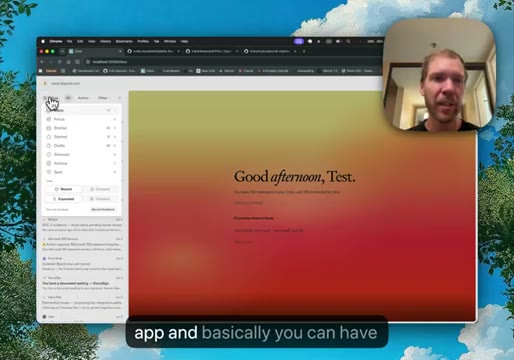
A button labeled ‘Allow recording feedback’ is shown within a React app, demonstrating Riffraff’s integration.
This rich data is then saved as a file and shared directly to a dedicated V2 Alpha channel in Slack. “It’s like rich information, better than a video,” the developer notes, highlighting Riffraff’s ability to provide a comprehensive diagnostic snapshot.
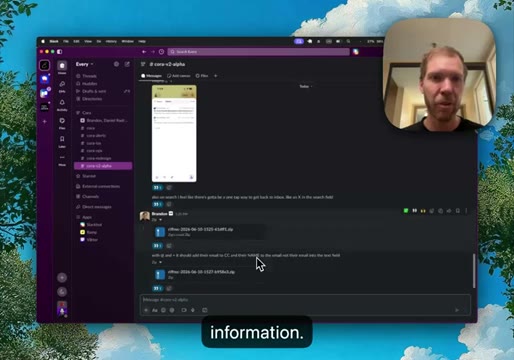
A Slack channel shows user feedback, including screenshots and Riffraff zip files, being processed.
The Intelligent Sorter: Automating Feedback Processing
A scheduled “Alpha Feedback Pulse” skill, powered by Cloth Co-work, processes Slack feedback by fetching messages, classifying feedback, checking status, and downloading Riffraff recordings for deeper analysis, generating structured YAML and Markdown files.
Once feedback lands in Slack, the AI factory springs to life. A scheduled routine, powered by Cloth Co-work, runs multiple times a day (morning, evening, and sometimes manually triggered). This routine executes a custom “Alpha Feedback Pulse” skill, designed to ingest and structure the raw information.
The skill performs several critical tasks:
- Fetches Messages: Using the Slack MCP (Message Processing), it reads all new feedback.
- Classifies Feedback: It intelligently categorizes the type of feedback received.
- Checks Status: It verifies if similar issues have already been addressed.
- Downloads Recordings: If Riffraff recordings or videos are present, it downloads them for deeper analysis by “compound engineering.”
This automated processing ensures that no feedback is lost and that all necessary context is prepared for the next stage. It also generates structured YAML files to track reported items and Markdown files detailing discovered issues, creating a searchable, organized knowledge base.
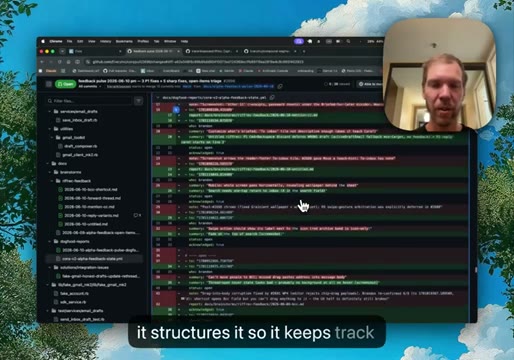
A YAML file displays structured feedback data, showing how the AI organizes reported items.
The AI Coder: Transforming Ideas into Pull Requests
The developer uses Cursor, an AI-powered code editor, to instruct the cloud AI to process batched feedback using LFG Flow from Compound Engineering, autonomously generating code fixes and video walkthroughs for a single pull request.
This is where the magic truly unfolds. While the initial trigger is still manual – the developer currently goes to Cursor, an AI-powered code editor, to initiate the next step – the potential for full automation is clear.
The developer instructs the cloud AI within Cursor, leveraging a powerful workflow called LFG Flow from Compound Engineering, to process the batched feedback. “Log flow for each of the every items in the pull request. Let’s work in this PR branch too. So like I combine it.” This crucial step aggregates multiple feedback items into a single, manageable pull request branch.
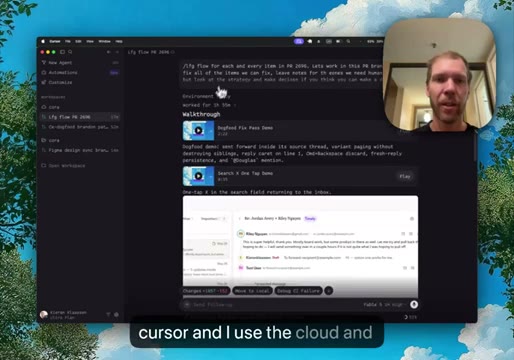
The Cursor AI editor shows a prompt instructing the AI to fix items and leave notes based on a strategy doc.
The AI’s directive is simple yet profound: “Fix all the items. Leave notes for the ones that need human input.” Guided by a “strategy doc” that outlines decision-making principles, the AI autonomously generates code to address the reported issues. What’s truly remarkable is the output: not just code, but also video walkthroughs demonstrating the fixes. “You can see here that in the walkthrough it just shows you in video form all the things it fixed, which is really cool.” This transparency allows for quick human review of the AI’s work.
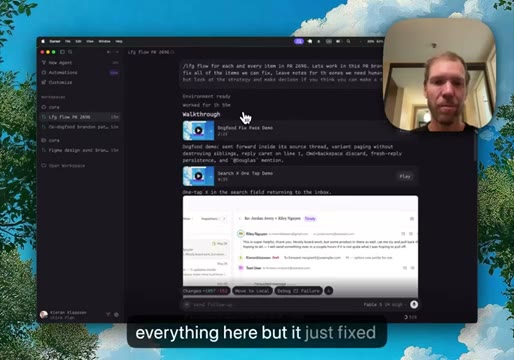
A video walkthrough generated by the AI shows code changes being applied to the application.
The Art of Review: Batching, Learning, and Polishing
The AI factory streamlines review by batching multiple feedback items into a single pull request, reducing cognitive load, and the system, powered by Compound Engineering, learns from mistakes to prevent their recurrence.
Even with an AI doing the heavy lifting, human oversight remains vital. However, the AI factory significantly streamlines the review process.
A key insight from the developer is the power of batching. Instead of reviewing 17 individual pull requests for 17 separate feedback items, the AI consolidates them into a single, comprehensive PR. “I mine the stuff in batches and I kind of like that because it’s manageable for me to review. Just imagine like there like 17 items I think that were found in Slack. Like imagine you have to review 17 pull requests. It’s a lot of work.” This approach drastically reduces context switching and cognitive load for the human reviewer.
After the AI generates the fixes, the developer checks out the branch, reviews the video walkthroughs, and uses a custom command, /f polish, which spins up a local server for interactive testing. This allows for a final quality check before merging.
Perhaps the most impressive aspect of this system, powered by Compound Engineering, is its ability to learn. “If it makes a mistake, it will also not make the same mistake the next time.” This self-correcting mechanism ensures continuous improvement, making the AI factory more robust and reliable with each iteration.
The “Superpower” Moment: Waking Up to Done
The developer experienced a “superpower” moment when he woke up to a colleague praising design improvements that were automatically merged overnight, fulfilling the dream of AI handling complex development tasks autonomously.
The true “superpower” moment, as described by the developer, came last night. He initiated the process, instructed the system to “merge it” if everything looked good and the CI (Continuous Integration) checks passed, and then went to sleep.
“This morning I woke up, and Brandon said, ‘Whoa, like the design looks good, or like things things are slick.’ I like that’s cool. I was sleeping and it was doing that. So, that’s the dream.”
This anecdote perfectly encapsulates the promise of the AI software factory: a world where complex development tasks are handled autonomously, freeing up human developers to focus on higher-level design, strategy, and innovation, rather than the minutiae of bug fixing and repetitive coding. It’s about leveraging AI to achieve a state of flow where the core work progresses even when you’re offline.
The Road Ahead: Refining the Autonomous Dream
The journey towards a fully autonomous software factory is ongoing, with plans to further integrate these capabilities into Compound Engineering and explore new tools to push the boundaries of AI-driven development.
While the current setup is already delivering transformative results, the journey towards a fully autonomous software factory is ongoing. The developer plans to further integrate these capabilities into Compound Engineering, making the entire process even more robust and seamless. New tools and methodologies are constantly being explored to push the boundaries of what’s possible.
This pioneering work with Fable 5 and the custom AI pipeline at Every offers a compelling glimpse into the future of software development. It’s a future where AI doesn’t just assist, but actively participates, learns, and builds, allowing human creativity and strategic thinking to truly flourish. The dream of an AI that codes while you sleep is no longer a distant vision; it’s being built, one autonomous pull request at a time.
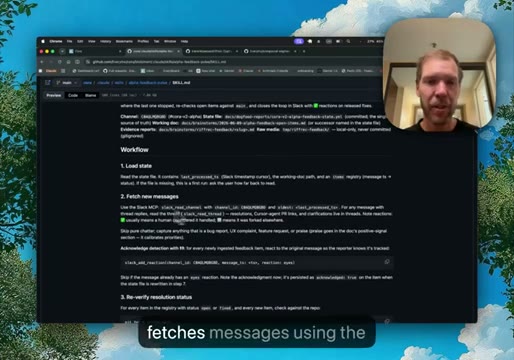
A flowchart illustrates the ‘Alpha Feedback Pulse’ skill, detailing its steps for processing feedback.
Based on “The shifting line between free speech and a criminal threat | Throughline” from NPR Podcasts Watch the original video
The Perilous Power of Words: How the Supreme Court Navigated Free Speech and Intimidation
Episode summary
This Throughline episode from NPR meticulously dissects the shifting legal definition of a “true threat” versus protected free speech in the U.S., arguing that the line has consistently been drawn to safeguard political dissent, even when it impacts private citizens. The journey begins with Robert Watts, an 18-year-old Black man who, in 1966, was arrested for saying, “If they ever make me carry a rifle, the first man I want to get in my sights is LBJ,” a comment made at an anti-Vietnam War protest that was met with laughter, not alarm, by his peers. This led to the landmark Watts v. United States Supreme Court case, which established “true threats” as an unprotected category of speech, but crucially defined them as more than “loose talk or political hyperbole,” considering context, conditionality, and audience reaction.
The court further refined this in Virginia v. Black (2003), distinguishing between cross burnings intended to intimidate (like two men setting a cross on a Black neighbor’s lawn) and those as part of KKK rituals, with Justice Clarence Thomas powerfully arguing that the historical context of cross burnings inherently signifies terror. Most recently, Counterman v. Colorado (2023) overturned the conviction of a man who sent hundreds of terrifying messages to a musician, ruling that prosecutors must prove the speaker acted with “conscious disregard” that their statements would be threatening, not just that a “reasonable person” would feel terrorized. This trajectory reveals a consistent legal bias towards protecting political speech, even if it inadvertently makes it harder to prosecute stalkers or those making private threats.
August 27th, 1966. On the Washington Monument grounds, a gathering of young activists, mostly teens and men in their early twenties, met near the Sylvan Theater. They were members of the Web Du Bois Club, a youth organization sponsored by the Communist Party USA, deeply entrenched in the era’s civil rights, labor, and anti-big government movements. Their primary focus that day was protesting the Vietnam War and the racially disproportionate draft, which saw Black men, only 12% of the US population, making up over 30% of ground combat troops in Vietnam.
Amidst discussions on police brutality, an 18-year-old named Robert Watts made an off-the-cuff comment. “If they ever make me carry a rifle,” he allegedly said, “the first man I want to get in my sights is LBJ. They’re not going to make me go kill my Black brothers.” LBJ, of course, referred to Lyndon Baines Johnson, the President of the United States. The crowd laughed. It was a jest, a hyperbolic expression of deep-seated anger and political dissent.
But not everyone found it funny. An investigator with the US Army was in the crowd, monitoring anti-war protests. To him, “scope president LBJ” sounded like a direct threat. Watts was arrested and prosecuted under a 1917 federal law that made it illegal to threaten the president. This seemingly minor incident would ignite a decades-long legal battle, forcing the Supreme Court to grapple with one of the most fundamental tensions in American society: how to balance the constitutional guarantee of free speech with the imperative of public safety, especially when words seem to cross the line into criminal threats.
In an increasingly polarized world, where threats and harassment against public officials—from presidents to local librarians—have become disturbingly common, the questions raised by Robert Watts’s comment remain more relevant than ever. How do we define a “threat” in an age where the internet amplifies voices, making threats easier to make, harder to trace, and subject to countless interpretations? And how do we protect robust, even caustic, political speech without enabling genuine calls for violence? The Supreme Court has repeatedly tried to draw this shifting line, revealing the enduring difficulty of the task.
The Birth of “True Threats”: Watts v. United States (1969)
In Watts v. United States (1969), the Supreme Court overturned Robert Watts’s conviction for threatening President Johnson, establishing that “true threats” must be more than “loose talk or political hyperbole,” considering context, conditionality, and audience reaction.
The arrest of Robert Watts was unusual, particularly given the United States’ unusually permissive speech laws. As David L. Hudson Jr., an associate professor of law at Belmont University and a First Amendment fellow for the Freedom Forum, notes, “We’re a free speech outlier in the world.” Unlike many other countries where hate speech is unprotected, in the US, it’s constitutionally protected for adults “unless it incites imminent lawless action, rises to the level of a true threat, or is considered fighting words.”
Watts’s comment, “If they ever make me carry a rifle, the first man I want to get in my sights is LBJ,” was not, in his mind, a serious intent to assassinate President Johnson. It was a visceral protest against an unjust war and racial discrimination. Yet, he was prosecuted.
This wasn’t the first time an American citizen got into trouble for a seemingly flippant remark about a president. In 1798, during the era of the Alien and Sedition Acts, a drunk Luther Baldwin in New Jersey allegedly quipped, regarding a ceremonial cannon salute for President Adams, “I hope if they fire at President Adams, they fire through his ars.” He was prosecuted under the Alien and Sedition Acts, which criminalized “false, scandalous, and malicious statements against the federal government,” a Federalist-controlled Congress’s attempt to silence opposition. While those acts expired in 1801, a similar sentiment resurfaced with the 1917 law under which Watts was charged, passed during World War I—another moment of national anxiety.
The 1960s were a “flash point” for the First Amendment, according to Maryanne Franks, a professor at George Washington Law School and president of the Cyber Civil Rights Initiative. “There’s a lot of clashes happening… liberal versus conservative, anti-war versus pro-public order.” Amid this turmoil, the US government’s Army Counter Intelligence Corps monitored protests for signs of espionage or communism. It was one of their investigators who overheard Watts.
After Watts’s conviction, he appealed. The US Court of Appeals upheld his conviction by a 2-1 vote, but the dissenting opinion by Justice James Skelly Wright proved crucial. Wright argued for “breathing space for critical speech,” warning that punishing all statements, even hyperbolic ones, that “by implication or through hyperbole encompass the violent end of the chief executive,” would “exert a chilling effect on political speech too drastic to be consistent with the guarantee of free expression.”
When the Supreme Court took up the Watts case in 1969, they did something surprising: they decided not to hear oral arguments. This usually signals that the Court considers a case “incredibly easy” or “really straightforward.” Just a few years prior, in New York Times v. Sullivan, the Court had ruled that “debate on public issues should be uninhibited, robust, and wide open, and it may well include vehement, caustic, and sometimes unpleasantly sharp attacks on government and public officials.” This standard, prioritizing robust debate, heavily influenced their view of Watts’s case.
On April 21st, 1969, the Supreme Court issued its ruling, focusing on the “first threshold question: what does it mean to make a threat?” They introduced the concept of “true threats,” stating that such threats must be “more than just sort of loose talk or political hyperbole.” The Court laid out what are now known as the “Watts factors”:
- Context: Watts’s statement was made in a political discussion group among activists.
- Conditionality: The threat was not unequivocal. It was conditional: “If they draft me and make and send me to Vietnam…”
- Audience Reaction: The listeners laughed, indicating they perceived it as a jest, not a serious attempt to assassinate the president.
The Supreme Court ruled in favor of Robert Watts, overturning his conviction. Justice William O. Douglas, in a concurring opinion, famously wrote that he “thought the days of the Alien and Sedition Act were over… prosecuting somebody for a comment that was really just made in jest.”
The Watts case was profoundly important. It established that “true threats” are an unprotected category of speech, entering the legal lexicon alongside obscenity, libel, and fighting words. Crucially, it also affirmed that not all speech critical of the president or public officials constitutes a true threat, ensuring “breathing space” for political dissent.
Defining the Threat: Virginia v. Black (2003)
The Court in Virginia v. Black (2003) upheld laws against cross burning with intent to intimidate, defining a true threat as a “serious expression of an intent to commit an act of unlawful violence,” but overturned a conviction where intent was presumed.
While Watts introduced the term “true threats,” it didn’t provide a precise definition, leading to a period of confusion in lower courts. That clarity would come about 30 years later, in the early 2000s, when the Supreme Court addressed two consolidated cases revolving around the deeply symbolic and terrifying act of cross burning.
One case involved Barry Elton Black, a local Ku Klux Klan leader in Virginia. In 1998, Black organized a Klan rally in Carroll County, choosing a spot near an open highway. With the property owner’s permission, they erected and burned a 30-foot cross. During the event, attendees reportedly spoke about “randomly shooting Black people.” A woman related to the property owner witnessed this, horrified by the sight of people in Klan hoods. Black was arrested and convicted under a Virginia state law that outlawed burning a cross “with an intent to intimidate a person or group,” and crucially, stipulated that any cross burning was inherently evidence of such intent.
The other case involved Richard Elliot and Jonathan O’Meara. In May 1998, after his Black neighbor, James Jubilee, complained about Elliot firing guns in his backyard, Elliot and O’Meara drove a truck onto Jubilee’s property, planted a cross, and set it on fire. They were also arrested under the same Virginia law.
These two cases, consolidated before the Supreme Court, posed a fundamental question: Did the Virginia statute, which criminalized cross burning with an intent to intimidate and presumed that intent, violate the First Amendment? At the heart of the debate was the meaning of burning a cross.
During oral arguments, a “profoundly unusual thing happened,” as described in the transcript. Justice Clarence Thomas, at the time the sole Black justice on the court, spoke. He had not spoken during arguments in six to eight years. Thomas agreed with the state of Virginia, emphasizing the historical context of cross burnings: “It’s my understanding that we had almost 100 years of lynching and activity in the South by the Knights of Chameleia and and the Klux Klan. And all of a sudden he talks about the clan and the burning cross being a tool, a tool used in lynchings… this was a reign of terror. And the cross was a symbol of that reign of terror. Wasn’t isn’t that significantly greater than intimidation or a threat?”
Justice Thomas’s intervention underscored that for Black individuals, a burning cross was not mere symbolism; it was a potent sign of impending physical violence, regardless of the specific intent of the burner in that moment. The impact on the targeted individual was paramount.
The Supreme Court announced its ruling on April 7th, 2003. It upheld state laws that make cross burning a crime, but “only in limited circumstances where the purpose of the burning is intimidation.” The Court recognized that “not all cross burnings are the same.” The act could signify constitutionally proscribable intimidation or “core political speech,” like a KKK ritual celebrating identity.
This distinction was key. While Elliot and O’Meara’s act of burning a cross on Jubilee’s lawn was clearly an intent to intimidate and a tool of terror, Barry Elton Black’s cross burning as part of a Klan meeting, though abhorrent, was viewed as a form of “shared group ideology.” The Court ultimately overturned Black’s conviction because the Virginia law’s provision that any cross burning was presumptive evidence of intent to intimidate violated the First Amendment. It shifted the burden to the prosecution to prove intent.
In its ruling, the Supreme Court finally provided a clearer definition of a true threat: “The speaker means to communicate a serious expression of an intent to commit an act of unlawful violence to a particular individual or group of individuals.” This was a significant development, giving the legal system a more concrete framework than Watts had offered. However, Justice Thomas dissented, maintaining his conviction that the very act of burning a cross was inherently meant to intimidate.
The Digital Dilemma: Counterman v. Colorado (2023)
In Counterman v. Colorado (2023), the Supreme Court ruled that to convict someone for a true threat, prosecutors must prove the speaker acted with “conscious disregard” that their statements would be threatening, not just that a reasonable person would feel terrorized.
The years following Virginia v. Black brought new challenges. The rise of social media and escalating political and social tensions in the country created a fertile ground for threats that often fell into a legal gray area. Law professor David Hudson Jr. experienced this firsthand, recalling an incident where men in a pickup truck with Confederate flags chanted “White power” at him and his family after Barack Obama’s election, a period he describes as an eruption of “violent, virulent racism.”
Online threats to public officials became a major concern, complicating the work of the Secret Service and the Supreme Court. Maryanne Franks highlights how the internet fundamentally changed the nature of speech. It’s no longer just spontaneous verbal communication; it’s a “mix of speech and conduct,” a conscious act of typing and disseminating, potentially reaching millions. “We’ve never really seen the Supreme Court grapple with that and suggest that maybe that means that some of the standards have to be changed,” Franks observes, adding that “many, many abusers… talk about the boundaries of the First Amendment and how they can get away with things.”
This evolving context played a pivotal role in the most recent Supreme Court case on true threats: Counterman v. Colorado. The story begins in 2014 with Billy Raymond Counterman, a man from Colorado who became obsessed with local musician Cole Whan. Whan, an up-and-coming artist, was cultivating her fanbase when Counterman began sending her hundreds of Facebook messages. She rebuffed him, blocked him, but he would simply create new accounts and continue.
Whan described the messages as “really disturbing,” indicating he knew her or was watching her. She developed a “heightened fearful sense of my surroundings,” constantly scanning crowds at her performances, looking for suspicious individuals. Her bandmates noticed her terror. Her fear escalated when a family member discovered Counterman had prior convictions for making violent threats against female family members. She reported him to the police.
Counterman was arrested and convicted under a Colorado stalking law that criminalized repeated communication with someone in a way that would cause a “reasonable person” to suffer serious emotional distress. Counterman, who was diagnosed with a mental illness, argued that he was innocent because he didn’t intend for Whan to feel terrorized. His argument forced the Supreme Court to confront the unresolved question: Does the speaker have to know their words are threatening, or is it enough that a “reasonable person” would feel threatened?
In its 7-2 decision, read by Justice Elena Kagan, the Supreme Court ruled in favor of Billy Counterman, overturning his conviction. The Court stated that prosecutors must show the speaker acted with “conscious disregard” as to whether their statements would be considered threatening. It’s not about intending to terrorize, but about knowing there was a “substantial risk” that the recipient would perceive the statements as terrifying, and proceeding anyway.
Justice Kagan’s opinion emphasized the need to “ensure that the prosecution of unprotected speech doesn’t… chill valuable protected expression.” The Court explicitly linked this back to Watts, arguing that allowing convictions without showing some subjective awareness on the part of the defendant could lead to the prosecution of “hyperbolic political type statements that somebody else might view as a threat that the speaker really didn’t intend as a true threat.”
This ruling, made in the name of preserving the rights of the “Watts of the world” to criticize government and politicians, had a significant side effect: it also impacted private citizens, including victims of domestic abuse and stalking. Critics argue it effectively gives private stalkers “even more room to stalk” than someone criticizing a political figure.
The Enduring Question in a Polarized World
The ongoing challenge of balancing free speech and criminal threats, particularly in a polarized, digital world, reveals an “impossible to get it completely right” dilemma, impacting both political dissent and private safety.
From a young activist’s offhand remark about President Johnson to the terrifying online stalking of a musician, the Supreme Court has consistently grappled with the elusive boundary between protected speech and criminal threats. The journey through Watts, Black, and Counterman reveals a continuous effort to define “true threats” while safeguarding the vital “breathing space” for free expression in a democracy.
Yet, the core dilemma remains “an enduring question,” one that seems “impossible to get it completely right.” In an era of profound political polarization and vitriolic online rhetoric, David Hudson Jr. worries about an increase in “true threat prosecutions,” potentially catching “a few Watses in the mix” due to overzealous prosecutors targeting individuals who didn’t intend their statements to be threatening.
This tension highlights two opposing views: the “safety valve theory” of free speech, which suggests that allowing people to vent or “blow off steam” might actually prevent violence, versus the idea that incendiary speech is a “window into troubled souls,” signaling a clear danger. Both perspectives hold truth, making the balance even more precarious.
Maryanne Franks adds another crucial dimension: the power dynamics. While much of the legal focus is on what individuals can say to public figures, or to each other, less attention is paid to “how much the government or public officials themselves are able to cause fear and intimidation in their citizens.” If free speech is truly about empowering the public to criticize the government, Franks argues, then we must also consider the government’s role in potentially repressing dissenting voices or engaging in violence against those who disagree.
The line between free speech and a criminal threat is not static; it shifts with technological advancements, societal tensions, and political climates. Each Supreme Court ruling attempts to anchor it, but the complexities of human intent, perception, and the ever-evolving mediums of communication ensure that this perilous balance will remain a defining challenge for American justice.
Based on “The Young Economic Populists Reshaping the Left” from New York Times Podcasts Watch the original video
The Unsettling Transformation of America’s Educated Class
Episode summary
This episode of The Daily explores the dramatic political shift of college graduates from conservative-leaning in the 80s and 90s to a strong progressive economic populism today. This transformation is primarily driven by economic forces: a national “PR campaign” for college led to an explosion in enrollment, including less competitive and for-profit institutions, diluting degree value while student debt doubled by 2020. The 2008 Great Recession, which offered no bailout for indebted graduates, ignited a deep sense of grievance, culminating in movements like Occupy Wall Street, where three-quarters of participants were college grads.
Post-recession, continued economic stagnation, wage suppression, and industry consolidation (like in healthcare, accelerated by Obamacare regulations) further alienated highly educated workers, making them feel like “cogs in some giant medical industrial complex” rather than management-adjacent professionals. This fueled the rise of figures like Bernie Sanders and Alexandria Ocasio-Cortez, and a near-doubling of support for socialism among young college graduates between 2010 and 2020. While demographic shifts and college campuses’ leftward lean play a role, the economic disillusionment of this cohort remains the most significant driver, creating a new class politics where highly educated individuals, feeling economically marginalized, are reshaping the left.
For decades, the path to a prosperous, upper-middle-class life in America seemed clear: go to college. It was the golden ticket, a guaranteed appreciating asset that promised affluence, stability, and a worldview aligned with smaller government and lower taxes. This was a demographic that, as recently as the 1980s, leaned Republican, often voting by double-digit margins for conservative candidates. They saw themselves as “management adjacent,” aspiring to executive roles where government interference was anathema.
But fast forward to today, and a dramatic political realignment has taken root. This once reliably conservative bloc of college graduates has swung sharply to the left, increasingly embracing economic populism. In the most recent election, college grads supported Kamala Harris over Donald Trump by a 15-point margin, and on issues like government spending, taxes, and regulation, they now stand much closer to their non-degreed counterparts than they ever did in the past. What explains this seismic shift? The answer, as explored in Nom Shber’s book “Mutiny: The Rise and Revolt of the College Educated Working Class,” lies primarily in a profound economic disillusionment, coupled with cultural currents and the subtle influence of academia.
The Shifting Sands of the Educated Electorate
The once reliably conservative college-educated bloc has swung sharply left, now embracing economic populism and aligning with non-degreed counterparts on economic issues, primarily due to profound economic disillusionment.
The transformation is stark. Historically, a college degree was synonymous with a certain economic and political outlook. Graduates envisioned a trajectory of upward mobility, comfortable salaries, and the kind of professional autonomy that fostered a conservative, pro-business mindset. They expected to be the architects of industry, not the cogs in its machine. This aspiration translated into political preferences that favored policies that would allow them to accrue wealth and manage their businesses without undue government oversight.
However, the reality that unfolded for subsequent generations of college graduates diverged sharply from this idealized vision. Instead of a clear path to affluence, many found themselves navigating a landscape of deep indebtedness, underemployment, and a gnawing sense of frustration. This unmet expectation, this feeling of being “squeezed in a whole variety of ways,” has fueled a profound sense of grievance, reshaping class politics and driving the college-educated further and further to the left.
The Broken Promise of Higher Education
The frustration stems from a broken promise that higher education would guarantee affluence, leaving many college graduates with unmet expectations and a sense of grievance.
The roots of this frustration stretch back several decades, tracing the evolution of higher education itself.
A National Obsession
From the 1980s, a national PR campaign championed college as an absolute necessity, tripling the proportion of Americans with four-year degrees to 30% by 2010.
In 1970, only about 10% of Americans held four-year college degrees. The vast majority of the workforce found stable, well-paying jobs without one. But as the 1980s and 90s progressed, the landscape began to shift dramatically. The decline of traditional blue-collar jobs—manufacturing roles lost to automation, globalization, and weakening unions—created a national anxiety. “Good jobs, good wages, a whole way of life disappearing forever,” lamented news reports of the era. The perceived solution, championed by politicians from Bill Clinton to George W. Bush and Barack Obama, was clear: everyone must go to college.
“Your children can go on to college,” Clinton declared. Obama set an ambitious goal: “By 2020, America will once again have the highest proportion of college graduates in the world.” This wasn’t just political rhetoric; it permeated society. Public school systems, charter networks like Kip Academy, and even parents echoed the message: college was no longer just a pathway to opportunity, but a prerequisite. As one Kip Academy founder put it, “college begins in kindergarten,” instilling in children as young as four and five the singular goal of obtaining a degree. This amounted to a national PR campaign, convincing an entire generation that higher education was an “absolute necessity.” By 2010, the proportion of Americans with four-year degrees had tripled to 30%.
Dilution and Debt
This explosion in demand led to a dilution of degree value through less selective institutions and a doubling of student debt by 2020, burdening graduates entering a precarious job market.
This explosion in demand for higher education spurred a corresponding expansion in its supply, but not always in ways that preserved its value. For-profit colleges proliferated, and many public universities, particularly “non-competitive” ones that admitted almost every applicant, expanded their ranks. While prestigious institutions continued to offer a strong return on investment, the value proposition for graduates of these newer, less selective schools became “a much more complicated picture.” The sheer increase in the number of graduates, combined with the varying quality of institutions, began to dilute the once-guaranteed “can’t lose asset” of a college degree.
Compounding this dilution was the simultaneous rise in student debt. Congress, in the early 90s and again during the 2007-2009 period, made it easier for students to borrow, raising limits on federal loans. The result was a staggering increase: student debt roughly doubled between the early 90s and 2020. This meant that a generation, hyped on the necessity of college, often attended institutions of questionable value, only to graduate burdened with “loads of debt” as they entered a precarious job market.
The Great Recession: A Catalyst for Disillusionment
The 2008 Great Recession, with its bailouts for Wall Street but none for indebted graduates, ignited a deep sense of injustice, culminating in movements like Occupy Wall Street where three-quarters of participants were college grads.
The precarious situation for these young college graduates “kind of falls apart around 2008” with the onset of the Great Recession and financial crisis. While millions lost jobs or struggled to find work, the blow was “uniquely sharp” for this cohort. Having been given the “hardest sell” about college, they entered the job market with sky-high expectations and massive debt, only to face an unemployment rate for recent grads that jumped to its highest level in decades.
The government’s response to the crisis further amplified their sense of injustice. Financial institutions, collapsing under the weight of their own debt, received aggressive bailouts. “Bailing out Wall Street is the only way to save Main Street,” President Bush declared. But for college graduates, who had done “everything that they thought they were supposed to do” and were now “stuck with this debt that’s suddenly weighing them down,” there was no such relief. “For us private citizens, nobody’s bailing us out and nobody’s helping us,” resonated the public sentiment.
This moment crystallized a perception of “two tiers of society in America”: Wall Street and the ultra-wealthy on one side, and “everyone else” on the other. This populist sentiment found its voice in the Occupy Wall Street movement in 2011. Protesters in Zuccotti Park railed against the “1%” who had “had it better than ever” while the “99% of Americans who are doing the right thing” were “getting left behind by the economy.” Significantly, studies showed that about three-quarters of Occupy participants were college graduates, many of whom specifically elevated student debt as a major concern. “Why are other people getting bailed out and I’m stuck with college loans? Why can’t I get a job that’s actually fulfilling that I like to do?” they demanded. This movement, though it eventually fizzled, marked a “real shift in their consciousness,” an “opening act” in a dramatic political realignment where college grads began to identify with the exploited rather than the exploiters.
The Age of Consolidation and Alienation
Post-recession, corporate consolidation across industries like healthcare further alienated highly educated workers, making them feel like “cogs in some giant medical industrial complex” rather than management-adjacent professionals.
The economic struggles didn’t end with the recession. Employment rates for young college grads remained low, wages never fully recovered, and the phenomenon of “scarring” meant that graduating into a recession could impact earnings for 10 to 15 years. Adding to this pressure was the accelerating trend of corporate consolidation across diverse industries like tech, retail, and healthcare.
Consolidation, where companies merge or acquire competitors, reduces the number of employers in a given sector. While it might benefit consumers in some ways (e.g., Facebook buying Instagram), for workers, it means “fewer options… and less power.” This often leads to feelings of frustration and alienation. A computer programmer, once feeling impactful at a startup, might suddenly find themselves a small cog in a “much more bureaucratic” giant tech company, with “a lot less agency.”
Nowhere was this more visible than in healthcare. Driven by Obama-era initiatives like Obamacare and regulations aimed at efficiency, hospitals and health systems began to merge at an unprecedented rate. To insulate themselves against new financial risks, they sought to get “bigger and bigger.” This had a dual impact on workers. For nurses or pharmacists, consolidation meant fewer potential employers, which could depress wages. For doctors, highly trained professionals who often spent years honing their “professional judgment,” the impact was different but equally profound. They found themselves working for massive systems, micromanaged by “MBAs and bean counters” who dictated patient time, hospital stays, and even conversation points. “We feel like cogs in some giant medical industrial complex. We might as well be factory workers,” one unionizing doctor lamented. The most educated people in society were beginning to feel like laborers, stripped of the control and stature they had earned with their degrees. This marked a critical shift: white-collar workers, once “management adjacent,” increasingly identified as “rank and file employees who were bossed around by management.”
The Rise of the New Left-Wing Populism
This alienation fueled the rise of figures like Bernie Sanders and Alexandria Ocasio-Cortez, nearly doubling support for socialism among young college graduates between 2010 and 2020.
By 2016, these simmering grievances found a mainstream political voice in Bernie Sanders. The independent senator from Vermont spoke directly to the “99% versus the 1%,” arguing that “the bosses and the billionaires are dominating the political system.” His message resonated deeply with college graduates, particularly younger ones, in a way that would have been “unimaginable a few decades earlier.”
Sanders’ appeal was a clear manifestation of the leftward shift. While he lost the Democratic nomination to Hillary Clinton, he “crushed her by a 2 to 1 margin” among college grads under 30. He gave “voice to the sense of grievance on the national political stage,” articulating a widespread feeling that “the economy just isn’t working for them.”
This momentum continued with figures like Alexandria Ocasio-Cortez, who famously stated, “It was literally easier for me to become the youngest woman in American history elected to Congress than it is to pay off my student loan debt.” She, and others like New York City mayoral candidate Zoran Mani (who garnered 84% support from college grads under 30), embodied this new demographic. The Democratic Socialists of America (DSA), a group once on the fringes, saw its membership explode from 5,000 before 2016 to nearly 100,000 by the end of the decade, a majority of them young, college-educated individuals. Support for “socialism” among college-educated people doubled between 2010 and 2020, from 20% to 40%. The “long tail of all this economic upheaval” had finally come to fruition, creating “momentum behind candidates and ideas that would have almost been unthinkable before the financial crisis and great recession.”
Beyond Economics: Cultural Currents and the “Diploma Divide”
While demographics and campus ideologies play a role, economic disillusionment is the primary driver; the “diploma divide” on voting patterns is largely cultural, as college and non-college grads converge on economic issues.
While economics is central, other factors have contributed to this leftward shift. One theory posits that changing demographics within the college-educated population—more women and people of color, who tend to be more progressive—explain the trend. While there’s “definitely something to this,” the data shows that “white male college grads during this period… also move pretty sharply to the left.” This suggests that the shift isn’t just about who is going to college, but how college itself, and the broader societal context, is shaping political identities.
The ideological composition of college faculty has also shifted dramatically. In the late 80s, less than half identified as liberal; by the mid-2010s, it was over 60%. Today, Democrats outnumber Republicans among faculty by about 10 to 1, a “stark difference” that likely influences students’ political identities.
Furthermore, it’s plausible that college graduates are moving left on economic issues not purely due to their financial circumstances, but also by identifying with the left on a range of cultural issues that matter to them, such as abortion rights, LGBTQ+ rights, or racial justice. Once within that “tribe,” they may adopt its economic platform. Research suggests that while some cultural shifts began before the Great Recession (around 2004), the “much, much sharper movement to the left” occurred after the 2008 economic collapse, underscoring the primacy of economic disillusionment.
It’s also crucial to acknowledge a paradox: while college grads may feel more like the working class economically, they aren’t voting like the non-degreed working class. The “diploma divide” has widened since 2012, with college grads voting Democrat and non-grads largely voting Republican (especially for Trump). However, on core economic issues like taxing the rich, supporting unions, or government’s role in healthcare, “people who graduated from college and people who didn’t have actually been moving closer and closer together over the past 20 years.” The divergence in voting patterns, it seems, has largely been driven by cultural issues, not economic ones. Intriguingly, even on some cultural issues like immigration and crime, there’s been recent convergence between college grads and non-grads, suggesting that these groups “don’t have so little in common that they can’t even talk to one another.”
The AI Revolution: A New Wave of Disruption?
The AI revolution threatens to extend this sense of powerlessness to more college-educated professionals, intensifying their identification as workers and reinforcing economic populist leanings.
Looking ahead, the rise of artificial intelligence (AI) is poised to further accelerate these trends. AI threatens to extend the “sense of powerlessness” previously felt by blue-collar workers and some white-collar professionals to an even wider array of college-educated individuals. Lawyers, bankers, consultants, marketing professionals, and those in sales are now confronting a reality where machines can perform their work “almost as well, if not better than they can.” This technological shift fundamentally alters their leverage in the workplace, making them feel increasingly at the mercy of executives and powerful corporations.
The “radicalizing” effect of AI is already visible. Tech workers, who once felt a strong bond with their companies and aspired to management, are now lashing out with “incredible anger” as mass layoffs occur and AI is cited as a reason for needing fewer workers. The stark divide between the “hundreds of billions or even trillions of dollars” accruing to a “small portion of very affluent, very rich owners and founders” and the “tens of thousands of people who’ve been laid off” is becoming “as stark as it’s ever been.”
While the precise political consequences remain to be seen, it’s clear that AI will intensify the feeling among college graduates that they are, fundamentally, workers. They are not management, not owners, but employees whose skills and livelihoods are increasingly vulnerable to technological disruption and corporate power. This will likely reinforce their identification with the “99%” and further solidify the economic populist leanings that have come to define this once-conservative demographic.
The transformation of America’s college-educated class from a bastion of conservatism to a driving force of the left is not merely a political curiosity; it’s a profound commentary on the evolving economic and social contract in America. Burdened by debt, disillusioned by unfulfilled promises, and increasingly feeling like “cogs in a giant industrial complex,” this generation is reshaping the political landscape in ways that will continue to reverberate for decades to come.
한국어
“How I Built an AI Software Factory With Fable 5” — Every 기반 기사 원본 영상 보기
AI 소프트웨어 팩토리: Fable 5로 개발 속도를 혁신하다
에피소드 요약
화자는 최근 Fable 5를 활용해 AI 소프트웨어 팩토리를 구축하며 개발 속도가 엄청나게 빨라졌다고 주장한다. 그는 이 시스템을 통해 코라(Kora) 버전 2를 개발 중이며, 이는 피드백 수집부터 코드 병합까지 자동화된 워크플로우를 통해 이루어진다. 핵심은 사내 사용자들로부터 슬랙(Slack)을 통해 피드백을 받고, 이를 ‘알파 피드백 펄스’라는 스킬이 자동으로 분류하고 처리하는 것이다. 특히, Riffraff라는 오픈소스 라이브러리를 사용해 사용자의 클릭, 음성, 네트워크 요청 및 오류까지 기록한 풍부한 피드백 파일을 생성하여 분석의 깊이를 더한다. 이렇게 수집된 정보는 야믈(YAML) 파일로 구조화되고, 이후 커서(Cursor)의 클라우드(Cloud) 기능을 활용해 AI가 자동으로 문제를 수정하고 풀 리퀘스트(Pull Request)를 생성한다.
이러한 자동화된 시스템은 개발자가 직접 17개의 풀 리퀘스트를 검토하는 대신, AI가 생성한 하나의 통합된 풀 리퀘스트만 검토하면 되므로 작업 효율을 극대화한다. 화자는 이 과정이 때로는 2~4시간이 걸리지만, 지난밤에는 시스템을 가동해두고 잠든 사이 AI가 모든 작업을 완료하고 CI(Continuous Integration)까지 통과해 코드 병합까지 마쳤다고 언급하며, 이를 “꿈같다”고 표현했다. 이 사례는 AI를 활용한 개발 자동화가 단순한 효율성 증대를 넘어, 개발자가 잠자는 동안에도 제품을 개선하는 수준의 생산성 혁신을 가져올 수 있음을 시사한다. 물론, 초기 설정과 시스템 구축에 상당한 노력이 필요하며, AI가 모든 결정을 내리기 어려운 부분에서는 여전히 인간의 개입이 필요하다는 한계도 존재한다.
최근 소프트웨어 개발 분야에서는 인공지능(AI) 기술이 단순한 보조 도구를 넘어, 개발 프로세스의 핵심 동력으로 자리 잡고 있습니다. 특히 ‘Fable 5’와 같은 최신 AI 모델은 개발자가 상상하던 ‘AI 소프트웨어 팩토리’를 현실로 만들고 있습니다. 유튜브 채널 ‘Every’의 영상에서, 한 개발자는 Fable 5를 활용해 자신의 프로젝트 ‘코라(Kora)‘를 재구축하며 경험한 놀라운 개발 속도와 자동화의 비전을 공유했습니다. 이는 단순한 기능 개선을 넘어, 개발 방식 자체의 거대한 변화를 예고합니다.
Fable 5, 개발 생산성의 새로운 지평을 열다
화자는 Fable 5 사용 일주일 만에 ‘코라’ 버전 2 재구축 속도가 ‘팩토리’처럼 빨라졌음을 강조하며, 이전에는 어려웠던 작업들이 가능해졌다고 밝혔다.
영상의 화자는 Fable 5를 사용한 지 일주일 만에 “가장 좋아하는 모델”이 되었고 “거대한 변화”를 느꼈다고 고백합니다. 이전에는 어려웠던 작업들이 Fable 5 덕분에 “갑자기 작동하기 시작했다”는 것입니다. 그가 현재 재구축 중인 ‘코라(Kora)’ 버전 2는 완전한 인박스(Inbox) 시스템으로, Fable 5를 통해 상상할 수 없는 속도로 기능들을 구현하고 있습니다. 그는 이 과정을 “많은 것이 자동으로 이루어지는 팩토리”라고 표현하며, 자신의 개발 방식이 ‘정답’이라고 단언하기보다는 하나의 흥미로운 접근 방식임을 강조합니다.
AI 기반 피드백 시스템: Riffraff와 Slack의 시너지
내부 팀은 슬랙으로 피드백을 공유하고, 화자가 개발한 오픈소스 라이브러리 Riffraff는 사용자의 클릭, 음성, 네트워크 요청 및 오류까지 기록하여 풍부한 정보를 제공한다.
AI 소프트웨어 팩토리의 첫 단계는 효율적인 피드백 수집입니다. 화자의 팀은 내부적으로 ‘코라’를 사용하며 슬랙(Slack)을 통해 피드백을 공유합니다. 여기에는 스크린샷, Riffraff 압축 파일 등 다양한 정보가 포함됩니다. 흥미로운 점은 피드백 처리 상태가 ‘보는 중(ice)’ 또는 ‘해결됨(check marks of solved)‘으로 표시되어, 진행 상황을 한눈에 파악할 수 있다는 것입니다.
특히 ‘리프래프(Riffraff)‘는 이 시스템의 핵심입니다. 화자가 직접 개발한 오픈소스 라이브러리로, 리액트(React) 앱에 간단히 래핑(wrapping)하여 사용할 수 있습니다. 사용자가 버튼을 클릭하면 피드백 녹음이 시작되고, 클릭하는 모든 동작, 말하는 내용, 네트워크 요청 및 오류까지 기록합니다. 녹음을 중지하면 이 모든 정보가 담긴 파일이 생성되어 슬랙으로 공유됩니다. 이는 단순한 비디오 녹화보다 훨씬 풍부한 정보를 제공하여 문제 진단과 해결에 큰 도움을 줍니다.
자동화된 피드백 처리: ‘알파 피드백 펄스’ 스킬
수집된 피드백은 ‘알파 피드백 펄스’ 스킬을 통해 자동으로 분류되고, Riffraff 파일이 다운로드되어 분석되며, 모든 과정은 YAML 파일로 구조화되어 추적된다.
수집된 피드백은 자동으로 처리됩니다. ‘클라우드 코워크(Cloud Co-Work)‘에 스케줄링된 루틴이 매일 아침저녁으로 실행되는데, 화자는 때때로 수동으로 실행하기도 합니다. 이 루틴은 슬랙의 모든 메시지를 읽고 구조화하는 역할을 합니다.
여기서 핵심적인 역할을 하는 것이 ‘알파 피드백 펄스(Alpha Feedback Pulse)‘라는 스킬입니다. 이 스킬은 다음과 같은 작업을 수행합니다.
- 메시지 로드 및 분류: 슬랙 MCP(Slack Message Processing)를 사용하여 모든 메시지를 가져와 분류합니다.
- 완료 여부 확인: 이미 처리된 피드백인지 확인합니다.
- 녹화 파일 다운로드: Riffraff 녹화 파일이나 비디오 파일이 있다면 다운로드합니다. 이는 이후 ‘컴파운드 엔지니어링(Compound Engineering)‘을 통해 분석됩니다.
- 분석 스킬 활용: 다운로드된 파일을 분석하기 위해 특정 스킬을 사용합니다.
이 모든 과정은 야믈(YAML) 파일로 구조화되어 어떤 피드백이 보고되었고 처리되었는지 추적하며, 마크다운(Markdown) 파일로 문제점과 해결책을 기록합니다.
AI가 코드를 작성하다: Cursor와 LFG 플로우
화자는 구조화된 피드백을 ‘커서’ AI 코드 편집기에 입력하고, AI는 모든 문제를 해결하여 풀 리퀘스트를 생성하며, ‘LFG 플로우’로 수정 사항을 시각적으로 보여준다.
피드백이 구조화되면, 다음 단계는 AI를 통한 코드 작성입니다. 현재 이 단계는 화자가 수동으로 진행하지만, 자동화 가능성을 염두에 두고 있습니다. 화자는 매일 아침저녁으로 두 번, 구조화된 피드백을 ‘커서(Cursor)‘라는 AI 코드 편집기에 입력하고, ‘클라우드(Cloud)‘에 지시를 내립니다.
그는 “풀 리퀘스트(Pull Request)의 모든 항목에 대해 로그 플로우(log flow)를 실행하고, 모든 항목을 수정하며, 사람의 개입이 필요한 부분에는 메모를 남겨라. 그리고 전략 문서(strategy doc)를 참조하여 결정을 내릴 수 있다면 그렇게 하라”고 지시합니다.
그 결과는 놀랍습니다. AI는 모든 문제를 해결하고, 심지어 영상 형태로 수정된 사항들을 보여주는 ‘LFG 플로우(LFG flow)‘를 생성합니다. 화자는 자신이 보고된 모든 내용을 정확히 알지 못해도 AI가 알아서 해결하는 모습에 감탄합니다. 이 ‘LFG 플로우’는 ‘컴파운드 엔지니어링’에서 파생된 것으로, 개발 과정을 시각적으로 추적하는 데 큰 도움을 줍니다.
효율적인 검토와 학습: Compound Engineering의 역할
AI는 17개의 피드백 항목을 하나의 풀 리퀘스트로 묶어 처리하며, ‘컴파운드 엔지니어링’은 AI의 실수를 학습하여 시스템의 지속적인 개선과 안정성을 보장한다.
AI가 생성한 코드는 검토 과정을 거칩니다. 화자는 해당 브랜치를 체크아웃(checkout)하고, 필요한 경우 비디오를 확인합니다. 특히 /f polish 명령어를 사용하면 로컬 서버가 열려, 개발 중인 앱을 실시간으로 확인하며 변경 사항을 검토할 수 있습니다.
여기서 중요한 통찰은 작업을 ‘배치(batches)‘로 처리하는 것입니다. 예를 들어 슬랙에서 17개의 피드백 항목이 발견되었다면, AI는 이 모든 것을 하나의 풀 리퀘스트로 묶어 처리합니다. 만약 17개의 개별 풀 리퀘스트를 검토해야 한다면 엄청난 작업량이 되겠지만, Fable 5는 이를 효율적으로 관리 가능하게 합니다.
더 나아가 ‘컴파운드 엔지니어링’의 학습 단계는 AI 소프트웨어 팩토리의 핵심입니다. AI가 실수를 저지르더라도, 다음번에는 같은 실수를 반복하지 않도록 학습하고 개선됩니다. 이는 시스템의 지속적인 발전과 안정성을 보장합니다.
개발자의 꿈, 현실이 되다: ‘자면서도 개발’
화자는 AI에게 작업을 지시하고 잠든 사이 AI가 CI를 통과해 코드 병합까지 완료한 경험을 ‘자면서도 개발’이라고 표현하며, Fable 5가 개발자의 생산성을 혁신한다고 강조했다.
이 모든 과정은 때때로 2~4시간이 걸리기도 하지만, 화자는 이를 “초능력(superpower)“이라고 표현합니다. 가장 마법 같은 순간은 전날 밤, AI에게 “모든 것이 좋고 CI(지속적 통합)가 초록색이면 병합(merge)하라”고 지시한 뒤 잠이 들었을 때였습니다. 다음 날 아침, 동료 브랜든(Brandon)이 “디자인이 멋지다”며 칭찬하는 것을 보고 화자는 자신이 잠든 사이에 AI가 작업을 완수했음을 깨달았습니다.
이는 모든 개발자의 꿈인 ‘자면서도 개발(developing while sleeping)‘이 현실이 되는 순간이었습니다. Fable 5와 같은 AI 모델은 개발자가 더 이상 반복적이고 시간이 많이 소요되는 작업에 얽매이지 않고, 더 창의적이고 전략적인 업무에 집중할 수 있도록 돕습니다. 화자는 이 시스템을 더욱 견고하게 만들고, ‘컴파운드 엔지니어링’에 더 많은 기능을 통합할 계획을 밝히며, 이 혁신적인 개발 방식에 대한 기대감을 감추지 않았습니다.
Fable 5가 이끄는 AI 소프트웨어 팩토리는 소프트웨어 개발의 미래를 재정의하고 있습니다. 피드백 수집부터 코드 작성, 검토 및 개선에 이르기까지 전 과정을 자동화하고 학습하는 시스템은 개발 속도를 극대화하고, 개발자의 삶을 더욱 풍요롭게 만들 잠재력을 가지고 있습니다.
“The shifting line between free speech and a criminal threat | Throughline” — NPR Podcasts 기반 기사 원본 영상 보기
자유 발언과 위협의 경계: 끓어오르는 사회 속, 말의 힘을 정의하다
에피소드 요약
이 영상은 자유 발언과 형사상 위협 사이의 경계가 어떻게 진화해 왔는지, 특히 미국 수정헌법 제1조가 ‘진정한 위협(true threat)‘을 어떻게 정의하고 보호된 표현과 구분하는지에 초점을 맞춥니다. 1966년 베트남 전쟁 반대 시위 중 로버트 와츠(Robert Watts)가 대통령을 위협하는 듯한 발언을 했다가 체포된 사건은 이 논의의 중요한 출발점이 됩니다. 당시 대법원은 와츠의 발언이 ‘정치적 과장(political hyperbole)‘이며 ‘진정한 위협’이 아니라고 판결하며, 발언의 맥락, 조건부적 성격, 청중의 반응(웃음)을 중요한 판단 기준으로 제시했습니다. 이는 표현의 자유를 폭넓게 인정하고, 공직자에 대한 비판적 발언을 보호하려는 의지를 보여준 사례로 평가됩니다.
그러나 ‘진정한 위협’에 대한 명확한 정의는 여전히 모호했고, 2003년 버지니아 대 블랙(Virginia v. Black) 사건에서 흑인 가정을 위협하기 위한 십자가 방화가 ‘진정한 위협’으로 인정되며 구체화되기 시작했습니다. 특히 2023년 카운터맨 대 콜로라도(Counterman v. Colorado) 사건에서는 스토킹 메시지를 보낸 피고인이 정신 질환을 앓고 있었고 위협의 의도가 없었다고 주장하며, 위협 여부 판단에 있어 ‘합리적인 사람(reasonable person)‘의 관점과 ‘화자의 주관적 의도’ 중 어느 것이 우선되어야 하는지에 대한 논쟁이 벌어졌습니다. 대법원은 피고인이 자신의 발언이 위협적일 수 있다는 ‘상당한 위험(substantial risk)‘을 인지했어야 한다고 판결하며, ‘의도(intent)‘가 아닌 ‘무모함(recklessness)‘을 기준으로 제시했습니다. 이는 정치적 발언의 자유를 보호하려는 취지에서 비롯되었지만, 스토킹이나 가정 폭력 피해자들에게는 위협을 입증하기 더 어렵게 만들어 잠재적인 위험을 초래할 수 있다는 시사점을 남깁니다.
미국 수정헌법 제1조가 보장하는 ‘자유 발언(Free Speech)‘의 권리는 민주주의의 핵심 가치 중 하나입니다. 이는 시민이 정부나 공공 정책에 대해 자유롭게 비판하고 의견을 표명할 수 있는 근간을 이룹니다. 그러나 타인에게 해를 끼치거나 공포를 유발하는 ‘위협(Threat)’ 발언은 어디까지 보호받아야 할까요? 이 복잡한 질문은 시대의 변화와 함께 끊임없이 새로운 도전을 던져왔습니다.
미국 대법원은 지난 수십 년간 세 차례의 주요 판결을 통해 이 난해한 질문에 답을 찾아왔습니다. 베트남 전쟁에 대한 정치적 과장(political hyperbole)에서 시작하여, 백인 우월주의자들의 십자가 방화(cross-burning)가 내포하는 역사적 공포, 그리고 디지털 시대의 온라인 스토킹(online stalking)에 이르기까지, 대법원은 자유 발언과 ‘진정한 위협(true threats)’ 사이의 미묘한 경계를 끊임없이 재정의해 왔습니다. 이 기사는 이 세 가지 중요한 판례를 통해 미국 사회가 어떻게 ‘말의 힘’과 ‘안전’ 사이의 균형을 찾아왔는지 심층적으로 탐구합니다.
1부: 자유 발언의 초석: 와츠 대 미국 사건 (Watts v. United States, 1969)
1966년 로버트 와츠는 베트남 전쟁 반대 시위 중 대통령을 위협하는 듯한 발언으로 체포되었으나, 이는 ‘정치적 과장’으로 간주되어 자유 발언의 보호 범위에 대한 논의가 시작되었다.
1966년 8월 27일, 워싱턴 기념탑(Washington Monument) 근처에서 주로 10대 후반과 20대 초반의 청년들이 모였습니다. 이들은 미국 공산당(Communist Party USA)이 후원하는 청년 단체인 ‘웹 뒤부아 클럽(Web Dubo Club)’ 소속으로, 당시 미국 사회를 휩쓸던 민권 운동(civil rights movement), 노동 운동, 반정부 정서에 편승한 좌파 그룹이었습니다. 이들은 특히 베트남 전쟁과 인종차별적인 징병제에 반대하는 시위를 벌이고 있었습니다. 당시 흑인 남성은 미국 인구의 12%에 불과했지만, 베트남 지상 전투 부대의 30% 이상을 차지하며 불균형적인 희생을 강요당했습니다.
경찰의 만행에 대한 토론 그룹에서 로버트 와츠(Robert Watts)라는 18세 청년은 즉흥적인 발언을 했습니다. “만약 그들이 나를 베트남으로 보내 싸우게 한다면, 내 조준경(scope)에 들어올 첫 번째 사람은 LBJ(린든 B. 존슨 대통령)가 될 것이다. 나는 내 흑인 형제들을 죽이러 가지 않을 것이다.” LBJ는 당시 미국 대통령이었던 린든 베인즈 존슨(Lyndon Baines Johnson)을 지칭했습니다. 그의 발언에 주변 사람들은 모두 웃었지만, 현장에 있던 미 육군 정보요원은 이를 심각한 위협으로 간주했습니다.
미국의 독특한 자유 발언 보호
미국은 다른 나라와 달리 혐오 발언도 즉각적인 불법 행위 선동이나 진정한 위협이 아닌 한 헌법적으로 보호하며, 와츠 사건은 1917년 제정된 대통령 위협 금지법에 따라 기소되었다.
와츠는 1917년에 제정된 ‘대통령에 대한 위협을 불법으로 규정하는 연방법’에 따라 체포되고 기소되었습니다. 이는 미국의 발언 관련 법률이 다른 나라에 비해 매우 관대한 편이라는 점에서 다소 이례적인 일이었습니다. 벨몬트 대학교 법대(Belmont University Law School)의 데이비드 L. 허드슨 주니어(David L. Hudson Jr.) 교수는 미국을 “전 세계적으로 자유 발언의 예외적인 국가(free speech outlier)“라고 설명합니다. 대부분의 다른 국가에서 혐오 발언(hate speech)은 보호받지 못하지만, 미국에서는 즉각적인 불법 행위(imminent lawless action)를 선동하거나, 진정한 위협(true threat)에 해당하거나, 싸움 유발적 언사(fighting words)로 간주되지 않는 한 헌법적으로 보호받습니다.
와츠의 사건은 과거의 선례와도 비교됩니다. 1798년, ‘외국인 및 선동법(Alien and Sedition Act)’ 시대에 루터 볼드윈(Luther Baldwin)이라는 남자가 술에 취해 “대통령 애덤스를 향해 대포를 쏠 거라면, 그의 엉덩이를 관통하게 쏴라”고 말했다가 기소된 사건과 유사합니다. 이 법은 연방 정부에 대한 ‘거짓되고, 스캔들적이며, 악의적인 발언’을 범죄로 규정하여 신생 공화국의 정치적 반대 의견을 침묵시키려 했습니다. 이 법은 몇 년 후 만료되었지만, 1차 세계대전 말기 국가적 불안감이 고조되던 1917년에 대통령에 대한 위협을 범죄로 규정하는 새로운 법이 통과되었고, 와츠가 기소된 법이 바로 이것입니다.
대법원의 판단: 정치적 과장은 위협이 아니다
1969년 대법원은 와츠의 발언이 정치 토론 맥락, 조건부적 성격, 청중의 반응 등을 고려할 때 ‘정치적 과장’이며 ‘진정한 위협’이 아니라고 판결하여 그의 유죄를 뒤집었다.
1960년대는 수정헌법 제1조(First Amendment)의 해석에 있어 중대한 시기였습니다. 당시 대법원은 ‘뉴욕 타임스 대 설리번(New York Times v. Sullivan)’ 판결을 통해 공적 문제에 대한 토론은 “억제되지 않고, 활발하며, 개방적이어야 하며, 정부와 공무원에 대한 맹렬하고 신랄하며 때로는 불쾌하게 날카로운 공격을 포함할 수 있다”고 밝혔습니다.
와츠는 유죄 판결을 받았으나 항소했고, 연방 항소 법원은 2대 1로 유죄를 유지했습니다. 그러나 제임스 스켈리 라이트(James Skelly Wright) 대법관의 반대 의견은 중요했습니다. 그는 “비판적인 발언을 위한 숨 쉴 공간(breathing space)을 허용해야 한다”며, 정치적 발언에 대한 처벌이 표현의 자유를 위축시킬 수 있다고 주장했습니다.
1969년, 대법원은 와츠 사건을 심리하기로 결정했습니다. 대법원은 구두 변론(oral arguments) 없이 판결을 내렸는데, 이는 사건이 매우 명확하다고 판단했음을 의미합니다. 대법원은 와츠의 발언이 맥락상 ‘진정한 위협’이 아닌 ‘느슨한 발언(loose talk)’ 또는 ‘정치적 과장(political hyperbole)‘에 불과하다고 판단했습니다.
법원은 ‘와츠 요소(Watts factors)‘를 제시하며, 위협이 진정한 위협인지 판단하는 세 가지 기준을 제시했습니다.
- 발언이 이루어진 맥락(Context): 정치 토론 그룹 내에서 이루어진 점.
- 위협의 조건부적 성격(Conditional nature): “만약 베트남에 가게 된다면”이라는 조건이 붙은 점.
- 청중의 반응(Reaction of the listeners): 사람들이 웃으며 심각하게 받아들이지 않은 점.
결과적으로 와츠의 유죄 판결은 뒤집혔고, 그는 무죄를 선고받았습니다. 윌리엄 O. 더글러스(William O. Douglas) 대법관은 별도의 보충 의견에서 “외국인 및 선동법 시대의 날들은 끝났다고 생각했지만, 우리는 다시 한번 농담으로 한 발언 때문에 누군가를 기소하고 있다”고 비판했습니다. 이 판결은 ‘진정한 위협’이 보호받지 못하는 발언의 범주에 속하지만, 대통령을 비판하는 모든 발언이 위협이 아니라는 중요한 선례를 남겼습니다.
2부: 상징과 공포: 버지니아 대 블랙 사건 (Virginia v. Black, 2003)
와츠 판결 이후에도 ‘진정한 위협’의 정의는 모호했고, 2003년 대법원은 십자가 방화 사건을 통해 이 개념을 구체화하기 시작했다.
와츠 판결 이후에도 ‘진정한 위협’의 정확한 정의는 여전히 모호했습니다. 하급 법원에서는 이 개념을 적용하는 데 혼란을 겪었습니다. 이 혼란은 약 30년 후인 2000년대 초, 대법원이 두 건의 십자가 방화(cross-burning) 사건을 병합하여 심리하면서 해소되기 시작했습니다.
십자가 방화의 두 얼굴
KKK 지도자 배리 엘튼 블랙과 이웃을 위협한 리처드 엘리엇 등의 십자가 방화 사건은 버지니아주 법률에 따라 기소되었으며, 이는 십자가 방화의 위협적 성격을 둘러싼 논쟁을 촉발했다.
첫 번째 사건은 배리 엘튼 블랙(Barry Elton Black)이라는 백인 우월주의 단체 KKK(Ku Klux Klan)의 지역 지도자에 관한 것이었습니다. 1998년 버지니아주에서 블랙은 캐롤 카운티(Carol County)에서 흑인과 백인이 손을 잡고 걷는다는 소식을 듣고, KKK 회원 25~30명과 함께 30피트 높이의 십자가를 세우고 불태우는 행사를 주최했습니다. 이 행사는 주 고속도로 근처에서 공개적으로 이루어졌으며, 근처에 살던 한 여성이 이를 목격하고 극심한 공포를 느꼈습니다.
두 번째 사건은 리처드 엘리엇(Richard Elliot)과 조나단 오메라(Jonathan O’Meara)라는 두 남성과 관련이 있었습니다. 1998년 5월, 이들은 엘리엇의 이웃인 흑인 제임스 주빌리(James Jubilee)의 잔디밭에 십자가를 세우고 불태웠습니다. 주빌리는 엘리엇이 집 뒤뜰에서 총을 쏘는 것에 대해 불평했고, 엘리엇의 어머니는 아들이 총 쏘기를 좋아해서 뒤뜰에서 쏜다고 답했습니다. 이 사건은 명백한 협박 행위였습니다.
두 사건 모두 버지니아주의 한 법률을 위반한 것으로 기소되었습니다. 이 법은 ‘타인이나 단체를 위협할 목적으로 십자가를 태우는 행위’를 불법으로 규정하며, 모든 십자가 방화가 본질적으로 협박 의도의 증거라고 명시하고 있었습니다.
클래런스 토마스 대법관의 침묵을 깬 발언
클래런스 토마스 대법관은 십자가 방화가 흑인에 대한 린치와 테러의 상징임을 강조하며, 단순한 위협을 넘어선 ‘테러의 통치’ 도구였다고 지적했다.
이 사건의 구두 변론 중, 당시 대법원의 유일한 흑인 대법관이었던 클래런스 토마스(Clarence Thomas) 대법관이 6~8년 만에 처음으로 질문을 던져 깊은 인상을 남겼습니다. 그는 십자가 방화의 역사적 맥락, 즉 흑인에 대한 린치(lynching)와 테러의 상징이었음을 강조하며, 십자가 방화가 단순한 위협을 넘어선 “테러의 통치(reign of terror)” 도구였다고 지적했습니다. 토마스 대법관은 “십자가 방화는 협박이나 위협보다 훨씬 더 큰 의미를 가진다”며, 그 상징성이 과소평가되고 있다고 우려를 표했습니다.
2003년, 대법원은 십자가 방화가 특정 상황에서 범죄가 될 수 있다고 판결했지만, 버지니아주 법률의 ‘모든 십자가 방화는 본질적으로 협박 의도의 증거’라는 조항은 수정헌법 제1조에 위배된다고 보았습니다. 대법원은 모든 십자가 방화가 동일하지 않다고 판단했습니다. KKK 의식의 일부로 태워지는 십자가와 같이 ‘핵심 정치적 발언(core political speech)‘일 수도 있고, 엘리엇과 오메라가 주빌리 가족에게 한 것처럼 ‘진정한 협박 의도(real intent to intimidate)‘를 가진 테러 도구일 수도 있다는 것입니다.
이 판결을 통해 대법원은 ‘진정한 위협’을 “행위자가 특정 개인이나 집단에 대한 불법 폭력을 저지르겠다는 심각한 의도를 전달하려는 표현”으로 정의했습니다. 이는 와츠 판결에서 정의하지 못했던 ‘진정한 위협’에 대한 구체적인 기준을 제시했다는 점에서 중요한 진전이었습니다. 그러나 토마스 대법관은 십자가 방화 자체가 본질적으로 협박 의도를 내포한다고 보며 반대 의견을 냈습니다.
3부: 디지털 시대의 딜레마: 카운터맨 대 콜로라도 사건 (Counterman v. Colorado, 2023)
블랙 판결 이후에도 위협 발언 시 ‘화자의 의도’와 ‘합리적인 사람의 관점’ 중 무엇이 우선되어야 하는지에 대한 혼란이 지속되었고, 소셜 미디어의 부상으로 이 문제는 더욱 복잡해졌다.
블랙 판결 이후에도 하급 법원에서는 ‘위협 발언 시 화자가 실제로 위협할 의도가 있었는지’ 아니면 ‘합리적인 사람이 위협으로 느낄 만했는지’를 두고 의견이 분분했습니다. 이 혼란은 소셜 미디어의 부상과 함께 더욱 심화되었습니다. 온라인에서는 위협적인 발언을 하기가 훨씬 쉬워졌고, 이를 추적하고 기소하기는 더욱 어려워졌습니다.
조지 워싱턴 법대(George Washington Law School)의 매리앤 프
“The Young Economic Populists Reshaping the Left” — New York Times Podcasts 기반 기사 원본 영상 보기
빚과 좌절이 낳은 대전환: 미국 대졸자들이 이끄는 좌파 경제 포퓰리즘의 부상
에피소드 요약
최근 수십 년간 미국 대졸자들의 정치적 성향이 보수에서 진보로 급격히 변화했으며, 이는 주로 경제적 요인에 기인한다는 분석이 제기되었다. 1980년대에는 대졸자들이 공화당을 지지하며 작은 정부, 낮은 세금 등을 선호했지만, 최근 선거에서는 카말라 해리스를 15%p 차이로 지지하는 등 좌파 성향으로 크게 이동했다. 이러한 변화의 핵심 원인은 대학 교육이 상위 중산층으로 가는 열쇠라는 기대와 현실 간의 괴리에서 비롯된 좌절감이다. 1970년대 10%에 불과했던 대졸자 비율이 2010년 30%로 급증하면서, 대학 학위의 가치가 희석되고 학자금 대출 부담은 크게 늘었다. 특히 2008년 금융 위기 이후 월스트리트 구제금융과 달리 학자금 대출자들에게는 구제가 없었던 경험은 “1% 대 99%“라는 인식을 강화하며 ‘월가를 점령하라(Occupy Wall Street)’ 운동의 주요 동력이 되었다. 이 운동 참여자의 4분의 3이 대졸자였다는 점은 이러한 경제적 불만이 정치적 행동으로 이어진 강력한 증거다.
대졸자들이 겪는 경제적 어려움은 2010년대 산업 전반의 기업 합병(consolidation)으로 인해 더욱 심화되었다. 이는 노동자들의 선택권을 줄이고 임금 상승을 억제했으며, 심지어 의사 같은 고학력 전문직조차 거대 의료 시스템의 ‘톱니바퀴’처럼 느껴지게 만들었다. 이러한 불만은 2016년 버니 샌더스 상원의원의 대선 캠페인을 통해 주류 정치 무대에서 표출되었고, 특히 30세 미만 대졸자들 사이에서 샌더스 지지율이 힐러리 클린턴을 2대 1로 압도하는 결과로 나타났다. 이는 대졸자들이 더 이상 스스로를 경영진에 가까운 존재가 아닌, 경영진에게 휘둘리는 일반 노동자로 인식하게 되었음을 시사한다. 이처럼 경제적 좌절이 대졸자들의 정치적 정체성을 재편하고 사회주의에 대한 지지도를 높이는 등 미국 정치 지형에 장기적인 변화를 가져오고 있다는 점은 주목할 만하다.
미국 민주당이 당의 방향성을 두고 고심하는 가운데, 새로운 진보 성향 후보군이 ‘경제 포퓰리즘(Economic Populism)‘이 정치적 미래라고 주장하고 있습니다. 특히 이러한 주장의 가장 큰 지지층은 과거에는 정치적으로 보수 성향이 강했지만, 지난 수십 년간 점진적으로 좌파로 이동해 온 대학 졸업자들입니다. 뉴욕타임즈 팟캐스트 ‘더 데일리’에서 놈 슈버(Nom Shber) 기자는 많은 대학 졸업자를 깊은 빚더미와 저임금, 그리고 분노에 빠뜨린 경제적 요인들과, 그들의 충족되지 못한 기대가 어떻게 미국 계층 정치의 지형을 재편하고 있는지 심층적으로 분석합니다.
보수에서 좌파로: 미국 대졸자들의 놀라운 정치적 변신
과거 보수적이었던 미국 대졸자들의 정치 성향이 경제적 요인으로 인해 급진적으로 좌파로 변화했다.
1980~90년대: 보수 성향의 엘리트
1980~90년대 대졸자들은 공화당을 지지하며 작은 정부를 선호했고, 자신들을 경영진에 가까운 존재로 여겼다.
우리는 종종 잊지만, 1980년대와 1990년대까지만 해도 미국 대학 졸업자들은 정치적으로 상당히 보수적이었습니다. 예를 들어, 1980년대에는 대선 수준에서 두 자릿수 격차로 공화당에 투표하는 경향이 있었습니다. 그들은 작은 정부, 낮은 세금, 적은 규제와 같은 정책을 선호했습니다. 놈 슈버 기자는 이러한 경향이 대학 교육을 받은 노동자들이 스스로를 ‘경영진에 가까운(management adjacent)’ 존재로 여겼기 때문이라고 설명합니다. 그들은 미래에 훨씬 더 부유한 삶을 살 것이라고 기대했고, 이는 그들의 세계관과 일치했습니다. 부유한 사람이 사업을 운영하거나 임원이라면 정부가 자신의 길을 방해하지 않기를 바라는 것이 당연했습니다.
2000년대 이후: 급진적 좌경화
최근 선거에서 대졸자들은 카말라 해리스를 15%p 차이로 지지하는 등 좌파로 이동했으며, 이는 대학이 상위 중산층을 보장할 것이라는 기대와 현실의 괴리 때문이다.
하지만 수십 년이 지난 지금, 상황은 완전히 달라졌습니다. 가장 최근의 선거를 보면 대학 졸업자들은 정반대 방향으로 크게 움직였습니다. 그들은 도널드 트럼프(Donald Trump)보다 카멀라 해리스(Kamala Harris)를 약 15%p 차이로 지지했습니다. 정부, 세금, 규제와 같은 특정 경제 문제에 있어서도 1980년대에 비해 학위가 없는 사람들과 훨씬 더 가까운, 즉 훨씬 더 좌파적인 입장을 취하게 되었습니다.
그렇다면 무엇이 이러한 변화를 이끌었을까요? 많은 요인이 지적되지만, 슈버 기자는 자신의 저서에서 무엇보다도 ‘경제’에 초점을 맞춥니다. 대학에 진학한 많은 사람들은 대학이 상위 중산층으로서의 삶을 보장해 줄 것이라는 생각에 사로잡혔지만, 현실은 그 기대에 훨씬 미치지 못했습니다. 대신 그들은 다양한 방식으로 압박받았고, 이는 많은 대학 졸업자들 사이에 현 경제 시스템에 대한 불만과 좌절감을 심어주었습니다.
‘고등 교육 만능주의’의 함정: 좌절을 낳은 경제적 현실
대학 교육이 상위 중산층으로의 길이라는 과도한 기대와 달리, 현실은 대졸자들에게 경제적 압박과 좌절감을 안겨주었다.
대학 진학의 폭발적 증가와 배경
1970년 10%였던 대졸자 비율은 블루칼라 직업 쇠퇴와 정부의 ‘대학 진학’ 강조로 2010년 30%로 급증했다.
이러한 좌절감의 씨앗은 수십 년 전부터 뿌려지기 시작했습니다. 1970년에는 미국인 중 4년제 대학 학위를 가진 사람은 약 10%에 불과했습니다. 대다수의 미국인은 대학에 가지 않았습니다. 그러나 1980년대와 1990년대에 들어서면서 대학 진학자 수가 폭발적으로 증가하기 시작합니다.
이는 전통적인 블루칼라(blue-collar) 직업의 쇠퇴와 밀접한 관련이 있습니다. 자동화, 세계화, 노조의 쇠퇴로 인해 고등학교 졸업장만으로는 생계를 유지하기가 점점 더 어려워진다는 인식이 널리 퍼졌습니다. “대학 학위가 평생 소득에 큰 차이를 만든다”는 통계청의 발표처럼, 많은 경우 ‘대학에 보내야 한다’는 것이 해결책으로 제시되었습니다.
빌 클린턴(Bill Clinton) 대통령을 시작으로 역대 대통령들은 “현대 글로벌 경제에서 경쟁하려면 대학에 가야 한다”고 강조했습니다. 조지 W. 부시(George W. Bush) 대통령의 ‘낙오 학생 방지법(No Child Left Behind Act)‘도 대학 진학을 위한 준비를 강조했고, 버락 오바마(Barack Obama) 대통령은 “2020년까지 미국이 전 세계에서 대학 졸업자 비율이 가장 높은 나라가 될 것”이라는 목표를 제시하며 이를 국가적 과제로 격상시켰습니다. 이러한 변화는 정치 영역을 넘어 공립학교 시스템, 차터 스쿨(charter schools) 등 교육 전반에 걸쳐 ‘대학 진학의 중요성’을 강조하는 국가적인 홍보 캠페인처럼 번졌습니다. 심지어 KIPP(Knowledge Is Power Program)와 같은 대규모 차터 스쿨 네트워크는 “대학은 유치원에서 시작된다”고 주장하며 아이들이 교실에 들어서는 순간부터 대학에 대한 집착을 시작해야 한다고 가르쳤습니다.
결과적으로 2010년에는 미국인의 30%가 4년제 대학 학위를 소유하게 되었는데, 이는 1970년의 10%에 비해 40년 만에 세 배나 증가한 수치입니다.
교육 환경의 변화와 학위 가치 하락
대학 진학자 급증으로 영리 대학과 비경쟁 공립 대학이 늘어나며 학위 가치가 희석되었고, 1980년대 ‘손해 볼 일 없는 자산’에서 복합적 가치로 변모했다.
대학 진학 수요가 폭발적으로 증가하자, 수많은 새로운 교육 기관들이 문을 열거나 규모를 확장했습니다. 영리 대학(for-profit colleges)들이 대거 등장했고, 비경쟁적인 공립 대학(non-competitive public universities)들도 늘어났습니다. 예를 들어, 텍사스 오스틴 주립대(University of Texas at Austin)와 같은 명문 공립대가 아닌, 지원자의 거의 대부분을 받아들이는 텍사스 리오그란데 밸리 주립대(University of Texas at Rio Grande Valley) 같은 곳들이 생겨난 것입니다.
오스틴 주립대 같은 곳을 졸업하면 성공적인 경력을 이어갈 가능성이 높지만, 사실상 ‘열린 입학(open admission)’ 정책을 쓰는 공립 대학을 졸업하는 경우 그 그림은 훨씬 복잡해집니다. 슈버 기자는 이러한 대학의 학비가 과연 그만한 가치가 있는지 불분명하다고 지적합니다. 이렇게 급증한 학생 수를 수용하기 위해 교육 환경이 변화하면서, 역설적으로 대학 학위의 가치는 희석되기 시작했습니다. 1980년대와 90년대에 대학 학위는 ‘절대 손해 볼 일 없는 자산(can’t lose asset)‘이었지만, 2000년대와 2010년대에는 훨씬 더 복합적인 가치를 가지게 되었습니다.
학자금 대출의 덫
의회의 학자금 대출 한도 상향으로 1990년대 초 대비 2020년 대출액이 두 배로 늘어, 대졸자들이 엄청난 빚을 지게 되었다.
동시에 의회는 사람들이 대학에 가기 위해 돈을 빌리는 것을 더 쉽게 만들었습니다. 1990년대 초에 학자금 대출 한도를 상향했고, 2007년에서 2009년 사이에도 몇 차례 더 올렸습니다. 이는 사람들이 대학에 가기 위해 짊어지는 빚의 급격한 증가와 일치했습니다. 1990년대 초와 2020년 사이에 학자금 대출액은 대략 두 배로 늘어났는데, 이는 결코 적은 문제가 아닙니다. 심지어 학생들이 자신의 대출 한도를 채우고 나면 부모님들까지 나서서 차액을 메우는 경우도 많아, 실제 부채 규모는 두 배 이상이라고 볼 수 있습니다.
결론적으로, 한 세대의 사람들은 대학이 절대적으로 필요하다고 듣고, 그 중요성에 대해 과도하게 홍보된 후, 심지어 존재한 지 얼마 되지 않은 대학에 진학하여 엄청난 빚을 지고 졸업하여 구직 시장에 뛰어드는 상황에 처하게 된 것입니다.
2008년 금융 위기: 분노와 정치적 각성의 촉매제
2008년 금융 위기는 젊은 대졸자들에게 혹독한 타격을 주었고, 정부의 월가 구제금융과 대조적으로 학자금 대출자들에게는 구제가 없어 분노를 키웠다.
‘빚더미’ 대졸자들의 좌절
대학이 성공을 보장할 것이라는 기대와 달리, 대졸자들은 엄청난 빚을 지고 구직난에 시달리며 좌절했다.
이 모든 상황은 2008년 무렵 ‘대침체(Great Recession)‘와 금융 위기가 닥치면서 완전히 무너져 내립니다. 수백만 명이 일자리를 잃거나 구하기 어려워졌지만, 특히 젊은 대학 졸업자들에게는 유례없이 혹독한 타격이었습니다. 그들은 역사상 그 어느 세대보다도 “대학에 가야 한다”는 압력을 강하게 받았고, 하늘 높은 줄 모르고 기대를 품었습니다. 대학을 얻기 위해 모든 것을 해야 한다고 생각했습니다.
그러나 졸업 후 엄청난 빚을 안고 구직 시장에 진입했을 때, 그들은 자신들이 공부한 분야와 맞는 일자리를 찾기 위해 허둥지둥해야 했습니다. 최근 대학 졸업자들의 실업률은 수십 년 만에 최고 수준으로 치솟았습니다. 2008년과 2009년 당시 ‘빚’은 엄청난 문제였고, 그 무게를 견디지 못하고 무너지는 금융 기관들이 속출했습니다.
정부의 이중잣대
정부가 월가를 7천억 달러로 구제하는 동안, 빚더미에 갇힌 대졸자들에게는 어떤 도움도 없어 ‘1% 대 99%’ 인식이 강화되었다.
미국 정부는 대규모 금융 기관들을 구제하기 위해 7천억 달러 규모의 구제금융을 승인하는 등 매우 공격적으로 개입했습니다. 당시 대통령은 “월가를 구제하는 것이 메인 스트리트(Main Street, 일반 대중)를 구하는 유일한 방법”이라고 말했습니다. 그러나 대학에 가기 위해 해야 할 모든 것을 했다고 믿었지만, 갑자기 자신들을 짓누르는 빚더미에 갇힌 사람들에게는 아무런 구제금융도, 도움도 없었습니다.
이 순간은 미국 사회에 ‘두 개의 계층’이 존재한다는 인식을 증폭시켰습니다. 월가, 즉 초부유층이 있고, 그 외의 모든 사람들이 있다는 것입니다. 이 시점에서 우리가 논의해 온 경제적 요인들이 매우 가시적인 정치적 결과로 나타나기 시작했습니다.
‘월가를 점령하라’ 운동과 대졸자들의 참여
2011년 ‘월가를 점령하라’ 운동은 대졸자 4분의 3이 참여하며 학자금 부채 문제를 제기했고, 대졸자들이 스스로를 ‘착취당하는 노동자’로 인식하는 계기가 되었다.
이것은 미국 사회가 포퓰리즘(populism) 방향으로 크게 전환하는 순간이었습니다. 보수 진영에서는 정부가 대형 은행을 구제하는 것을 보고 정부에 등을 돌리는 ‘티 파티 운동(Tea Party movement)‘이 부상했습니다. 그리고 좌파 진영에서는 정부가 ‘살찐 고양이들(fat cats)‘과 월가의 억만장자들을 구제하는 동안, 나머지 국민들은 고통받고 있는데 정부는 아무것도 해주지 않는다는 인식이 확산되었습니다.
이러한 분노는 2011년 ‘월가를 점령하라(Occupy Wall Street)’ 운동으로 절정에 달했습니다. 뉴욕시 주코티 공원(Zuccotti Park)에서 시작된 이 시위는 ‘상위 1%‘를 국가의 문제점으로 지목하고, ‘나머지 99%‘의 미국인들이 올바른 일을 했음에도 경제 시스템에 의해 뒤처지고 있다고 주장했습니다. “우리는 학교를 졸업했지만 일자리가 없다. 학자금 대출을 갚을 수 없고 채권자들은 우리가 게으르다고 말한다”는 외침이 터져 나왔습니다.
놀랍게도 젊은 대학 졸업자들이 이 운동의 핵심적인 부분을 차지했습니다. 연구에 따르면 ‘월가를 점령하라’ 시위 참여자의 약 4분의 3이 대학 졸업자였습니다. 그들은 “왜 다른 사람들은 구제받는데 나는 학자금 대출에 갇혀 있나? 왜 내가 좋아하는 보람 있는 직업을 가질 수 없나?”라고 분노했습니다. 이들은 학자금 부채와 학자금 대출을 ‘월가를 점령하라’ 운동의 주요 관심사로 격상시켰습니다. “부자들을 먹어 치워라(Eat the rich)“와 같은 포퓰리즘적 구호가 이때부터 널리 퍼지기 시작했습니다.
슈버 기자는 “이것은 대학 졸업자들이 자신들의 의식을 전환하는 순간”이라고 말합니다. 과거에는 스스로를 사회의 정점에 있거나 곧 정점에 도달할 사람으로 여겼지만, 이제는 다른 모든 사람들과 자신을 동일시하기 시작했습니다. 즉, 상위 계층에 의해 착취당하는 사람들과 연대하기 시작한 것입니다. ‘월가를 점령하라’ 운동은 결국 사그라들었지만, 이는 이후 15년간 펼쳐질 극적인 변화의 ‘서막(opening act)‘이었습니다. 이는 미국 정치의 재편(realignment)의 시작이었고, 대학에 간 사람들이 자신들의 충성심이 어디에 놓여야 하는지에 대해 생각하는 방식을 근본적으로 바꾸어 놓았습니다.
심화되는 불평등과 좌파 포퓰리즘의 부상
금융 위기 이후 장기적인 경제 침체와 산업 통합은 대졸자들의 불평등과 소외감을 심화시키며 좌파 포퓰리즘 부상의 배경이 되었다.
장기적인 경제 침체와 ‘상흔 효과’(Scarring Effect)
금융 위기 후 젊은 대졸자들의 고용률과 임금은 회복되지 않았고, 경기 침체기 졸업은 10~15년간 소득에 부정적인 ‘상흔 효과’를 남겼다.
‘월가를 점령하라’ 운동이 사그라든 후에도 경제 상황은 오랫동안 좋지 않았습니다. 젊은 대학 졸업자들의 고용률은 여전히 낮았고, 임금은 제대로 회복되지 않았습니다. 경기 침체기에 졸업하면 10년, 심지어 15년 후까지 소득에 영향을 미치는 ‘상흔 효과(scarring effect)‘가 나타나기도 합니다.
산업 전반의 ‘통합’(Consolidation) 현상
2010년대 기술, 유통, 헬스케어 등 산업 전반의 기업 통합은 노동자의 선택지를 줄이고 임금 상승을 억제하며 깊은 좌절감을 안겨주었다.
동시에 구직 시장에서는 또 다른 거대한 흐름이 젊은 대학 졸업자들이 겪는 모든 어려움을 더욱 심화시켰습니다. 바로 기술, 유통, 헬스케어 등 다양한 산업 전반에서 기업들이 점점 더 커지는 ‘통합(consolidation)’ 현상이었습니다. 기업들이 서로 합병하거나 경쟁사를 인수하는 경우가 많아졌습니다. 예를 들어 2010년대 초 페이스북(Facebook)이 인스타그램(Instagram)이나 왓츠앱(WhatsApp)을 인수한 것을 들 수 있습니다. 이는 소비자들에게는 새로운 기능이나 인프라 투자를 통해 좋은 영향을 미칠 수도 있지만, 노동자들에게는 일할 수 있는 선택지를 크게 줄였습니다.
이러한 통합은 노동자들에게 깊은 좌절감과 소외감을 안겨주기도 했습니다. 예를 들어, 소규모 스타트업에서 제품 개발이나 회사의 미션에 중요한 영향을 미친다고 느꼈던 컴퓨터 프로그래머가 갑자기 거대한 관료주의적 회사에 소속되면서 자신이 하는 일에 대한 주도권(agency)이 훨씬 줄어들었다고 느끼는 식입니다. 즉, 통합은 노동자로서의 선택지를 줄이고 권력을 약화시켜 노동자들을 더 열악한 상황에 놓이게 했습니다.
의료 산업의 사례: 오바마케어의 역설
오바마케어는 의료 산업 통합을 가속화하여 의사들조차 거대 시스템의 ‘톱니바퀴’처럼 느껴지게 만들었고, 고학력 전문직의 소외감을 심화시켰다.
이러한 통합 현상을 가장 잘 볼 수 있는 곳 중 하나는 2010년대에 통합이 가속화된 헬스케어 산업입니다. 오바마 행정부의 주요 우선순위 중 하나는 헬스케어 산업의 효율성을 높이는 것이었고, 이는 오바마케어(Obamacare)와 일련의 규제를 통해 산업 통합을 가속화했습니다.
아이러니하게도, 오바마케어는 수백만 미국인에게 의료 보험 혜택을 확대하여 보다 포퓰리즘적인 경제 정책이었지만, 동시에 헬스케어 산업에서 일하는 사람들에게는 더 나쁜 환경을 만들었습니다. 오바마케어와 관련 규제는 개별 병원과 헬스케어 시스템에 더 많은 위험을 전가했습니다. 예를 들어, 환자가 시술 후 결과가 좋지 않으면 정부가 병원에 예상만큼 비용을 보전해주지 않을 수 있었습니다. 이에 병원들은 위험을 방지하기 위해 점점 더 거대해지는 길을 택했습니다. 작은 병원이라면 재정적으로 큰 타격을 입을 수 있지만, 수십 개의 병원을 운영하는 대형 시스템은 이러한 위험에 훨씬 더 잘 대비할 수 있었기 때문입니다.
헬스케어 시스템이 거대해지면서 다양한 도시와 주에서 더 많은 병원을 인수하기 시작했고, 이는 사람들이 일할 수 있는 곳이 줄어들었다는 것을 의미했습니다. 이는 두 가지 영향을 미쳤습니다. 첫째, 간호사, 약사 또는 병원 후방 사무실에서 일하는 사람들의 임금에 영향을 미쳤습니다. 잠재적인 고용주가 줄어들어 노동력의 가격을 올리려는 경쟁이 줄었기 때문입니다. 둘째, 의사와 같은 일부 직원들은 임금이 줄어들지는 않았지만, 점점 더 커지는 헬스케어 시스템에서 일하는 새로운 방식에 대해 깊은 불만을 가졌습니다.
2015년 오리건주의 한 대형 헬스케어 시스템에서 노조를 결성하던 의사들은 “우리는 거대한 의료 산업 복합체의 톱니바퀴처럼 느껴진다. 마치 공장 노동자 같다”고 말했습니다. MBA 학위 소지자와 회계사들이 갑자기 그들에게 환자와 보낼 수 있는 시간, 환자를 병원에 머물게 할 수 있는 기간, 환자와 이야기할 때 물어봐야 할 것들을 지시했습니다. 이들은 수년간 훈련받았고, 자신의 전문적인 판단과 상황을 평가하고 최적의 치료법을 적용하는 능력에 자부심을 느끼는 사람들이었습니다. 그런데 갑자기 의학적 전문 지식이 없는 사람들에게 세세한 부분까지 간섭받는다고 느끼니 엄청난 소외감을 느낀 것입니다.
결국 사회에서 가장 교육받은 사람들, 즉 의사들조차도 자신들이 MD 학위를 받을 때 기대했던 통제력이나 위상이 아닌, ‘노동자’처럼 느끼기 시작한 것입니다. 한때 스스로를 경영진에 가까운 사람으로 여겼던 많은 고학력 화이트칼라(white-collar) 노동자들이 점차 경영진에게 지시받는 평범한 ‘일반 직원(rank and file employees)‘으로 자신을 인식하게 됩니다.
버니 샌더스와 AOC의 등장
2016년 버니 샌더스는 ‘99% 대 1%’ 담론으로 젊은 대졸자들의 압도적 지지를 얻었고, AOC 역시 학자금 대출 문제를 대변하며 새로운 좌파 정치의 상징이 되었다.
2016년, 이러한 모든 불만들은 주류 정치인의 목소리를 통해 응집되기 시작합니다. 좌파 진영에서는 바로 버니 샌더스(Bernie Sanders) 상원의원이었습니다. 그는 “부와 소득 불평등은 우리 시대의 위대한 도덕적 문제이자 경제적 문제, 정치적 문제”라고 말하며, “상위 99% 대 1%” 담론을 통해 보스와 억만장자들이 일반 노동자들의 이익과 상충되는 방식으로 정치 시스템을 지배하고 있다고 주장했습니다.
그의 메시지, 특히 “수십만 명의 똑똑한 젊은이들이 대학에 갈 여유가 없고, 수백만 명이 수십 년 동안 그들을 짓누르는 빚더미를 안고 졸업한다”는 주장은 몇십 년 전에는 상상하기 어려웠던 방식으로 많은 대학 졸업자들, 특히 젊은 대학 졸업자들에게 깊이 공명했습니다. 샌더스는 젊은이들, 특히 젊은 대학 졸업자들 사이에서 압도적인 지지를 얻었습니다. 30세 미만 대학 졸업자들 사이에서는 힐러리 클린턴(Hillary Clinton)을 2대 1의 격차로 압도했습니다. 샌더스는 경제 시스템이 자신들을 위해 작동하지 않는다는 불만을 국가 정치 무대에서 대변하며, 이러한 불만의 목소리를 모으는 데 결정적인 역할을 했습니다.
버니 샌더스 이후 얼마 지나지 않아 알렉산드리아 오카시오-코르테스(Alexandria Ocasio-Cortez, AOC)가 뉴욕시에서 하원의원에 당선되었습니다. 그녀는 “미국 역사상 최연소 여성 하원의원이 되는 것이 학자금 대출을 갚는 것보다 문자 그대로 더 쉬웠다”고 말하며, 이 새로운 인구통계학적 집단을 대표하고 그들의 지지를 받았습니다.
이러한 변화는 ‘미국 민주사회주의자들(Democratic Socialists of America, DSA)’ 회원 수의 폭발적인 증가로도 나타났습니다. 2016년 이전 약 5,000명이었던 DSA 회원은 10년 말까지 거의 10만 명으로 늘어났고, 그 대다수가 젊은 대졸자들이었습니다. 이들은 ‘레드 스퀘어(red scare)‘를 경험하지 않았기 때문에 ‘사회주의’라는 단어에 대한 거부감이 덜했고, 2010년과 2020년 사이에 사회주의에 대한 지지율이 약 20%에서 40%로 두 배 가까이 증가했습니다. 작년 뉴욕시 시장 선거에서 조란 맘다니(Zohran Mamdani) 후보가 젊은 대학 졸업자들의 폭발적인 지지를 받으며 압승을 거둔 것도 같은 맥락입니다. 30세 미만 뉴욕시 대학 졸업자의 84%가 그를 지지했습니다.
이처럼 수십 년 동안 대학 졸업자들이 겪어온 모든 경제적 혼란의 오랜 여파가 이 시점에서 결실을 맺으며, 금융 위기와 대침체 이전에는 거의 상상할 수 없었던 후보와 아이디어들 뒤에 엄청난 추진력을 만들어내고 있습니다.
경제 외적 요인들: 이념, 문화, 그리고 인구통계학
대졸자들의 좌파 이동에는 경제 외에도 이념적, 문화적 요인이 작용했으며, 특히 인구통계학적 변화도 영향을 미쳤다.
슈버 기자는 이러한 좌파 포퓰리즘을 이끄는 것이 경제적 요인만이 아니라는 점도 인정합니다. 이념적, 문화적 요인들도 작용했습니다.
변화하는 인구통계학적 구성
대학 교육 인구 내 여성 및 비백인 비율 증가가 좌경화에 기여했지만, 백인 남성 대졸자들도 좌파로 이동했기에 인구통계학적 변화만으로는 설명이 불충분하다.
Vox의 에릭 레비츠(Eric Levitz)와 같은 일부 이론가들은 미국 대학 교육 인구의 인구통계학적 구성 자체가 근본적으로 변했기 때문에 좌파로 이동했다고 주장합니다. 즉, 대학 졸업자 중 여성과 비백인 비율이 높아졌고, 여성과 비백인 유권자들이 더 진보적인 경향이 있기 때문에 좌경화가 일어났다는 것입니다. 슈버 기자는 이에 대해 “일리가 있는 주장”이라고 말합니다. 실제로 더 많은 여성과 유색인종이 대학 학위를 취득했고, 그들이 백인 남성보다 역사적으로 더 진보적인 경향이 있다는 것은 사실입니다. 그러나 이 시기 동안 백인 남성 대학 졸업자들만 보더라도 그들 역시 상당히 좌파로 이동했습니다. 따라서 단순히 인구통계학적 변화만으로는 전체를 설명할